Medical note: This article is for education only and does not replace medical advice from your pediatrician. Read our Medical Disclaimer.
You are watching your baby’s tiny finger trace the letters on a cereal box, or babbling along as you read the same board book for the tenth time this week, and you cannot help but wonder if any of it is actually sinking in. It is, and there are real alphabet secrets behind why it works. Specialists in early language development point to the months between 6 and 3 years old as a particularly strong window for teaching baby the alphabet, when a baby’s brain is unusually receptive to sounds, symbols, and the rhythm of language.
Understanding how to make the most of this window is what separates alphabet exposure that fades from alphabet learning that lasts, and it starts with a handful of simple, playful habits you can begin today. Specialists in early language development point to the months between 6 and 3 years old as a particularly strong window for teaching baby the alphabet. During this critical window, the brain’s language processing centers develop at remarkable rates, creating optimal conditions for alphabet learning and early reading foundation building.
Understanding how to leverage this window makes all the difference between surface-level memorization and genuine literacy development. The alphabet teaching methods explored in this guide move beyond traditional flashcards and repetition drills. They engage babies through music, movement, texture, storytelling, and real-world discovery, creating the kind of rich, multi-sensory experiences that leave lasting impressions on developing minds. Whether your baby is just beginning to babble or already pointing at letters with curiosity, these strategies meet them exactly where they are.
Disclosure: This post contains affiliate links. If you make a purchase through these links, we may earn a small commission at no additional cost to you. This helps us keep providing free, quality content for parents everywhere.
Written by Kelly, Childcare Specialist, and Peter, Researcher and Child Development Advocate.
Table of Contents
The Real Alphabet Secrets Behind Contextual Mastery
According to ZERO TO THREE, the leading U.S. nonprofit on early childhood brain development, a baby’s brain forms an extraordinary number of neural connections every second between birth and age three, creating optimal conditions for early literacy and reading foundation building.
Consistent, playful communication from caregivers during this window is widely considered one of the strongest supports for a baby’s developing language regions. These neurological advantages translate into superior phonemic awareness, faster symbol recognition, and accelerated reading comprehension that persists throughout academic development.
The key insight driving revolutionary early reading methodology lies in understanding that babies don’t simply memorize symbols, they develop sophisticated linguistic processing systems that support advanced reading abilities. Professional educators leverage this understanding to create teaching methodologies that build genuine literacy foundations rather than superficial recognition skills.
Making the Most of This Critical Period for Language Development
This period will not last forever, and understanding its boundaries helps caregivers set realistic expectations. This critical period for language development gradually narrows as children approach school age, though learning certainly continues afterward.
Rather than rushing to cram instruction into these months, caregivers benefit most from treating these alphabet secrets as an invitation to weave words naturally into daily life. A relaxed, consistent presence often accomplishes more during this stage than an intensive, pressured schedule ever could.
1. The Sensory Letter Immersion Technique
Professional literacy specialists have developed groundbreaking approaches that engage all sensory systems simultaneously to create powerful early literacy experiences. This multi-sensory methodology recognizes that babies learn most effectively when visual, auditory, tactile, and kinesthetic inputs work together to reinforce symbol recognition and phonetic understanding.
The technique involves creating sound-and-symbol learning environments where each letter is associated with specific sensory experiences. The letter ‘A’ might be represented through apple-scented materials, rough sandpaper textures, and the sound of an airplane. This comprehensive sensory association creates robust neural pathways that support rapid recognition and recall.
Advanced practitioners incorporate textural learning libraries where babies explore three dimensional symbols made from various materials, fuzzy fabric, smooth wood, bumpy surfaces, and soft foam. This tactile exploration develops fine motor skills while simultaneously reinforcing shapes and phonetic associations, one of the quieter alphabet secrets behind why sensory play sticks.
2. The Phonetic Symphony Method
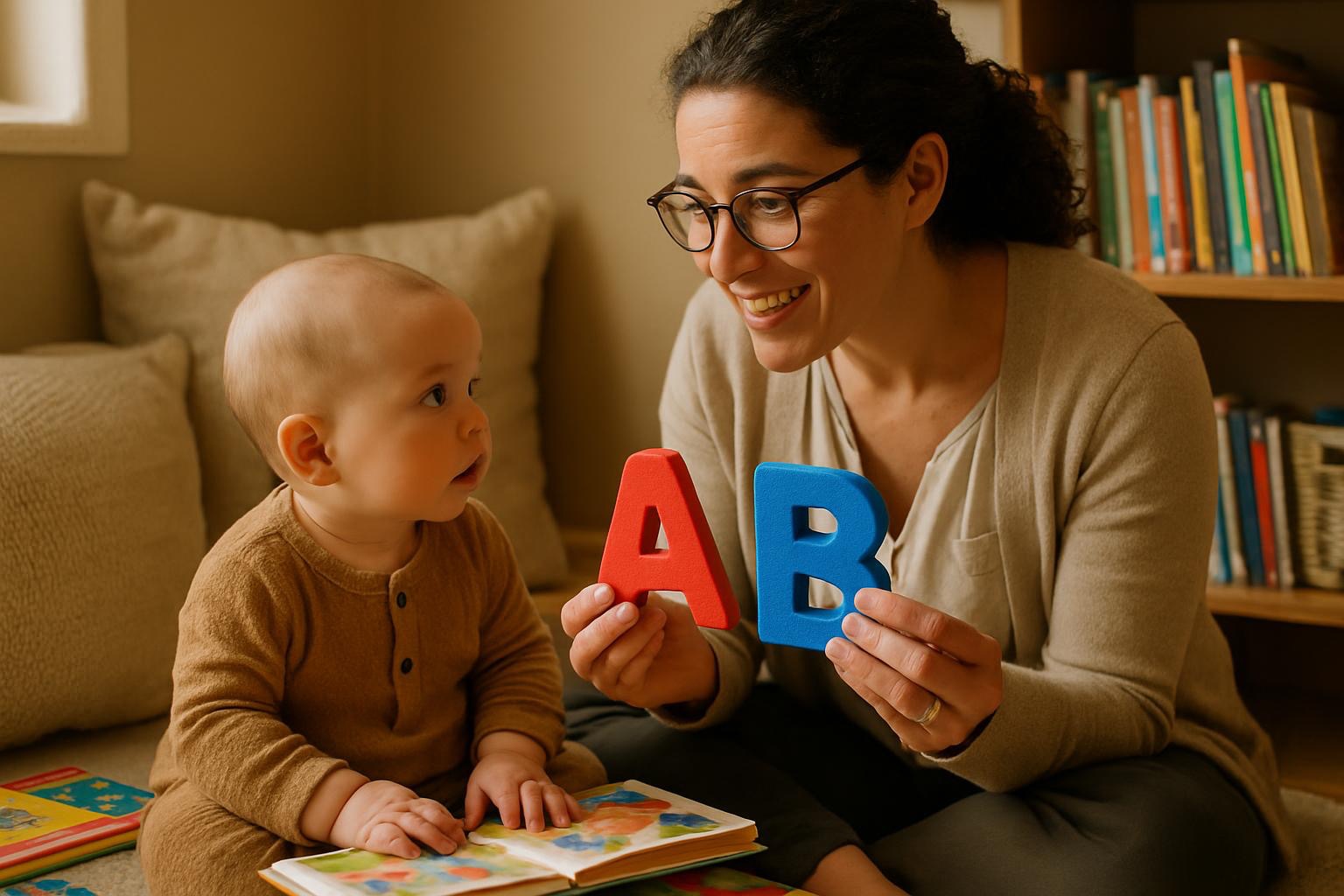
Early childhood literacy specialist teaching alphabet secrets recognition to engaged baby using colorful educational materials
Revolutionary early reading methodology recognizes that early reading success depends fundamentally on phonemic awareness, the ability to hear and manipulate individual sounds within words. The Phonetic Symphony Method transforms abstract sound-symbol relationships into concrete, memorable experiences that babies can easily understand and internalize.
This approach is one of the simplest alphabet teaching methods for babies: creating sound portraits for each letter, where babies hear the sound embedded within musical compositions, environmental recordings, and rhythmic patterns. The letter ‘B’ might be introduced through bass drum beats, buzzing bee sounds, and bouncing ball rhythms that emphasize the phonetic characteristics.
Expert implementations include vocal mirror games where caregivers exaggerate sounds while babies observe mouth movements and facial expressions. This visual-auditory connection helps babies understand how sounds are physically produced, accelerating their ability to connect symbols with their corresponding phonetic values.
Choosing the Right Alphabet Teaching Methods for Your Baby
Not every one of these alphabet teaching methods for babies works equally well for every child, and recognizing this early saves caregivers significant frustration. A methodology built around music and rhythm might captivate one baby while another responds far more strongly to tactile exploration or visual storytelling.
The most effective approach often blends elements from several methods rather than committing rigidly to a single system. Caregivers who stay observant, noticing which activities hold their baby’s attention longest, can adjust their methodology in real time rather than forcing a one size fits all plan.
Flexibility, not perfection, is what separates a methodology that works in theory from one that actually produces results at home.
Incredible Alphabet Secrets That Transform Babies Into Early Readers
Take a look this article: The Power of Talking to Your Baby: Unlock Your Child’s Amazing Potential
3. The Step-by-Step System That Builds Real Letter Recognition
Professional educators understand that teaching baby the alphabet works best through carefully structured progressions that gradually increase complexity while maintaining achievable challenge levels. The Progressive Recognition Building System guides babies from simple symbol awareness to sophisticated reading readiness through systematic skill development.
This step-by-step system, one of the more reliable alphabet teaching methods for babies, begins with personality-based introductions, where each letter receives distinctive characteristics, colors, and associated objects that make abstract symbols memorable and meaningful. The letter ‘S’ becomes the slithery snake symbol with green coloring and wavy movements, while ‘T’ transforms into the tall tree symbol with brown textures and upward gestures.
Advanced techniques include story weaving, where babies participate in narrative experiences featuring different symbols as characters. These stories naturally incorporate shapes, sounds, and early word formation while maintaining high engagement levels that sustain learning motivation throughout extended teaching sessions.
Why Talking to Your Baby Matters More Than Curriculum
Structured activities matter, but daily communication is what ties everything together. Babies absorb far more from spontaneous exchanges, a question asked during breakfast, a story told before nap time, than from any single planned lesson.
Talking to your baby, language development happens through these everyday moments, creates countless small opportunities for word exposure without ever feeling like a lesson. Pointing to a cereal box, naming a toy, or describing the weather outside all become quiet building blocks for later reading skills.
Caregivers who prioritize open, frequent communication often see stronger results than those relying solely on formal teaching tools, simply because language exposure becomes constant rather than occasional.
4. The Interactive Letter Theater Approach
Innovative literacy educators have revolutionized traditional instruction by creating theatrical experiences where babies become active participants in early reading adventures. This approach recognizes that babies learn most effectively through play-based experiences that feel entertaining rather than educational.
This playful method, another one of the alphabet teaching methods for babies worth trying, involves character dramatization where caregivers embody different symbols through costumes, movements, and voice modulations. The letter ‘L’ might be portrayed through long, stretching movements and low vocal tones, while ‘Q’ involves circular gestures and quirky behaviors that make its unique characteristics memorable.
Professional implementations include action sequences where babies imitate symbol-specific movements and sounds. These kinesthetic activities develop motor memory associations that support recognition while simultaneously building gross motor skills and spatial awareness crucial for reading development.
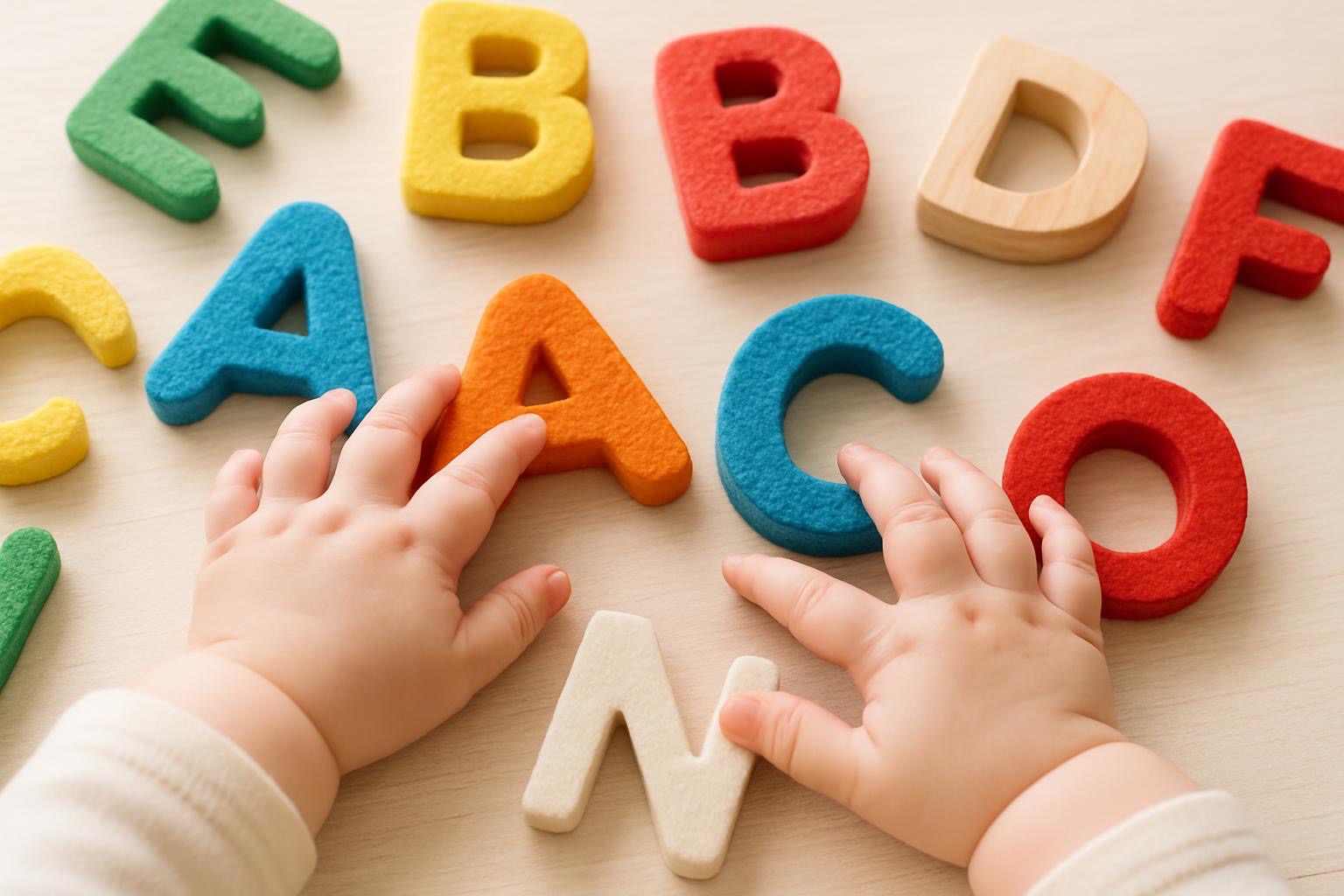
Baby exploring tactile three-dimensional alphabet letters through hands-on sensory learning experience
5. Turning Letters Into Your Baby’s First Real Words
A revolutionary early reading methodology moves beyond isolated symbol instruction to integrate early literacy with meaningful word formation, early reading experiences, and natural parent-child communication. This contextual approach helps babies understand that symbols serve practical communication purposes rather than existing as abstract academic concepts.
This framework is one of the most practical alphabet secrets for teaching baby the alphabet: babies observe symbols being used to create familiar words related to their daily experiences. Caregivers might spell MAMA, DADA, MILK, and BYE while babies watch combinations create meaningful communication tools.
Advanced techniques include environmental print exploration where babies discover words in their natural surroundings on food packages, street signs, books, and household items. This real-world application helps babies understand that reading skills have immediate practical value in their everyday lives.
6. The Rhythmic Letter Recognition Method
Expert literacy specialists have discovered that rhythm and music dramatically enhance early literacy by creating memorable patterns that support recognition and recall. The Rhythmic Letter Recognition Method transforms instruction into musical experiences that babies find naturally engaging and easy to remember.
This approach involves percussion sessions where each symbol corresponds to specific drum beats, clapping patterns, or musical instrument sounds, a favorite among alphabet teaching methods for babies who love movement. Babies learn to associate the letter ‘D’ with drum beats, while ‘C’ connects to cymbal crashes and ‘T’ links to triangle chimes.
Professional implementations include song creation where caregivers compose original melodies featuring individual symbols and their phonetic sounds. These personalized musical experiences create unique memory anchors that accelerate recognition while building positive associations with reading activities.
Toddler Safety: Essential Tips to Keep Your Child Safe and Secure
7. The Simple Trick That Helps Babies Tell Letters Apart
Reading success requires sophisticated visual discrimination abilities that enable children to distinguish between similar shapes and recognize symbols in different fonts, sizes, and orientations. The Visual Discrimination Enhancement Technique specifically develops these crucial skills through systematic visual training.
This simple trick includes differentiation games where babies practice identifying target symbols within arrays of similar-looking shapes, a small but powerful alphabet secret for visual learners. These activities might involve finding the letter ‘P’ among groups containing ‘B,’ ‘R,’ and ‘D’, developing the precise visual discrimination skills essential for reading fluency.
Advanced techniques incorporate font flexibility training where babies encounter the same symbols presented in various typefaces, sizes, and styles. This exposure ensures that recognition skills transfer across different reading contexts and materials.
Incredible Alphabet Secrets That Transform Babies Into Early Readers
Baby Milestones: What to Expect in the First Year
8.The Emotional Alphabet Connection Strategy
Revolutionary educators recognize that emotional engagement dramatically enhances learning retention and motivation. The Emotional Alphabet Connection Strategy creates positive emotional associations with symbols and reading activities that sustain long-term learning enthusiasm.
This approach involves celebration rituals where each successfully learned symbol is acknowledged through special activities, songs, or treats, another gentle way of teaching baby the alphabet without pressure. These positive reinforcement experiences create powerful emotional memories that maintain motivation throughout the challenging process of learning to read.
Professional implementations include personal stories where symbols are connected to meaningful people and experiences in babies’ lives, another one of the alphabet secrets that makes letters feel personal instead of abstract. The letter ‘G’ might represent Grandma while ‘P’ connects to Papa, creating emotional anchors that make abstract symbols personally meaningful and memorable.
9.Why Going at Your Baby’s Own Pace Works Best
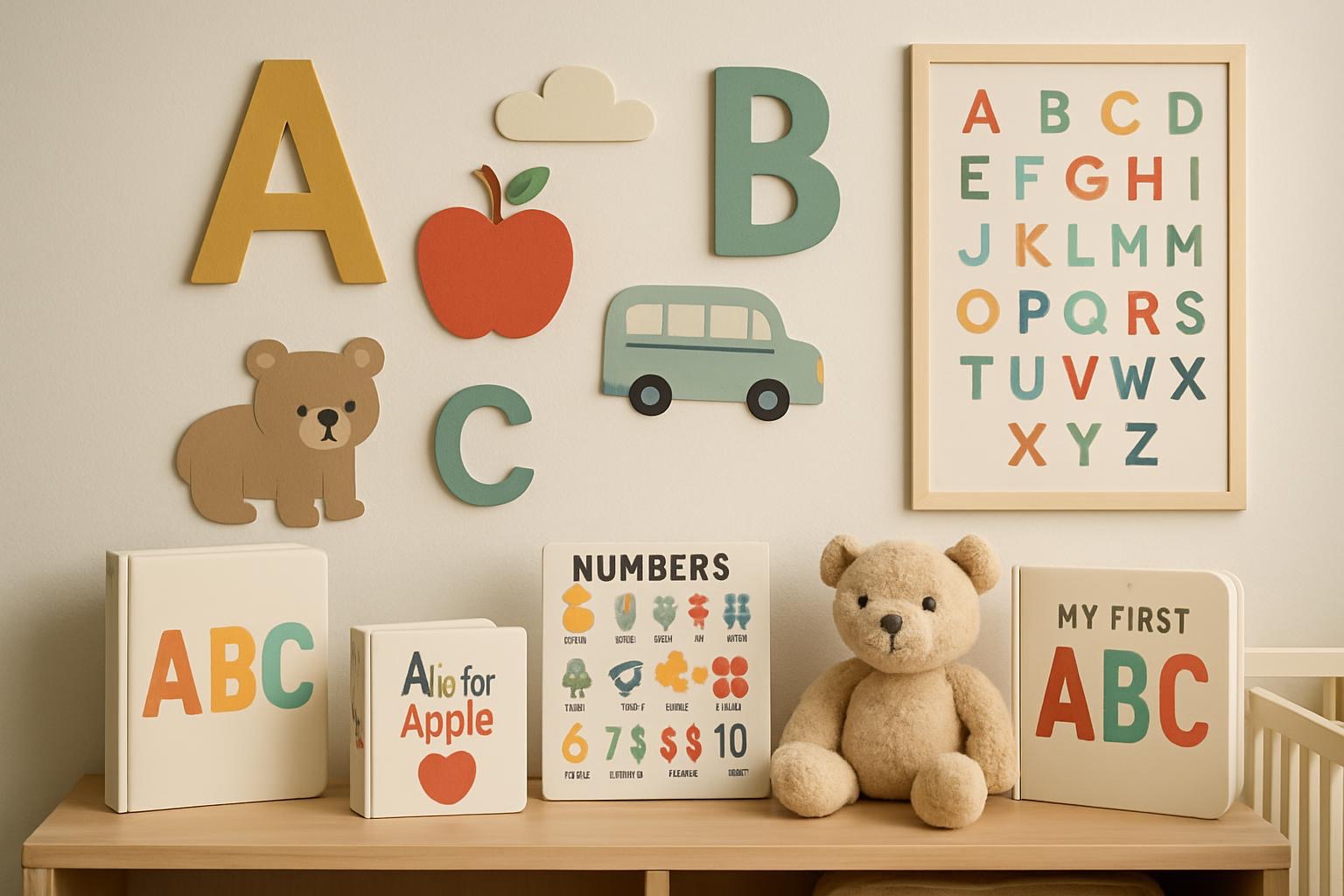
Interactive alphabet learning environment with educational books and letter-themed materials for infant literacy development
Experts in early literacy understand that babies develop foundational reading skills at individual paces and require personalized approaches that adapt to their unique learning styles and developmental timelines. The Adaptive Learning Pace Methodology ensures that each baby receives appropriately challenging instruction that maximizes learning without creating frustration.
Because this critical period for language development looks different for every baby, this framework involves continuous assessment of babies’ responses to different teaching techniques, allowing caregivers to adjust methods based on individual preferences and learning patterns. Some babies might respond best to visual presentations, while others benefit from auditory or kinesthetic approaches.
Advanced implementations include learning style optimization where teaching techniques are customized based on observed preferences for specific types of sensory input, activity duration, and interaction styles. This personalization ensures optimal learning conditions for each individual baby.
10. The Digital Integration Strategy for Modern Letter Learning
Contemporary early literacy teaching recognizes that technology can enhance traditional methods when used strategically and age appropriately. The Digital Integration Strategy combines classic hands-on techniques with carefully selected digital tools that support reading mastery without replacing essential human interaction.
This approach involves balanced screen time applications where interactive learning apps supplement, but never replace, the hands-on alphabet teaching methods for babies described throughout this guide. High-quality educational applications provide immediate feedback, adaptive difficulty levels, and engaging animations that reinforce recognition through multiple repetitions and varied contexts.
Professional implementations include tech-enhanced progress tracking where digital tools help caregivers monitor progress, identify learning gaps, and adjust teaching strategies based on concrete performance data. These analytics provide insights that enable more effective personalized instruction while maintaining the irreplaceable value of parent-child learning interactions.
Expert educators emphasize strict time limits and content quality when incorporating technology, ensuring digital tools enhance rather than diminish the hands-on alphabet teaching methods for babies described throughout this guide. The goal is strategic technology use that amplifies traditional teaching methods while preserving the developmental benefits of hands-on exploration and human connection.
11. Weaving Your Family’s Culture Into Alphabet Learning
Revolutionary literacy education recognizes that early reading occurs within cultural contexts that shape how children experience and understand written language. The Cultural Awareness Framework helps caregivers incorporate cultural elements that make early literacy more meaningful and personally relevant for babies from diverse backgrounds.
This methodology involves heritage connections where teaching baby the alphabet incorporates cultural stories, traditional songs, and family language patterns that reflect babies’ cultural identities. Bilingual families might introduce symbols through words in multiple languages, creating rich linguistic foundations that support both cultural connection and cognitive flexibility.
Advanced techniques include cultural literacy celebrations where teaching baby the alphabet integrates with cultural festivals, traditional foods, and family customs that make words meaningful within babies’ lived experiences. This cultural grounding ensures that literacy development supports rather than conflicts with cultural identity formation, creating confident readers who value both their heritage and academic achievement.
Long-Term Reading Success: The Payoff of These Alphabet Secrets
Babies who benefit from these alphabet secrets and consistent alphabet teaching methods for babies demonstrate remarkable advantages that extend far beyond early symbol recognition. These children typically show superior reading comprehension, enhanced vocabulary development, and increased confidence in academic settings throughout their educational careers.
The National Early Literacy Panel’s 2008 report identified alphabet knowledge as one of the strongest early predictors of later reading, writing, and overall academic success. The cognitive advantages gained through intensive early literacy instruction provide lasting benefits that support lifelong learning success.
Professional educators emphasize that these teaching methods create genuine literacy foundations rather than superficial academic skills, ensuring that early reading advantages translate into sustained educational excellence and lifelong love of learning.
Building Reading Confidence Through Daily Communication
The most powerful of all the alphabet secrets in this guide is not a flashcard or an app, it is talking to your baby, language development that happens in the ongoing back and forth between caregiver and baby. Every conversation, every shared book, and every playful exchange during this critical period builds the foundation for confident reading later on.
Caregivers who narrate their day, name objects out loud, and respond to babbling treat communication as a two way process rather than a passive activity. This back and forth strengthens the same neural pathways that support symbol recognition, word formation, and eventually independent reading.
Consistency matters more than intensity. A few minutes of genuine, attentive communication each day, repeated across this developmental period, often produces stronger long term results than occasional, longer sessions focused purely on drills.
Incredible Alphabet Secrets That Transform Babies Into Early Readers
For evidence-based guidance on early literacy development, read this article: Baby Sign Language: These Hands Were Made for Talking – American Academy of Pediatrics (AAP)
Conclusion
Of all the alphabet secrets in this guide, the most powerful thing you can do for your child’s literacy development does not require flashcards, apps, or a structured curriculum. It requires your voice, your presence, and ten minutes a day with a book. The techniques in this post work because they meet babies where they actually are: in a world of sensation, rhythm, movement, and connection.
Letters learned through touch, song, and play are letters that stick. And the child who grows up surrounded by adults who make language feel like an adventure is the child who grows into a reader who loves what they are reading. You do not need to be a literacy expert to lay this foundation. You just need to show up, stay curious alongside your child, and trust that every story read aloud is doing more than you can see.
Looking for comprehensive guidance on caring for your baby? Our book ‘How to Care for Children: From Birth to Age 2’ combines professional childcare expertise with evidence-based child development research. Written by Kelly and Peter, this guide provides clear, reliable advice rooted in real-world childcare. Available in English, Spanish, and Portuguese on Amazon.
Click the link below your preferred language to get your copy!


1. At what age should I start teaching my baby the alphabet?
You can begin teaching baby the alphabet as early as 6 months through sensory exploration and exposure to symbol shapes, sounds, and patterns. Babies between 6 and 18 months benefit from multi-sensory experiences that don’t require formal recognition, while toddlers aged 18 to 36 months can engage in more structured learning activities. The key is matching teaching methods to your baby’s developmental stage and natural interest level rather than following rigid timelines. The National Early Literacy Panel’s 2008 report found alphabet knowledge to be one of the strongest predictors of later reading success, even before babies show conscious recognition of letters.
2. Can teaching letters too early harm my baby’s development?
No. When letter teaching uses age-appropriate methods like games, music, tactile exploration, and playful interaction, it stimulates brain development and strengthens parent-child bonds without causing harm or pressure. The critical factor is maintaining a joyful, pressure-free approach that respects your baby’s natural attention span and learning preferences. Problems only arise when teaching becomes forced, stressful, or replaces other essential developmental activities like free play and social interaction. Early childhood specialists agree that babies’ neural plasticity during these years makes it an optimal time for language exposure when presented through engaging, developmentally appropriate methods.
3. How much time should I spend on literacy activities each day?
Effective early literacy learning occurs through multiple short sessions (5 to 10 minutes) throughout the day rather than extended formal lessons. Babies learn best through brief, engaging interactions during daily routines: bath time symbol games, mealtime songs, diaper change letter pointing, and bedtime picture books. This distributed practice approach maintains high engagement levels while preventing fatigue or frustration. Total daily exposure of 20 to 30 minutes spread across various activities and contexts provides optimal learning conditions without overwhelming your baby or disrupting other essential activities. Quality and consistency matter more than quantity when building early literacy foundations.
4. What if my baby shows no interest in symbols or early literacy activities?
Every baby responds differently to these alphabet secrets, developing at their own pace with individual interests and learning preferences. If your baby seems uninterested in these activities, experiment with different teaching methods: try tactile symbols instead of visual flashcards, incorporate movement and music rather than sitting activities, or connect symbols to your baby’s existing interests like animals or vehicles. Sometimes reduced interest simply means the approach needs adjustment rather than indicating developmental concerns.
Continue providing casual exposure through environmental print, songs, and books without pressure while focusing on other aspects of language development like vocabulary and conversation. Many babies show sudden interest surges after periods of apparent disinterest.
5. Are letter flashcards effective for teaching babies?
Traditional flashcards can be useful tools when integrated into multi-sensory learning approaches rather than used as standalone drill methods. Effective flashcard use involves making them interactive through touch, movement, and sound rather than passive viewing. Consider textured flashcards babies can explore tactilely, oversized cards that allow full-body interaction, or flashcards paired with songs and games that create memorable associations.
Many literacy specialists suggest flashcards work best as one component within diverse teaching strategies that engage multiple senses and learning styles. The key is using flashcards to spark playful interaction rather than creating pressure-filled testing situations that diminish learning motivation.
6. Should I teach uppercase or lowercase letters first?
Among the most common alphabet teaching methods for babies, most literacy experts recommend beginning with uppercase symbols because their distinct shapes make them easier for babies to visually discriminate and remember. Uppercase forms have clearer visual differences (compare ‘B’ and ‘D’ versus ‘b’ and ‘d’) and appear more frequently in environmental print, children’s books, and early learning materials. After establishing solid uppercase recognition (typically by age 2 or 3), introduce lowercase forms gradually through comparison activities that highlight similarities and differences.
However, the most important factor is consistency. Whichever approach you choose, maintain it long enough for solid recognition before introducing the alternative form to avoid confusion during early learning stages.
7. How do I know if my baby is actually learning or just memorizing?
Genuine learning involves transferring knowledge across different contexts, while memorization produces rigid responses limited to specific situations. Test understanding by presenting symbols in varied formats: different fonts, sizes, colors, and contexts beyond your usual teaching materials. Ask your baby to identify symbols on signs, food packages, and books rather than only during structured learning sessions. True comprehension shows when babies recognize forms regardless of presentation style and can connect symbols to their sounds in multiple contexts. Progress indicators include spontaneous identification during daily activities, attempts to form shapes through drawing or gestures, and growing interest in finding familiar symbols in new environments.
8. What role does reading to my baby play in early literacy?
Reading aloud provides essential exposure within meaningful language contexts that accelerate recognition and reading readiness. When you read to your baby, you naturally demonstrate that symbols combine to create words with meaning, model fluent reading behaviors, and build crucial connections between spoken and written language. Choose books with clear, large print; point to words as you read; emphasize sounds within story contexts; and encourage your baby to touch and explore symbols on pages.
Daily reading sessions, even just 10 to 15 minutes, are widely recommended by literacy specialists as more effective than isolated drill instruction. Reading together creates positive associations with books and words that sustain motivation throughout the learning-to-read journey.
9. Is talking to my baby as valuable as structured alphabet activities?
Yes. Everyday talking to your baby language development is one of the strongest supports for future literacy, often more than any single structured lesson. Simply narrating your day, naming objects, and responding to babbling builds the same neural pathways that the alphabet secrets in this guide are designed to strengthen.
10. How much everyday talking does my baby need for language development?
There is no strict formula, but consistency matters more than length. A few minutes of genuine, back and forth talking to your baby language development, repeated throughout the day, tends to produce stronger results than occasional long sessions focused only on drills.