
Medical note: This article is for education only and does not replace medical advice from your pediatrician. Read our Medical Disclaimer.
The moment your baby starts pulling up on furniture and taking those first wobbly steps, everything changes. Suddenly, corners are sharper, stairs are steeper, and the kitchen becomes a whole different kind of challenge. Keeping toddlers safe is not about wrapping them in bubble wrap. It is about making smart, practical changes to your home and daily routines so your child can explore freely without facing preventable dangers.
This guide covers 15 essential childproofing strategies that actually work, organized room by room and situation by situation, so you know exactly what to do and when. Here’s the complete list at a glance, so you can jump straight to whichever area matters most for your home right now.
15 Toddler Safety Tips at a Glance
- Install safety gates at the top and bottom of stairways.
- Anchor furniture, TVs, and large appliances to the wall to prevent tip-overs.
- Cover every electrical outlet within your toddler’s reach.
- Lock cabinets and drawers that hold cleaning supplies, medications, or sharp objects.
- Add corner guards to sharp furniture edges.
- Childproof the kitchen with stove knob covers, cabinet locks, and knives out of reach.
- Childproof the bathroom with toilet locks, a non-slip mat, and water set below 100°F.
- Secure the bedroom, including crib safety and furniture anchored to the wall.
- Practice active supervision, staying positioned where you can see and reach your toddler.
- Use a rear-facing car seat until at least age 2, and get the installation checked by a certified technician.
- Never leave your toddler alone in a vehicle, even for a minute.
- Cut food into pieces no larger than half an inch and supervise every meal.
- Check toys regularly for small or broken parts using the toilet paper tube test.
- Teach safety rules with simple, repeated language your toddler can actually understand.
- Build an emergency plan: learn infant CPR, keep a first aid kit stocked, and save the poison control number.
Disclosure: This post contains affiliate links. If you make a purchase through these links, we may earn a small commission at no additional cost to you. This helps us keep providing free, quality content for parents everywhere.
Written by Kelly, Childcare Specialist, and Peter, Researcher and Child Development Advocate.
Table of Contents
Understanding the Toddler Mindset: Why Toddler Safety Matters More Than Ever
Between 1 and 3 years old, toddlers do not have the intellectual awareness to comprehend danger or estimate risk. While their brains are developing faster than any other time in their lives, the prefrontal cortex, the brain region responsible for impulse control and risk management, will not mature until their mid-twenties. With this developmental fact comes their behavior of acting on sheer curiosity and impulse without consequences.
Key Developmental Factors in Toddler Safety
Understanding why toddlers behave the way they do makes safety measures feel less like arbitrary rules and more like common sense. Three areas of development in particular explain most of the risky behavior you’ll see at this age.
Physical Development:
- Rapid growth in height and strength, but coordination lags behind
- Developing gross motor skills that may exceed balance abilities
- Natural tendency to test physical limits through climbing and jumping
- Limited understanding of spatial relationships and depth perception
Cognitive Development:
- Unable to understand cause and effect relationships consistently
- Limited memory for safety rules and instructions
- Difficulty distinguishing between safe and dangerous situations
- Natural drive to explore that overrides caution
Emotional Development:
- Strong need for independence conflicting with safety requirements
- Limited emotional regulation skills when frustrated by safety restrictions
- Tendency to act impulsively when excited or curious
This matters developmentally too. Psychologist Mary Ainsworth’s research on secure attachment found that children explore more confidently, not less, when they trust their environment and caregivers to keep them safe. A well-childproofed space does not hold your toddler back from taking healthy risks, it gives them the freedom to try, fall, and try again without the outcome being catastrophic.
The Statistics: Understanding Real Risks
According to the Centers for Disease Control and Prevention (CDC), unintentional injuries are the leading cause of death for children ages 1-4 in the United States. Understanding these statistics helps parents focus their toddler safety efforts effectively:
- Falls are among the most frequent causes of toddler injuries, particularly from furniture, stairs, and playground equipment
- Poisoning risk increases significantly once babies become mobile and begin exploring low cabinets and drawers
- Drowning is one of the leading causes of injury-related death in toddlers and can happen silently in very small amounts of water
- Motor vehicle accidents remain a serious risk, most often linked to incorrect car seat installation or use
- Burns from hot liquids, surfaces, and bath water are among the most common and preventable household injuries in this age group
These toddler safety statistics aren’t meant to create fear but to emphasize the importance of proactive toddler safety measures and constant vigilance during this developmental stage.
Making Every Room Safe for a Toddler
Every room in your house presents a different set of hazards, and a room-by-room approach ensures nothing gets overlooked. The sections below walk through each space your toddler spends time in, from the living room to the bedroom, with the specific baby proofing tips for toddlers each one calls for.
Living Areas, the foundation of everyday toddler safety:
- Install safety gates at the top and bottom of stairways, ensuring they meet current safety standards
- Use outlet covers or sliding outlet protectors on all electrical outlets
- Anchor heavy furniture, televisions, and large appliances to walls using safety straps
- Install corner guards on sharp furniture edges
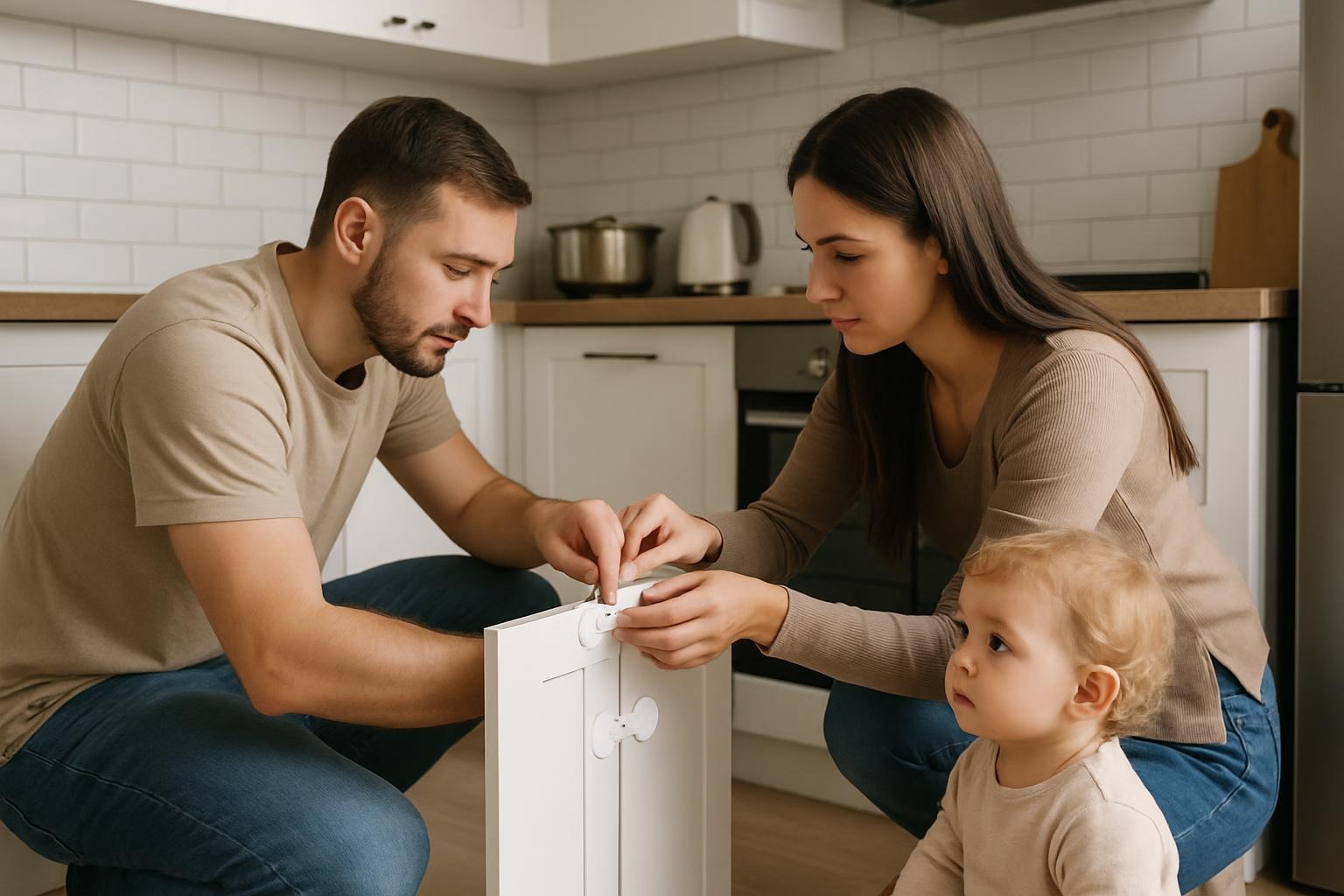
- Secure cabinets and drawers containing dangerous items with safety latches
- Keep blind cords out of reach or choose cordless window coverings
When selecting safety equipment and baby essentials, quality matters. Our comprehensive baby essentials guide helps you choose the most reliable safety products for your home.
Kitchen Safety:
The kitchen poses significant safety challenges for toddlers, with hot surfaces and toxic substances often within easy reach, making it one of the rooms where child safety at home for toddlers matters most.
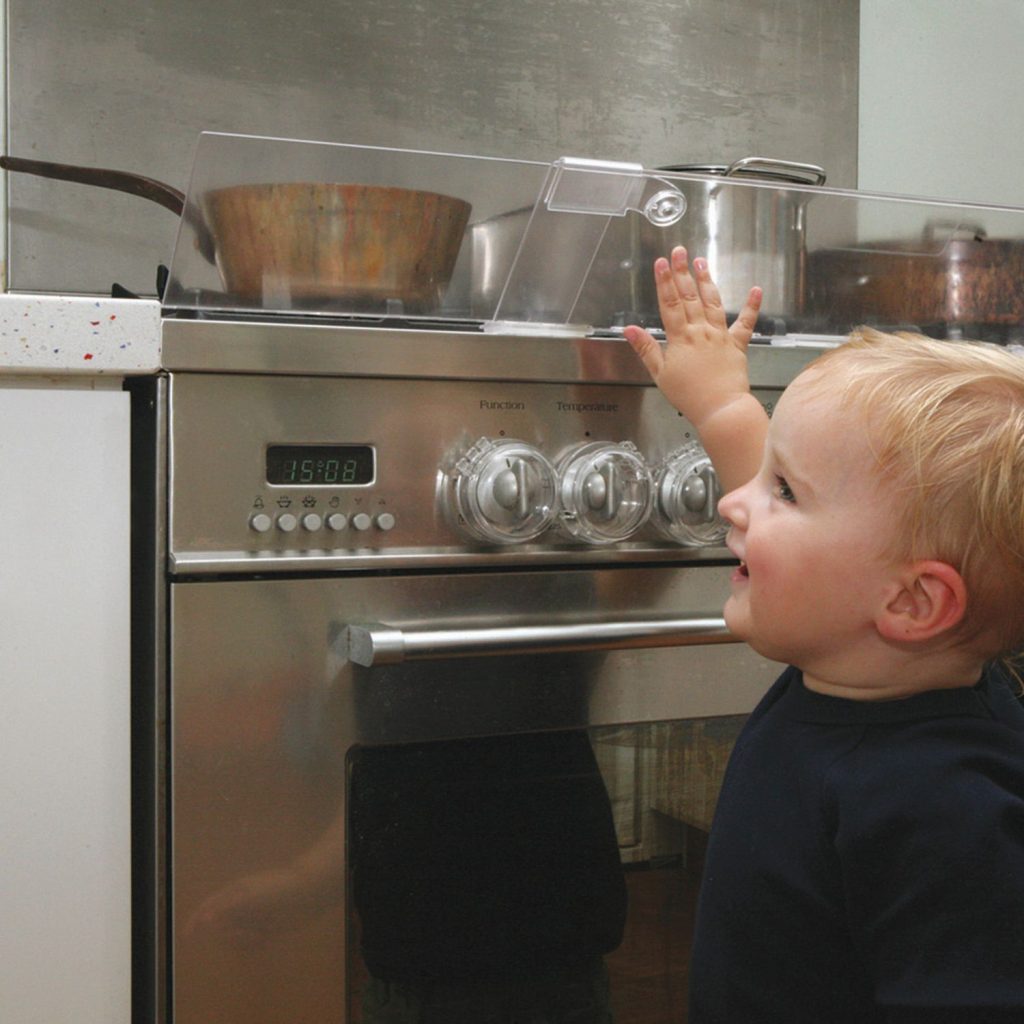
- Use stove knob covers and oven locks to prevent access to cooking surfaces
- Install cabinet locks on areas containing sharp objects, cleaning supplies, or breakable items
- Keep knives and other sharp utensils in locked drawers or high cabinets
- Use refrigerator locks to prevent access to potentially harmful foods or choking hazards
- Ensure all small appliances are unplugged and stored safely when not in use
Bathroom Safety:
Keeping the bathroom safe is one of the most important parts of child safety at home for toddlers, given the drowning risks involved.
- Install toilet locks to prevent drowning hazards and keep toddlers out of toilet water
- Use non-slip mats in bathtubs and showers
- Keep medications, razors, and cleaning supplies in locked cabinets
- Set bath water to between 96°F and 100°F (36°C to 38°C), close to your baby’s body temperature. Always test with your wrist or the back of your hand before placing your child in the water. Never exceed 100°F (38°C).
- Install faucet covers to prevent injuries from hard surfaces
Bedrooms:
These baby proofing tips for toddlers apply to the bedroom just as much as any other room in the house, since toddlers spend many unsupervised hours there during naps and overnight sleep.
- Ensure cribs meet current safety standards with proper mattress height adjustment
- Keep small objects that could pose choking hazards out of reach
- Secure dressers and changing tables to walls
- Use window guards or stops to prevent falls
Advanced Supervision Strategies
Effective toddler safety supervision goes beyond simply being present. Most parents assume supervision is binary, either you’re watching or you’re not, but the quality of that attention matters just as much as its presence. The strategies below are some of the most effective toddler accident prevention strategies available, because they work regardless of which room your child is in.
Active Supervision Techniques:
- Position yourself where you can see and quickly reach your toddler
- Scan the environment regularly for new hazards
- Anticipate your child’s next move based on their interests and abilities
- Avoid distractions like phones, especially during high-risk activities
High-Risk Situations Requiring Extra Vigilance:
- Water activities: Drowning can occur in less than 2 inches of water and happens quickly and silently
- Kitchen activities: Hot surfaces, sharp objects, and potential choking hazards require constant attention
- Outdoor play: Uneven surfaces, playground equipment, and traffic pose significant risks
- Social gatherings: Increased distractions and unfamiliar environments elevate risk levels
Transportation Safety: Protecting Your Child on the Road
Transportation toddler safety, especially car seat safety, is critical for child protection.

Transportation is one of the areas where toddler safety requires the most consistent attention. Unlike child safety at home for toddlers, where you control the environment and can make permanent adjustments, road safety depends on correct habits being repeated every single time, without exception. A car seat installed incorrectly just once, or a harness buckled too loosely on a rushed morning, can have consequences that no amount of caution afterward can undo. The guidelines below are not suggestions. They are the standard that protects your child every time you drive.
Car Seat Safety Excellence
Car seat use is one of the most effective toddler accident prevention strategies available to parents today. Research consistently shows that correctly installed and properly used car seats significantly reduce the risk of serious injury and death in vehicle accidents. Yet studies continue to find that a large proportion of car seats are not installed correctly, making this one of the most important baby proofing tips for toddlers that parents can act on outside the home.
The guidelines below cover seat selection, installation, and daily use. Read through each section carefully, even if you have used a car seat before. Recommendations are updated regularly as new safety data becomes available, and small details, like harness height or chest clip placement, make a critical difference in how well the seat protects your child.
Proper car seat use can reduce the risk of death by up to 71% for infants and 54% for toddlers ages 1-4:
Choosing the Right Car Seat:
- Rear-facing seats until at least age 2 or until reaching maximum height/weight limits
- Forward-facing seats with harnesses for children who have outgrown rear-facing seats
- Ensure car seat meets federal safety standards and hasn’t been recalled
Installation Best Practices:
- Have installation checked by a certified technician
- Car seat should not move more than one inch when tested at the belt path
- Harness straps should be at or below shoulder level for rear-facing seats
- Chest clip should be positioned at armpit level
Never Leave Children Unattended: Vehicle temperatures can rise 20 degrees in just 10 minutes, creating deadly conditions even on mild days.
Choking Prevention and Baby Proofing Tips for Toddlers
Choking is one of the most frightening toddler safety emergencies a parent can face, and it can happen faster than most people expect. Toddlers explore the world with their mouths, and their airways are narrow enough that everyday objects and common foods become serious hazards. Effective baby proofing tips for toddlers go beyond keeping small objects off the floor when it comes to choking. It means understanding which foods are risky, how to prepare them safely, and how to respond quickly if something goes wrong.
The good news is that most choking incidents are preventable. The strategies below address both food preparation and toy safety, covering the two main sources of choking risk for children in this age group.
Food Safety Guidelines:

- Cut round foods like grapes, cherry tomatoes, and hot dogs lengthwise
- Avoid hard candies, nuts, and popcorn for children under 4
- Supervise all eating and ensure children are seated while eating
- Cut food into pieces no larger than 1/2 inch
- Avoid foods that are hard, sticky, or can form a plug in the throat
Toy and Object Safety:
- Follow age recommendations on toy packaging
- Test small objects with a toilet paper tube if it fits through, it’s a choking hazard
- Regularly inspect toys for broken parts or small pieces
- Keep older children’s toys separate from toddler play areas
Sleep Safety: Creating a Secure Rest Environment
Sleep takes up a significant portion of your toddler’s day, which means the sleep environment is one of the most important areas of child safety at home for toddlers to get right. As toddlers grow and begin transitioning out of cribs, the risks shift. Falling out of bed, wandering at night, and accessing unsafe areas of the home become new concerns that require updated childproofing measures.
Safe sleep for a toddler is about more than the crib itself. It includes what is in the room, what your child can reach once they wake up, and whether they can safely stay in their space until you come to them. The guidelines below address both the sleeping area setup and the transition to a toddler bed.
Safe sleep practices continue to be important beyond infancy:
Understanding safe sleep practices is crucial for preventing sleep-related accidents. Read our detailed guide on baby sleep disorders symptoms to recognize warning signs and ensure healthy sleep development.
Crib Safety Standards:
Following these crib guidelines is one of the simplest toddler accident prevention strategies, since sleep-related hazards are largely preventable with the right setup.
- Slats should be no more than 2⅜ inches apart
- Mattress should fit snugly with no gaps
- Keep cribs away from windows, blinds, and hanging decorations
- Lower mattress as child grows and becomes more mobile
Transitioning to a Toddler Bed:
Moving to a toddler bed changes the safety equation for child safety at home for toddlers, since your little one can now leave their sleeping area freely without you knowing.
- Wait until child is at least 35 inches tall or shows signs of climbing out
- Use bed rails if necessary, ensuring they meet safety standards
- Childproof the bedroom thoroughly since toddlers can now leave their beds freely
Teaching Safety Rules Before Your Toddler Can Listen
While toddlers can’t fully understand complex safety concepts, they can learn simple rules. The key is matching your expectations to their developmental stage. A toddler who ignores ‘be careful’ will often respond to a short, concrete phrase repeated the same way every time, because repetition and simplicity, not explanation, are what actually stick at this age.
Safety education is just one component of comprehensive childcare. Discover evidence-based childcare basics that support your toddler’s development while maintaining a secure environment.
Effective Teaching Methods:
- Use simple, concrete language: Hot! Don’t touch!
- Repeat safety messages consistently
- Practice safety behaviors during calm moments
- Use positive reinforcement when children follow safety rules
- Model safe behavior yourself
Key Safety Concepts for Toddlers:
- Stop when asked
- Hold hands near streets or in crowded areas
- Don’t put objects in mouth unless given by adults
- Stay away from hot things
- Call for help if scared or hurt
Emergency Preparedness: Being Ready for the Unexpected
Even with every childproofing measure in place, accidents can happen. What separates a manageable situation from a devastating one is often how much emergency preparedness for toddlers the adults around the child have built in advance. Building real emergency preparedness for toddlers, not just hazard removal, is what turns reactive parenting into truly protective parenting.
Toddler accident prevention strategies do not end at installing safety gates and cabinet locks. Real emergency preparedness for toddlers means also knowing what to do when something slips through. The skills and plans below take time to learn and set up, but they are investments that matter most in the moments when there is no time to think. Start with the essentials and build from there.
Essential Emergency Skills:
- Learn infant and child CPR and first aid
- Keep emergency numbers easily accessible
- Know how to contact poison control (1-800-222-1222 in the USA)
- Have a well-stocked first aid kit appropriate for children
- Practice emergency scenarios with older family members
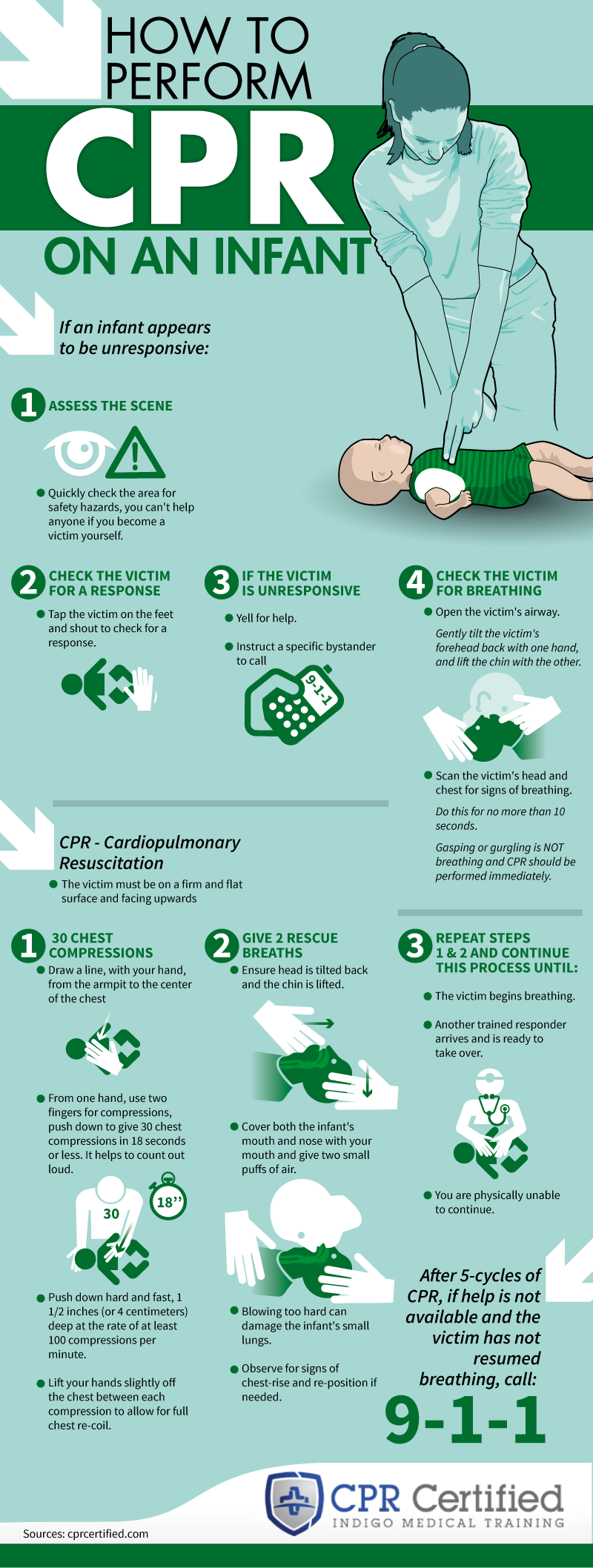
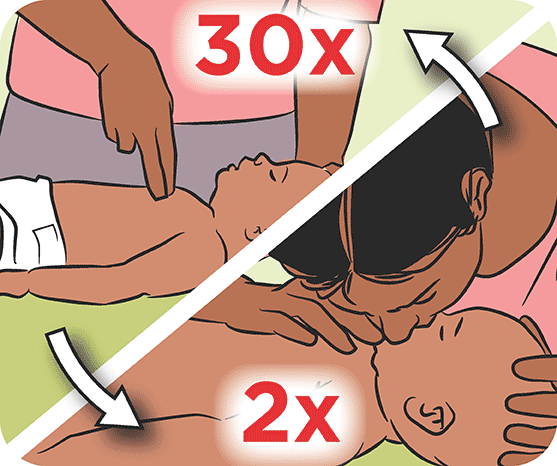
Images credits: www.cprcertified.com And https://raisingchildren.net.au/newborns/safety/cpr/cpr-for-babies
Creating Emergency Plans
- Develop fire escape routes that account for carrying toddlers
- Plan for natural disasters common to your area
- Ensure all caregivers know emergency procedures
- Keep emergency supplies at appropriate heights
Common Safety Mistakes to Avoid
Even parents who take toddler safety seriously can fall into patterns that leave gaps in their child’s protection. Most of these mistakes are not the result of carelessness. They happen because childproofing feels complete once it is done, and parents naturally shift their attention to other things. Regularly reviewing your home for overlooked hazards helps catch the mistakes listed below before they become problems. Review yours every few months, or any time your toddler reaches a new developmental milestone.
Overconfidence in Safety Measures: Remember that safety devices are tools, not substitutes for supervision.
Inconsistent Rule Enforcement: Safety rules must be enforced consistently by all caregivers.
Underestimating Developmental Changes: A toddler’s abilities can change rapidly; safety measures must evolve accordingly.
Neglecting Regular Safety Updates: Regularly reassess your home for new toddler safety hazards as your child grows.
Daily Habits That Prevent Most Accidents
Building toddler safety into daily routines turns prevention into habit rather than an occasional afterthought. Most accidents don’t happen during dramatic lapses in attention. They happen during the same predictable moments each day, getting dressed, sitting down to eat, winding down for bed, when a five-second habit can close the gap that a one-time safety sweep misses.
Morning Routines:
Mornings move fast, but a sixty-second safety scan is one of the simplest toddler accident prevention strategies you can build into the day, catching hazards that crept in overnight before they become accidents.
- Check that safety gates are properly closed
- Ensure windows and doors are secure
- Remove any hazards that may have appeared overnight
Meal Times:
Mealtime deserves the same attention as any other part of child safety at home for toddlers, since choking and high chair falls are two of the most common accidents at this age, and both happen in seconds.
- Always supervise eating
- Check food temperature and size
- Ensure child is properly positioned in high chair
Play Time:
Baby proofing tips for toddlers extend beyond the room itself into what’s actually in your toddler’s hands during play, since toys and play equipment carry their own set of risks that a childproofed space alone won’t catch.
- Inspect toys before use
- Supervise all play activities
- Rotate toys to maintain interest while ensuring safety
Bedtime Routines:
A consistent bedtime routine is one of the simplest toddler accident prevention strategies there is, since the rushed moments right before sleep are exactly when child safety at home for toddlers tends to slip.
- Secure bedroom environment
- Check that monitoring devices are working
- Ensure emergency supplies are accessible
What Changes When Your Toddler Leaves the House
The childproofing you’ve done at home doesn’t travel with your toddler. Every new environment, a relative’s house, a daycare, a crowded store, comes with its own hazards and its own blind spots, which is why it’s worth thinking through each setting separately rather than assuming your usual precautions will carry over.
Grandparents’ Homes:
Homes that aren’t childproofed daily require extra attention to child safety at home for toddlers, since grandparents and relatives may not have the same hazards top of mind.
- Provide safety checklists for relatives
- Help childproof frequently visited homes
- Communicate specific safety rules and requirements
Daycare and Preschool:
Applying the same emergency preparedness for toddlers mindset when evaluating a daycare or preschool helps you compare facilities objectively rather than relying on first impressions alone.
- Research safety policies and procedures
- Ensure staff are trained in CPR and first aid
- Verify that facilities meet safety standards
Public Spaces:
Child safety at home for toddlers is largely within your control, but keeping your child safe becomes more challenging outside it, where you can’t control the environment the same way.
- Always maintain close supervision
- Identify potential hazards before allowing exploration
- Have a plan for getting separated
Technology and Safety: Smart Tools for Modern Parents
Modern technology offers valuable tools to enhance toddler safety when used appropriately alongside traditional supervision methods. None of these tools replace hands-on supervision, but used well, they close gaps that even attentive parents can’t cover alone, an extra set of eyes during a nap, an early warning before a small problem becomes a big one.
Baby Monitors and Cameras:
Video monitors allow you to check on sleeping toddlers without disturbing them. Choose models with secure connections to prevent hacking, and position cameras to view the entire sleep area without creating blind spots.
Smart Home Safety Devices:
Smart smoke detectors, carbon monoxide alarms, and water leak sensors provide early warnings and can send alerts to your phone. However, ensure you still have traditional battery-operated backup devices in case of power outages or technical failures.
Safety Apps:
Various toddler safety apps can help track medication schedules, store emergency contacts, and provide quick access to poison control information. Some apps also offer age-appropriate safety checklists to ensure you haven’t overlooked important childproofing measures.
GPS Tracking Devices:
For highly mobile toddlers, wearable GPS devices designed for young children can provide peace of mind during outings to crowded places. However, these should supplement, not replace, active supervision and physical safety measures like holding hands near traffic.
Take a look at this post: ➡️ Toddler Activities for Development: 12 Incredible Ways
Conclusion
Toddler safety is not a one-time task. It is an ongoing process that evolves as your child grows, gains new abilities, and discovers new ways to surprise you. The 15 toddler accident prevention strategies in this guide cover the most common and preventable risks, but the most important tool you have is your own attention..
No safety gate or cabinet lock replaces a present, aware parent. These measures reduce risk; they do not eliminate it. Use them as a foundation, stay consistent, and update your childproofing as your child reaches new developmental stages.
Toddlerhood is a remarkable time. Children at this stage are brave, curious, and determined in ways that can be exhausting and wonderful in equal measure. Your job is not to stop the exploration. It is to make sure the environment is ready for it.
You are doing that already. Keep going.
Take a look at these articles: ⬇️
- American Academy of Pediatrics (AAP) – pediatric guidelines and recommendations.
- Centers for Disease Control and Prevention (CDC) – health statistics and safety data.
- Safe Kids Worldwide
- Consumer Product Safety Commission (CPSC)
Looking for comprehensive guidance on caring for your baby? Our book ‘How to Care for Children: From Birth to Age 2’ combines professional childcare expertise with evidence-based child development research. Written by Kelly and Peter, this guide provides clear, reliable advice rooted in real-world childcare. Available in English, Spanish, and Portuguese on Amazon.
Click the link below your preferred language to get your copy!




1. At what age should I start childproofing my home?
Start childproofing before your child becomes mobile (around 6-9 months) and continuously update as they develop new abilities. Toddlers aged 1-3 lack the cognitive ability to understand danger or assess risk, making prevention crucial. Focus on the most common injury causes: falls, poisoning, drowning, and burns, the leading causes of unintentional injury identified by the CDC for this age group. Take a room-by-room approach, securing stairways with safety gates, covering electrical outlets, anchoring heavy furniture to walls, and installing cabinet locks on areas containing dangerous items. Remember that a toddler’s abilities can change rapidly, so reassess your safety measures regularly.
2. What are the most important car seat safety rules for toddlers?
Keep toddlers in rear-facing car seats until at least age 2 or until they reach the maximum height/weight limits for their seat, this can reduce death risk by up to 71%. When transitioning to forward-facing seats, ensure harness straps are at or below shoulder level and the chest clip is positioned at armpit level. Have your car seat installation checked by a certified technician, and ensure the seat doesn’t move more than one inch when tested at the belt path. Never leave children unattended in vehicles, temperatures can rise 20 degrees in just 10 minutes, creating deadly conditions.
3. How can I prevent choking without limiting my toddler’s independence?
Cut round foods like grapes, cherry tomatoes, and hot dogs lengthwise, and avoid hard candies, nuts, and popcorn for children under 4. Cut all food into pieces no larger than 1/2 inch and always supervise eating while ensuring children are seated. For toys and objects, use the toilet paper tube test, if an item fits through a toilet paper tube, it’s a choking hazard. Follow age recommendations on toy packaging and regularly inspect toys for broken parts. Keep older children’s small toys separate from toddler play areas.
Balance independence with safety by creating designated ‘yes spaces’ where toddlers can explore freely without constant intervention, while maintaining strict boundaries in high-risk areas. Offer safe alternatives when redirecting from dangerous activities, for example, if they want to climb on furniture, redirect to a safe climbing toy. This approach teaches decision-making within safe parameters while respecting their developmental need for autonomy and exploration
4. What does active supervision actually mean?
Active supervision means being engaged and strategically positioned where you can see and quickly reach your toddler, not just being in the same room. Scan the environment regularly for new hazards, anticipate your child’s next move based on their interests and abilities, and avoid distractions like phones during high-risk activities. This is especially crucial during water activities (drowning can occur in less than 2 inches of water), kitchen time, outdoor play, and social gatherings where increased distractions elevate risk levels.
5. How can I teach safety concepts to my toddler when they don’t understand complex rules?
Use simple, concrete language like Hot! Don’t touch! and repeat safety messages consistently. Practice safety behaviors during calm moments using positive reinforcement when children follow rules, and always model safe behavior yourself. Key concepts toddlers can learn include: stopping when asked, holding hands near streets or in crowded areas, not putting objects in their mouth unless given by adults, staying away from hot things, and calling for help when scared or hurt. Remember that while toddlers can’t fully understand complex safety concepts, they can learn simple, repeated rules through consistent practice and positive reinforcement.
6. What safety equipment does every home need?
Every family needs a core set of safety equipment to properly childproof their home. Start with safety gates (both pressure-mounted for doorways and hardware-mounted for stairs), outlet covers or sliding outlet protectors, cabinet and drawer locks for areas containing dangerous items, corner guards for sharp furniture edges, and furniture anchoring straps to prevent tip-overs.
Install stove knob covers, oven locks, and toilet locks in appropriate rooms. For the bathroom, use non-slip mats and faucet covers. Window guards or stops prevent falls from windows. Keep a well-stocked first aid kit specifically designed for children, and ensure all caregivers know CPR and basic first aid. Invest in a reliable baby monitor for sleep supervision.
Don’t forget proper car seats that meet current safety standards. While the initial investment may seem substantial, these safety products significantly reduce injury risk and provide invaluable peace of mind. Prioritize items based on your home’s specific layout and your toddler’s developmental stage, adding equipment as new abilities emerge.
