
Building the right daily routine for autistic child is one of the most powerful things a parent can do, and it does not require a complicated system to start working. Living with an autistic child means learning a new language: not spoken words, but the language of patterns, rhythms, and what happens when those rhythms break at the wrong moment. Parents who are early in this journey often describe the first months as exhausting, not because their child is difficult, but because they have not yet found the framework that makes daily life feel manageable for everyone in the household.
A well-built daily routine for autistic child is exactly that framework. It is not a rigid system of rules. It is the structure that allows a child whose nervous system depends on predictability to relax enough to learn, connect, and grow.
This post was written to give you nine practical, tested strategies for building a daily routine for autistic child that actually holds together: how to reduce meltdowns before they start, how to set up a sensory-friendly home autism environment, and how to communicate in ways your child can genuinely receive.
👩🏻💻 👨🏻💻 This is Part 2 of a 6-part series on autism in children.
👩🏻💻 👨🏻💻 If you are still in the process of understanding what autism is and how the spectrum levels work, Part 1 of this series, Autism in Children: 3 Levels, Warning Signs, and How Diagnosis Works – Part 1, covers everything you need before diving into the day-to-day strategies in this post.
Disclosure: This post contains affiliate links. If you make a purchase through these links, we may earn a small commission at no additional cost to you. This helps us keep providing free, quality content for parents everywhere.
Written by Kelly, Childcare Specialist, and Peter, Researcher and Child Development Advocate.
Table of Contents
1. Why a Daily Routine for Autistic Child Is Not Optional
For most children, a missed nap or a dinner that runs late is an inconvenience. For a child with autism, it can be the beginning of a very difficult afternoon. The reason is neurological. Many autistic children have a nervous system that processes unexpected change as a genuine threat, not a minor disruption. Predictability is not a preference for these children. It is a regulation tool, and that is exactly why a consistent daily routine for autistic child matters so much more than it might for a neurotypical sibling.
When a child knows what comes next, what comes after that, and roughly when the day will end, their nervous system can operate at a lower baseline level of arousal. That lower baseline means more available capacity for learning, communication, play, and connection with the people around them. Meltdowns do not disappear entirely, but they become less frequent and often significantly less intense, because the child is not spending most of their energy bracing against the unknown.
This is not theory. Occupational therapists who work with autistic children consistently identify routine disruption as one of the primary triggers for behavioral escalation. The American Academy of Pediatrics recognizes structured, predictable environments as a core support strategy in their guidance on autism daily care. Parents who implement a consistent daily routine for autistic child frequently report that the first two weeks feel demanding, but by week three the household as a whole operates at a calmer baseline. That shift is real, and it is repeatable.
Repetition is one of the primary ways the human brain consolidates new skills, and this is especially true for a child whose nervous system needs more exposures to generalize a behavior across settings. A child who washes their hands the same way, in the same order, at the same point in the day, is not just avoiding a meltdown. They are building an automatic, low-effort competency that frees up cognitive resources for everything else happening around them.
Skills embedded inside a stable sequence become reliable faster than skills taught in isolation.
Many parents notice this benefit only after the fact, a child who becomes independent at brushing their teeth or putting on shoes without ever being directly taught.
The goal is not a perfect daily routine for autistic child.
It is a predictable enough schedule that your child can anticipate the shape of their day even when individual details shift. A flexible family does not need a rigid routine. It needs one flexible enough to bend without breaking, where the broad shape of morning, midday, and evening stays the same even when the specific activity inside each block changes. This is exactly the reasoning behind why so many specialists recommend establishing a daily routine for autistic child during the toddler years specifically, since that window is when habits form most easily.
2. Building a Morning Routine That Actually Holds Together
Mornings are the hardest part of the day for many families with autistic children. The transition from sleep to full sensory engagement with the world is abrupt, and for a child with sensory sensitivities, getting dressed, eating breakfast, and leaving the house can each feel like a separate ordeal. The solution is not pushing harder or moving faster. It is sequencing, and sequencing is the heart of any good morning routine within a broader daily structure.
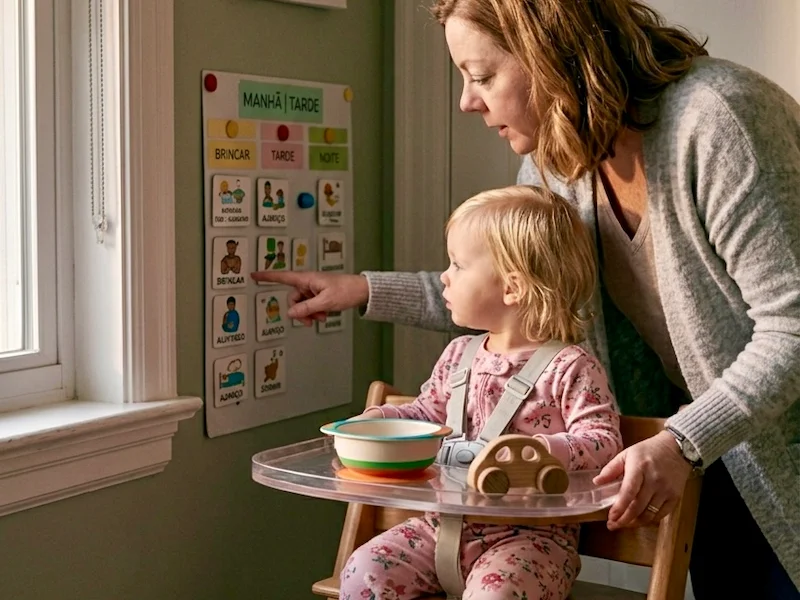
A visual schedule, a series of pictures or symbols showing each step of the morning in order, removes the burden of verbal instruction and replaces it with something the child can reference independently. Many autistic children are strong visual learners, and a consistent pictorial sequence for getting dressed, brushing teeth, and sitting down to eat reduces the friction of those transitions significantly.
Five more minutes, then we put on shoes is not just polite; it is a neurological bridge between one activity and the next, and a small habit that makes the rest of the morning easier to follow.
Build in buffer time without apology, a small but essential habit. The morning sequence of an autistic child takes longer than that of a neurotypical child, and fighting that reality every single day creates conflict that exhausts everyone. Adding 20 to 30 extra minutes and removing the urgency changes the entire emotional tone of how the day begins. The source of morning friction is often not the sequence itself, but the speed at which it is expected to happen.
It also helps to anchor the morning sequence to the same physical cues every day rather than to the clock alone. A child who associates socks on with next we go downstairs builds the transition into muscle memory faster than a child who is told it’s 7:45, time to go downstairs with no consistent physical marker attached to it. Clocks are abstract. Sequences are concrete, and concrete is what a developing, sensory-sensitive nervous system processes most reliably.
➡️ Visual schedule cards designed for children take the pressure off daily verbal reminders and give your child independent control over their own routine. Check the top-rated visual schedule boards for children on Amazon.com and read verified parent reviews to find the format that works best for your child’s current communication level.
3. How to Reduce Meltdowns Before They Start
Meltdown prevention autism strategies work best when they start long before any crisis moment, not in the middle of one. Meltdowns are not tantrums, and meltdown prevention autism strategies treat them differently for good reason. This distinction matters more than almost anything else in this post. A tantrum is a behavior with a social goal: the child wants something and is using an emotional display to obtain it. A meltdown is a neurological event: the child has exceeded their capacity to process incoming information and has lost voluntary control of their behavior.
Responding to a meltdown with consequences, time-outs, or punitive discipline does not work because the child is not making a deliberate choice in that moment.
What works is prevention, and prevention starts with learning your child’s specific escalation signs. Every child has a personal window of 10 to 20 minutes before a full meltdown during which certain behaviors appear: increased stimming, verbal repetition, a shift in vocal pitch, physical withdrawal, or heightened sensitivity to touch. When you recognize those early signals, you have time to intervene before the point of no return.
Intervening early means reducing the demand, lowering the sensory input, and offering co-regulation. Co-regulation means staying calm yourself and providing a regulated nervous system for your child to borrow. This is not passivity. It is the most active and effective form of meltdown prevention autism experts consistently recommend, and it works far better than any reactive strategy applied after the fact.
Reducing the overall sensory load throughout the day, before any crisis moment arrives, is the most sustainable form of meltdown prevention autism offers. A child who has been managing an overloaded nervous system since morning has a much lower threshold by evening. Managing that cumulative load is exactly what a strong sensory-friendly home, covered in the next section, is designed to do.
It is worth naming the emotional side of meltdown prevention autism for parents directly. Watching your child move toward a meltdown, unable to stop it, is one of the most helpless feelings in autism parenting. Most of the time, there was nothing to do differently in that moment. Prevention happens hours earlier, in the structure of the day.
This reframing matters because it changes where parents direct their energy. Instead of searching for the perfect response in the moment of crisis, the more productive use of attention is building the conditions, throughout the day, that make the moment of crisis less likely to arrive in the first place.
For families also navigating toddler behavior challenges, the distinction between meltdowns and defiance is explored further in how to handle toddler tantrums, which offers framing that applies alongside an autism diagnosis.
Many pediatric occupational therapists build meltdown prevention autism plans around exactly this kind of early-signal tracking, since catching the window matters more than the specific technique used.
4. Setting Up a Sensory-Friendly Home Without Redecorating Everything
Many parents assume that creating a sensory-friendly home autism environment requires a complete renovation. It does not. Small, targeted changes to your existing environment make a significant difference in how your child’s nervous system operates throughout the day, and most of them cost very little.
Start by identifying your child’s actual sensory triggers as part of building a true sensory-friendly home autism setup. Walk through the house with your child’s experience in mind and notice where the friction consistently happens. Is it the bright overhead fluorescent light in the kitchen? The unpredictable sounds of background television? The texture of the bathroom tiles underfoot first thing in the morning?
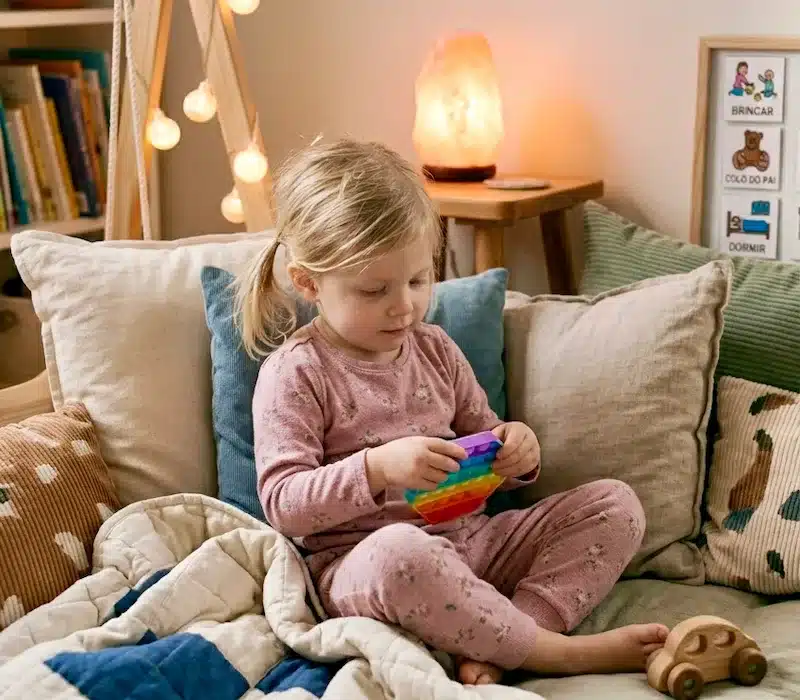
Designate one space as a sensory corner or calm corner, a small but central piece of any sensory-friendly home autism plan. This is not a punishment space and it should never become one. It is a self-regulation area the child can go to voluntarily when they feel overwhelmed. Fill it with items your specific child finds regulating: a weighted blanket, a few fidget tools, soft or dimmable lighting, and preferred comfort items.
Reduce unnecessary background stimulation throughout the day. Constant television noise, overlapping conversations, and unpredictable household sounds all add to the sensory load a child is managing, even when they appear to be ignoring them entirely. A sensory-friendly home autism setup accounts for these quieter, easy-to-miss sources of stimulation, not just the obvious ones.
For children with tactile sensitivities, simple adjustments like removing clothing tags, offering seamless socks, and allowing fabric preferences reduce daily friction in ways that cost almost nothing but add up meaningfully over the course of a week. Lighting deserves more attention than most homes give it. Fluorescent bulbs flicker at a rate many autistic individuals perceive directly. Swapping a single fixture for a warm, non-flickering LED bulb is a small change some families describe as surprisingly noticeable.
Smell is the most overlooked sensory channel in home design. Strong cleaning products and scented candles can be genuinely distressing for a child with heightened olfactory processing. Fragrance-free products are a low-cost, high-impact fix. A sensory-friendly home autism setup does not need to be finished all at once; most families find it easier to tackle one room at a time.
5. Choosing Toys and Play Tools That Support Your Daily Routine
The right toys do more than entertain. For an autistic child, certain toys and play tools actively support regulation, build skills, and make the rest of the daily routine for autistic child easier to sustain, because a child who has had genuine sensory and regulatory needs met through play is generally calmer and more available for the transitions that follow.
Fidget toys are one of the simplest additions to any home. A textured fidget, a chewable pendant, or a small squeeze toy gives the hands and mouth something appropriate to seek out, which reduces the likelihood that the same sensory need gets met through behaviors that are harder to manage in public, such as mouthing clothing or pulling at hair. Keeping two or three fidgets in rotation, rather than just one, prevents any single item from losing its regulating effect through overfamiliarity. These small, low-cost additions are an easy way to extend a sensory-friendly home autism environment beyond the calm corner and into daily play.
Weighted toys and weighted lap pads deliver the same deep pressure input as a weighted blanket, but in a smaller, more portable form that travels easily to the car, the classroom, or a relative’s house. Many occupational therapists recommend weighted lap pads specifically for moments that require sitting still, such as car rides, mealtimes, or therapy sessions, because the input helps the nervous system settle into a calmer baseline state.
Cause-and-effect toys, the kind that produce a predictable light, sound, or movement every single time a button is pressed, are particularly well suited to autistic children who find comfort in repetition and predictability. The same predictability that makes a daily routine for autistic child work so well shows up again here, on a smaller scale, inside a single toy.
Building toys with clear, repeatable steps, such as stacking cups, simple puzzles, and connecting blocks, support fine motor development while offering the kind of structured, end-point-visible play that many autistic children find genuinely satisfying. Unlike open-ended pretend play, which some autistic children find harder to initiate independently, these toys have a clear beginning and a clear end, which removes a layer of ambiguity from playtime.
➡️ A rotating set of sensory and fidget toys designed specifically for autistic children gives your child appropriate sensory outlets throughout the day and supports the same regulation goals as the rest of your daily routine. Check the top-rated sensory and fidget toy sets for autistic children on Amazon.com and read verified parent and occupational therapist reviews to find options matched to your child’s specific sensory profile.
The NIMH’s overview of autism spectrum disorders notes that play-based and sensory-informed approaches are widely used alongside formal therapy to support skill development in young autistic children, which is exactly why thoughtful toy selection deserves a place in daily life, not just inside therapy sessions.
Occupational therapists often suggest rotating two or three of these tools weekly as part of a daily routine for autistic child during the toddler years, so no single item loses its calming effect.
6. Communication Strategies That Work in Everyday Moments

The right autism communication strategies make an enormous difference in how smoothly daily interactions go. One of the most common mistakes caregivers make with autistic children, with no awareness that they are doing it, is using too many words. A child who is already working hard to process sensory input, manage transitions, and decode social expectations has a finite amount of processing bandwidth.
Simplify your language. Instead of You need to put your toys away now because we are going to eat dinner and I need the table clear, say Toys away, then dinner. One instruction at a time. This single change is one of the simplest autism communication strategies available, and it pays off immediately. Pause and allow processing time before repeating. Many autistic children need 10 to 15 seconds to process a verbal instruction before they can respond.
Use visual supports beyond the morning schedule, since they reinforce that same structure throughout the rest of the day. Picture cues for emotions, first-then boards for activity transitions, and visual countdown timers all reduce the cognitive and linguistic load of daily household communication significantly. These visual tools are among the most accessible autism communication strategies available, because they require no special training and can be introduced gradually at home.
For children who are minimally verbal or nonverbal, augmentative and alternative communication (AAC) deserves serious consideration. Research consistently shows that providing an AAC system does not reduce a child’s motivation to develop spoken language. It supports communication, and communication supports language, making AAC one of the most valuable autism communication strategies for families navigating limited speech.
The principle of building language through rich, responsive daily interaction applies powerfully to autistic children. The post on how talking to your baby builds early language offers a foundation for understanding why that everyday responsiveness matters and how to offer it in ways a child with ASD can actually receive.
Patience with silence is harder than it sounds, especially while you are still building that piece of communication. Most adults fill conversational gaps automatically, repeating a question, rephrasing it, adding more words when no response arrives. With an autistic child who needs longer processing time, that instinct works against you. Counting silently to ten after asking a question, resisting the urge to fill the gap, gives the child’s brain the runway it actually needs. The first few times this feels uncomfortably long. After consistent practice, it becomes a natural rhythm both of you settle into.
Teachers and therapists often appreciate when parents share which autism communication strategies are already working at home, since consistency across settings speeds up progress.
7. The Bedtime Routine That Makes Night Feel Safe
An autistic child sleep routine is one of the most consequential pieces of the entire day, because sleep difficulties affect between 50 and 80 percent of autistic children, according to research cited by the CDC. This is not primarily a behavior problem. It is largely a physiological one: many autistic individuals have differences in melatonin production and sensory regulation that make the transition into sleep genuinely difficult.
A consistent bedtime sequence is the most effective non-pharmaceutical intervention available for autistic child sleep challenges, and it is one of the most important pieces of the day. A wind-down period of 30 to 45 minutes before the target sleep time should include dimming lights, removing electronic screens, lowering noise levels, and moving through the same steps in the same order every night. This consistency is what makes the bedtime piece so reliable over time. The sequence itself, not just the individual steps, signals the nervous system that an autistic child sleep routine is beginning and sleep is approaching.
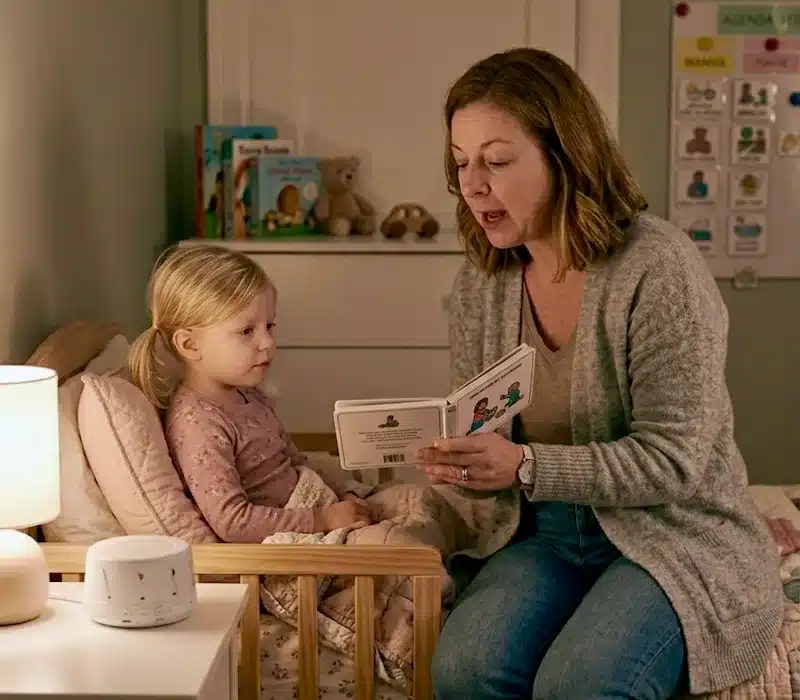
The sensory environment of the bedroom deserves the same attention as the rest of the house. Blackout curtains for children sensitive to light, white noise machines or soft music for children disturbed by environmental sounds, and appropriate bedding for tactile sensitivities all contribute to an autistic child sleep routine the nervous system can settle into reliably night after night.
For children who struggle with the transition into the bedroom itself, a brief structured closing activity such as two minutes of quiet reading together gives the child a predictable endpoint.
Some families find that the single hardest part of the bedtime sequence is not any individual step but the moment the parent leaves the room. A gradual fading approach, sitting beside the bed for several nights, then moving to a chair near the door, then to just outside the door with the door open, allows the child to adjust to increasing independence in small, tolerable increments rather than facing the full distance all at once. This kind of staged approach respects the genuine difficulty of the transition instead of treating it as something the child should simply push through.
A diagnosis is a door, not a sentence, and the right autistic child sleep routine is one of the first doors worth opening. Pediatric sleep specialists frequently point out that an autistic child sleep routine improves faster when the same steps happen in the same order, even on weekends.
8. Taking Care of Yourself Without Feeling Guilty About It

Parenting a child with significant daily support needs is demanding in ways outsiders rarely understand. Yet caregiver wellbeing is the subject most parents feel least entitled to discuss. You cannot regulate a dysregulated child from a dysregulated state. This is neuroscience, not self-help messaging. The co-regulation your child needs from you requires you to have something to offer, and that something depletes when you operate at a sustained deficit.
Self-care in this context is not about luxury. It is about the daily basics: sleep when you can get it, at least brief periods of physical movement during the week, and at least one conversation with another adult that is not about managing a crisis. A sustainable daily routine for autistic child has to include the caregiver, not just the child. Build these into your own schedule the same way you build your child’s, because they are just as non-negotiable to the functioning of your household.
Finding community matters more than most parents anticipate. Support groups for parents of autistic children, whether in person or online, reduce the specific kind of isolation that sustained caregiving produces in ways that professional support alone often cannot. Caregiver support groups exist specifically because sustaining a daily routine for autistic child during the toddler years takes a toll that is easy to underestimate from the outside.
9. Building a Daily Routine for Autistic Child That Lasts as Challenges Change
A strong daily routine for autistic child will reduce friction significantly for most families. But there are situations where daily challenges exceed what any home-based strategy can address, and recognizing those situations promptly matters.
Regression in previously mastered skills, significant self-injurious behavior, dramatic and unexplained changes in sleep or appetite, or behavioral escalation that intensifies despite consistent and sustained routine implementation are all signals to bring back to your clinical team rather than manage in isolation. No routine, no matter how well built, replaces professional evaluation when these signals appear. Progress is not linear. Brief regressions around major life transitions are expected. Sustained regression, or behavior causing harm, requires professional evaluation.
Understanding the broader developmental context helps frame these moments. The information in developmental delays in children can help you identify whether what you are observing falls within the expected range of ASD variability or represents something that needs an urgent clinical conversation. The CDC’s resources for families of autistic children also provide clear guidance on when and how to seek additional evaluation, so that your daily routine for autistic child continues to evolve alongside your child’s changing needs.
Families who keep a simple daily routine for autistic child during the toddler years journal, even a few lines a day, often spot these regression patterns sooner than they would otherwise.
Conclusion
Building a daily routine for autistic child takes patience, consistency, and a willingness to adjust as your child grows. No strategy in this post will transform everything overnight, and that is completely normal. What matters is showing up with the same framework, day after day, until predictability becomes something your child can count on. Small changes, repeated consistently, are what make the difference over time. Start with one thing. Hold it for two weeks. Then add another.
You are already doing more than you think.
👩🏻💻 👨🏻💻 Once your daily routine is in place, Part 3, feeding strategies for autistic children, tackles one of the most common daily struggles: mealtime.
👩🏻💻 👨🏻💻 And once mealtimes feel more manageable, Part 4, Autism in Children: 13 Critical School Strategies, covers what comes next: the classroom.
Looking for comprehensive guidance on caring for your baby? Our book ‘How to Care for Children: From Birth to Age 2’ combines professional childcare expertise with evidence based child development research. Written by Kelly and Peter, this guide provides clear, reliable advice rooted in real world childcare. Available in English, Spanish, and Portuguese on Amazon.
Click the link below your preferred language to get your copy!




1. How do I build a daily routine for an autistic child who actively resists structure?
Building a daily routine for autistic child who resists structure requires introducing it gradually rather than implementing a full schedule at once. Start with one or two consistent anchors, such as the morning sequence and the bedtime sequence, and add additional structure from there as your child adapts. Use visual supports rather than verbal reminders, and keep the initial routine short enough that your child can succeed at it before it expands.
2. What do I do when my autistic child has a meltdown in public?
This is one of the moments where meltdown prevention autism strategies matter most, but once a meltdown has started in public, prioritize safety first, then sensory reduction. Move toward a quieter, lower-stimulation environment as quickly as possible. Significantly reduce your own verbal output during the meltdown itself. Avoid consequences, explanations, or reasoning in the moment. Once the child is fully regulated, and only then, a brief and calm acknowledgment can help both of you integrate what happened.
3. My autistic child wakes multiple times a night. Is this common?
Yes. Disrupted sleep is among the most frequently reported challenges by parents of autistic children, and it stems from genuine physiological differences, not behavioral choices. Strengthening the autistic child sleep routine portion of your daily routine for autistic child, alongside a conversation with your child’s developmental pediatrician or a sleep specialist familiar with autism, is worthwhile.
4. What kinds of daily activities support development in autistic children?
Activities that incorporate sensory exploration, repetition, and the child’s own interests are most effective for building engagement and skill generalization. For specific developmental activity ideas across age ranges, the post on toddler activities for development offers a practical starting point that can be adapted for autistic children.
5. Are there products that help with sensory overload during daily outings?
Yes. Outings are one of the places where a sensory-friendly home autism approach needs to extend beyond your own walls. Noise-canceling headphones designed for children are one of the most consistently reported helpful tools for managing auditory overload during high-stimulation environments such as grocery stores, school events, or family gatherings.
➡️ A well-fitted pair of noise-canceling headphones gives your child an immediate way to reduce auditory overwhelm in situations where lowering the environmental noise is not possible. Check the top-rated noise-canceling headphones for children on Amazon and read verified parent reviews to find a fit and noise-reduction level appropriate for your child’s age and sensitivity profile.
6. My autistic child refuses most foods. Is this a behavior problem?
Food selectivity in autistic children is rooted in sensory processing differences far more often than in preference or defiance. Avoid forcing foods and avoid making mealtimes a conflict zone; both strategies increase food anxiety rather than expanding variety. If selectivity is severe enough to affect nutrition, a referral to a feeding therapist with autism experience is the appropriate next step.
7. How do I help my autistic child manage transitions between activities during the day?
Transitions are one of the trickiest parts of any daily routine for autistic child. Use consistent transition signals, both verbal and visual. Avoid abrupt endings: give a brief, predictable closing cue before each transition, such as two more minutes, then we put this away. Visual timers the child can see counting down are more effective than verbal countdowns alone.
8. Should I involve siblings in supporting an autistic child’s routine?
Yes, with appropriate framing and realistic expectations. Siblings who understand why consistency matters, explained in simple and age-appropriate terms, often become natural allies in maintaining the routine’s structure. Avoid placing siblings in a caretaking role; their job is to be children, not co-therapists.
9. Is it normal for daily care to feel overwhelming?
It is nearly universal among parents of children with significant support needs, especially in the early years after diagnosis, while you are still building the right daily routine for autistic child for your family. Feeling overwhelmed does not mean you are doing it wrong. It means you are doing something genuinely demanding. Reaching out for support is not a sign that you are failing. It is the most practical thing you can do for your child’s long-term care, and for your own strength as a family.