

Medical note: This article is for education only and does not replace medical advice from your pediatrician. Read our Medical Disclaimer.
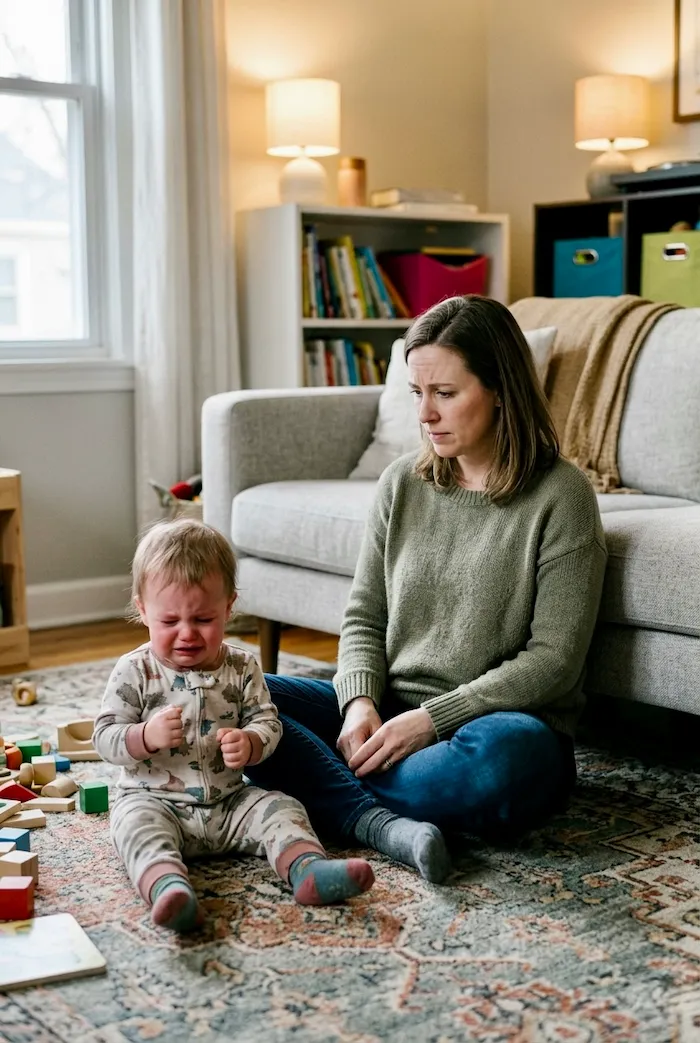
It is 7:30 in the evening. Your toddler has knocked over a full cup of water for the third time today, screamed through dinner, and just threw a toy across the room. You are exhausted, overstimulated, and running on empty. In that moment, the instinct to yell, to grab, to lose control feels almost impossible to fight.
You are not a bad parent for feeling that way. Every parent reaches that edge.
What matters is what happens next.
Positive discipline for toddlers is not about being a perfect parent who never raises their voice. It is about having a set of real, practical tools that work better than yelling or physical punishment, not just for your child, but for you too. The research is clear, the pediatric community is aligned, and thousands of parents who have made the shift will say the same thing: positive discipline for toddlers works, and it changes everything about how your home feels on the hardest days. When you understand how to discipline a child without hitting or yelling, you stop reacting from exhaustion and start responding from intention.
This post will walk you through what positive discipline for toddlers actually means, why it is more effective than traditional punishment, and exactly how to apply gentle parenting techniques from infancy through age two.
Disclosure: This post contains affiliate links. If you make a purchase through these links, we may earn a small commission at no additional cost to you. This helps us keep providing free, quality content for parents everywhere.
Written by Kelly, Childcare Specialist, and Peter, Researcher and Child Development Advocate.
Table of Contents
What Positive Discipline for Toddlers Actually Means (And What It Does Not)
A lot of parents hear positive discipline and immediately picture a child who does whatever they want while the parent smiles and nods. That misunderstanding keeps many families from accessing one of the most effective approaches to early childhood behavior available today.
Positive discipline for toddlers means setting clear, consistent boundaries while responding to misbehavior in a way that teaches rather than punishes. It is built on the understanding that children between birth and age two are not being defiant on purpose. Their brains are not developed enough for intentional manipulation. What looks like bad behavior is almost always an unmet need, an overwhelming emotion, or simple developmental curiosity pushing against a world they do not yet understand.
Children in this age range are building secure attachment, the emotional foundation they will carry into every relationship for the rest of their lives. How you respond to their behavior right now is not just about today’s tantrum. It is building a template for how they believe the world works, whether the people who love them can be trusted, and whether their own emotions are safe to feel.
Authoritative parenting, which is what positive discipline is rooted in, is actually firmer in its boundaries than many parents expect. The difference is not the presence of rules. It is the absence of fear as the enforcement mechanism.
Developmentally appropriate expectations are a core part of this approach. A 10-month-old who grabs your phone is not misbehaving. A 2-year-old who screams when you take away a toy is not a problem child. These are normal behaviors for their stage of neurological development. When parents understand what is developmentally typical, they stop reacting to normal behavior as if it were a personal attack, and that reframe alone transforms the emotional climate at home.
Child-led learning looks different in practice than it sounds in theory. When a toddler touches something dangerous, you do not scream or smack their hand. You firmly say no, get down to their level, redirect their attention, and remove the object. You do it the same way every time, with the same words and the same calm tone. The repetition is the lesson. Behavioral boundaries communicated this way are far more effective than those delivered through pain or fear, because the child learns the rule rather than simply fearing the consequence.
Why Yelling and Hitting Make Toddler Behavior Worse, Not Better
Here is what happens in a toddler’s brain when you yell.
Their nervous system interprets a raised, angry voice as a threat. The stress hormone cortisol spikes immediately. The prefrontal cortex, already significantly underdeveloped at this age, shuts down further under stress. The child is now in survival mode, not learning mode. Whatever lesson you were trying to teach has been overridden by their biological threat response. No amount of explanation will penetrate that state, because the part of the brain that processes behavioral lessons is temporarily offline.
Fear-based compliance can look like it works in the short term. The child stops. They freeze. They may cry and seem remorseful. But what they have learned is not I should not do that because it is wrong. What they have learned is I should not do that when my parent is watching. That distinction matters enormously when your child is older and making decisions without you present. Toddler behavior without punishment as the primary driver tends to be more internally motivated over time, which is the actual long-term goal.
The American Academy of Pediatrics stated clearly in 2018 that spanking, hitting, and all other forms of physical punishment are ineffective and harmful. Their research links physical discipline to increased aggression, elevated anxiety, lower self-esteem, and measurable damage to the parent-child relationship. There is no safe level of physical punishment for a child under two. You can read the full AAP guidance on discipline and spanking at HealthyChildren.org.
Behavioral escalation is a predictable consequence of fear-based discipline. Children disciplined primarily through fear tend to push harder against limits as they grow, not less. The toddler who is hit for hitting does not learn that hitting is wrong as a value. They learn that hitting is what you do when you are bigger and more frustrated than the other person.
Emotional dysregulation in parents transmits directly to children through co-regulation. Toddlers look to their caregiver’s nervous system as a reference for how alarmed they should be. When you escalate, their escalation follows. When you stay calm, you are offering your child’s nervous system something to borrow. That borrowed calm is one of the most effective gentle parenting techniques available to any parent in any moment.
How to Discipline a Child Without Hitting: Techniques That Work by Age
Learning how to discipline a child without hitting is not a single technique applied once and mastered. It is a layered approach that evolves as your child’s brain and emotional capacity develop. Understanding what works at each stage is essential to applying positive discipline for toddlers effectively.
0 to 3 Months: There Is Nothing to Discipline
A newborn cannot misbehave. Crying is their only form of communication, and it is always legitimate. Responding promptly to a newborn’s cries does not spoil them. It builds the secure attachment that is the foundation of every positive discipline strategy you will use later.
4 to 6 Months: Begin With Tone and Consistency
Babies at this stage read your emotional tone accurately. They do not understand words, but they understand energy, facial expression, and the quality of your voice. Start using a calm, firm tone when redirecting unwanted behavior, and a warm, enthusiastic voice when reinforcing behavior you want to see more of. The habits you build now in how you communicate will serve every stage of positive discipline for toddlers that follows.
7 to 12 Months: Redirection Is Your Primary Tool
Your baby is mobile, curious, and has zero impulse control. That is not a character flaw. It is normal. When they crawl toward something dangerous, move them gently and offer something else immediately. Do it consistently, without anger and without lengthy explanation. Natural consequences work well here when safe and immediate. If they throw food off the tray, the food is gone. They are beginning to understand cause and effect, and that understanding is the seed of toddler behavior without punishment becoming the default in your home.
1 Year: Simple, Consistent Language and Positive Reinforcement
At 12 months, toddlers understand far more than they can express. Keep instructions short and consistent: No touch. Hot. Gentle hands. We do not hit. Use the same words every time, in the same calm tone. Consistency is the mechanism through which toddlers learn rules.
Positive reinforcement is one of the most underused tools in how to discipline a child without hitting. When your toddler shares, uses gentle hands, or follows a simple instruction, name it specifically: You were so gentle with the baby. That was kind. Specific, immediate praise is far more effective than a generic good job.
2 Years: Choices, Boundaries, and Time-In
Two-year-olds are wired to assert independence. Every unnecessary power struggle is energy spent on the wrong battle. Offer controlled choices instead: Do you want to put on your shoes first or your jacket? Both options are acceptable to you. The child feels autonomy. You both move forward.
When behavior escalates, a time-in, where you remain with the child while they calm down rather than isolating them, is more effective than a traditional time-out for children under three. Young children cannot regulate emotions alone. Time-ins keep the relationship intact while still creating a pause in the problematic behavior.
For more detailed strategies on toddler meltdowns, our post on toddler tantrums goes deeper into exactly what works in the heat of the moment.
Gentle Parenting Techniques That Build Long-Term Trust
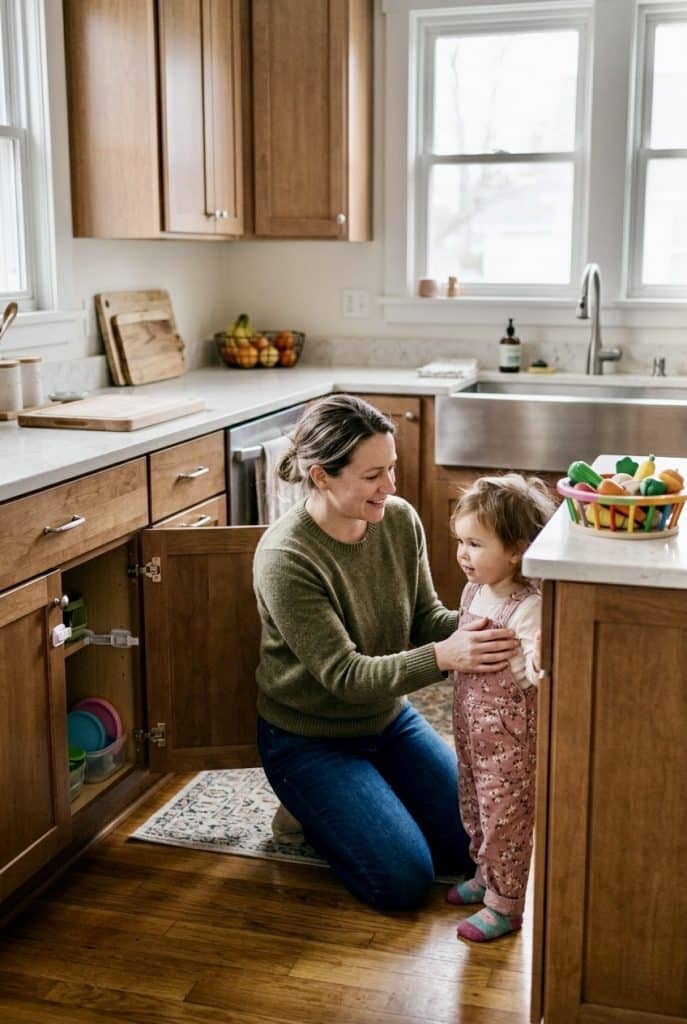
Gentle parenting techniques are sometimes dismissed as too soft or unrealistic for parents with real demands. Parents worry that validating a child’s feelings means accepting bad behavior. These two things have nothing to do with each other.
You can validate a feeling and still hold a boundary firmly. I understand you are angry that we are leaving the park. It is hard to stop something fun. We are still leaving. That sentence names the emotion, acknowledges it as real, and holds the limit without wavering. Children who hear their emotions named and validated are more likely to cooperate over time, because they do not need to escalate in order to feel understood.
Emotional validation is not about surrendering the boundary. It is about making sure the child knows their inner experience is seen by someone safe. Children who feel consistently seen develop stronger emotional intelligence, better impulse regulation as they grow, and more resilient relationships. This is one of the most supported outcomes in attachment theory research, and it is accessible through simple daily interactions.
Empathic response with a toddler does not require long speeches. Often it is just a word and a touch. Getting to eye level, using their name, making calm physical contact, and speaking in a low, steady voice does more to de-escalate a tantrum than any lecture. Your tone and body language reach your child before your sentences do.
One of the most underused gentle parenting techniques is the repair. When you lose your patience, and you will, coming back to your child afterward matters enormously. I got too loud earlier. That was not okay. I love you. This models exactly what you want them to do when they hurt someone, and it shows them that relationships survive ruptures. Attachment theory tells us that children need parents who repair, not parents who are perfect.
For more on creating the environment where positive discipline for toddlers can thrive, our post on childcare basics for healthy child development covers the foundational elements that support everything discussed here.
The Role of Emotional Regulation for Parents in Raising Calm Children
No positive discipline strategy works consistently if the parent applying it is dysregulated. That is not a criticism. It is neuroscience.
Your child’s nervous system mirrors yours in real time. When you are flooded with frustration or stress, your child’s body registers that state as danger. Their cortisol rises. Their ability to receive calm guidance drops to near zero. Emotional regulation for parents is therefore not a self-care add-on. It is a direct component of how to discipline a child without hitting or yelling, because the calm you bring into the room is the first intervention, before any words are spoken.
Parental self-regulation is not about suppressing emotions. It is about recognizing the moment before you reach your limit and having a plan for that window. Most parents can identify their own escalation signals once they pay attention. A tightening in the chest. A sudden rise in volume. A feeling of heat in the face. These are physiological cues that the nervous system is activating, and they are the precise moment when a brief pause is most valuable.
Some of what helps emotional regulation for parents is physical and immediate. Taking one slow breath before responding rather than reacting. Deliberately lowering your voice, which has a measurable calming effect on both you and your child. Unclenching your jaw and dropping your shoulders. These are not clichés. They are physiological interventions that shift your autonomic nervous system state within seconds.
Some of what helps is a brief mental reframe: This is a child. They are not doing this to me. They do not have the neurological development to regulate this on their own yet. Practiced enough times, that reframe becomes automatic. It becomes the default response rather than something you must consciously choose under pressure.
Mindful parenting does not require a meditation practice. It requires paying attention to your own internal state for even one second before you act. That one second is where the choice between reacting and responding lives. Gentle parenting techniques are most effective when delivered from a place of even partial calm, and emotional regulation for parents is what makes that possible in the real conditions of daily family life.
If stress is consistently overwhelming your ability to parent the way you want to, our post on self-care for overwhelmed parents offers practical strategies for parents who are genuinely running on empty.

How Your Daily Habits Shape Who Your Child Becomes
Children do not learn from what you tell them to do. They learn from watching what you do, consistently, in the unscripted ordinary moments when you are not thinking about parenting at all.
Behavioral modeling is active every moment your child is present, whether you intend to teach or not. The way you speak to your partner when frustrated. The way you react when something goes wrong. The way you treat people who disappoint you. Your child is absorbing all of it and building their understanding of how human beings treat each other when things are hard. The family climate you create through your daily behavior is the deepest curriculum your child will ever receive.
A child who grows up watching adults resolve conflict by yelling learns that yelling is how conflict gets resolved. A child who watches adults apologize sincerely, express emotions with words, and repair relationships learns that those tools exist and are available. Observational learning at this age is not passive. It is foundational, and it operates whether or not you think about it consciously.
Beyond the example you set through words and reactions, the physical environment you create also shapes your child’s sense of safety. Smoking in the presence of a baby or toddler carries documented health risks, including increased rates of respiratory illness, ear infections, and sudden infant death syndrome. If you smoke, doing so outdoors and washing hands before handling the child meaningfully reduces exposure.
The presence of alcohol in a young child’s environment also deserves honest consideration. An environment where alcohol is regularly associated with unpredictable mood changes or emotional unavailability registers to a young child as fundamentally unsafe, even when nothing overtly harmful occurs. The nervous system of a child living in chronic unpredictability remains in a state of low-level alarm that is incompatible with the secure attachment positive discipline for toddlers is built to support.
Arguments between adults, raised voices, and the kind of tension that fills a room without words affect children in the 0 to 2 age range even when no one addresses the child directly. Their nervous systems read the room. The family climate created by adult habits shapes everything, including how accessible gentle parenting techniques are when you need them most.
When Parents Are Struggling: Seeking Help Is a Sign of Strength
Some parents reading this are carrying things that go far beyond the daily difficulty of toddler tantrums. Unresolved mental health challenges, including anxiety, depression, unprocessed trauma, and anger management difficulties, do not make someone a bad parent. They make someone a human being parenting without the support they need.
Parental mental health directly affects children in measurable ways. When a parent gets help and begins to stabilize, the child benefits immediately and concretely. You do not need to be fully healed to be a good parent. You need to be honestly moving toward support.
If mental health challenges are affecting your ability to stay calm, connect with your child, or apply the gentle parenting techniques you genuinely want to use, please speak to your doctor. Therapy works. Cognitive behavioral therapy has strong evidence for helping parents manage the specific triggers that lead to reactive parenting. Medication, when appropriate, works. Peer support works. Asking for help is not a sign of failure. It is a sign that you understand what your child needs. The National Institute of Mental Health offers free resources on mental health support for parents and caregivers.
If substance use is part of your current reality and you know it is affecting your parenting, that awareness matters. Reaching out to a counselor, a support group, or a trusted physician is the next step, and it does not require having everything figured out first. Emotional regulation for parents who are navigating substance use challenges cannot be managed through willpower alone. It requires structured professional support.
Children need present, regulated, emotionally available adults. Getting help to become that adult more consistently is not separate from positive discipline for toddlers. It is the foundation of it.
For parents navigating the emotional weight of early parenthood, our post on baby blues versus postpartum depressionhelps distinguish between normal adjustment difficulty and something that needs professional attention.
Conclusion
Positive discipline for toddlers is not a parenting approach for parents who have everything figured out. It is a set of real tools for parents who are trying hard, who lose their patience sometimes, who are carrying their own history into the room, and who want something better for their children than what fear and pain can produce.
The children in your care are building their entire understanding of relationships, emotional safety, and their own worth during these first two years. What you do in the ordinary, tired, frustrated moments matters more than you may realize.
You do not have to be perfect. You have to be present, willing to repair when you fall short, and committed to learning alongside your child. Positive discipline for toddlers, applied imperfectly and consistently, is one of the most powerful gifts you can give the person your child is becoming.
That is enough.
Looking for comprehensive guidance on caring for your baby? Our book ‘How to Care for Children: From Birth to Age 2’ combines professional childcare expertise with evidence-based child development research. Written by Kelly and Peter, this guide provides clear, reliable advice rooted in real-world childcare. Available in English, Spanish, and Portuguese on Amazon.
Click the link below your preferred language to get your copy!



1. What is positive discipline for toddlers and how is it different from permissive parenting?
Positive discipline for toddlers is a structured, evidence-based approach to guiding children’s behavior through clear limits, consistent consequences, and emotional connection rather than fear or pain. It is the direct opposite of permissive parenting, which avoids consequences in the name of avoiding conflict. Positive discipline for toddlers holds firm boundaries while treating the child with dignity at every stage. The goal is to teach expected behavior rather than simply punish the unexpected, which produces children who internalize values rather than simply avoiding punishment when adults are watching.
2. How do I discipline a child without hitting when nothing else seems to work?
When redirection and calm boundaries feel ineffective, the most common issue is inconsistency. Toddlers need the same response to the same behavior every single time to build a reliable association. If yelling or physical punishment occasionally happens when frustration peaks, the child learns that escalation eventually changes the outcome. Committing to consistent, calm responses takes two to three weeks of unbroken practice before a measurable shift appears, but the behavioral change that follows is lasting in a way that fear-based compliance never is.
3. Is it normal to feel like I want to yell or lose control with my toddler?
Completely normal. Parenting a toddler is one of the most physically and emotionally demanding roles a human being can occupy. Feeling the impulse to yell does not make you a bad parent. Acting on it repeatedly without attempting to develop different responses is what creates lasting harm, not the feeling itself. If you are regularly losing control in ways that frighten you or your child, that is a signal that you need more external support, not more willpower.
4. At what age can toddlers understand consequences?
Children begin making simple cause-and-effect connections around 8 to 10 months. By 18 months, they can begin to understand simple, immediate consequences that follow directly from their behavior. Abstract or delayed consequences are too removed in time for children under three to connect meaningfully to their current behavior. Toddler behavior without punishment relies primarily on natural consequences, immediate redirection, and consistent limit-setting rather than complex conditional systems.
5. What should I do when my toddler hits me or another child?
Stop the behavior immediately with a firm, calm voice. Get to eye level and say clearly: We do not hit. Hitting hurts. Do not hit back, even lightly, as it sends a direct contradictory message. If the behavior continues, remove the child from the situation calmly. Knowing how to discipline a child without hitting when they themselves are hitting is one of the most common and genuinely challenging situations parents face, and consistent, calm repetition every single time is the most effective long-term response.
6. How does my emotional state affect my toddler’s behavior?
Toddlers co-regulate, using their caregiver’s nervous system as a reference for their own level of calm or alarm. When a parent is visibly anxious or angry, the child’s stress response activates in direct response. When a parent stays calm even in a difficult moment, the child has a physiological pathway to settle that they would not otherwise have.
7. Should I ever use time-outs with a toddler?
Traditional time-outs, where a child under three is isolated to regulate on their own, are generally less effective than time-ins for this age group. Young children do not yet have the capacity for independent emotional regulation. Isolation removes the one resource they need most: a calm, regulated adult. A brief pause from an activity with the parent physically present is more developmentally appropriate and more consistent with gentle parenting techniques that build trust rather than fear.
8. Is it ever okay to raise my voice with my child?
A firm, serious tone is meaningfully different from yelling in anger. Using a clear, elevated voice to communicate genuine urgency in a dangerous situation is appropriate and sometimes necessary. Habitual yelling as a discipline strategy is both ineffective and harmful to the child’s neurological development over time. The distinction that matters is tone, intention, and frequency.
9. How do I handle public meltdowns without losing control myself?
Lower your expectations for what you can teach in that moment. The priority is safety and reducing stimulation, not delivering a lesson. Move toward a quieter space if possible, speak softly, and stay physically close. Once the child is calm, the incident is over. There is no productive use of extended explanation or public consequence for a child under two who has melted down. Your calm presence during the storm is the intervention.
10. What should I do if I realize my own childhood trauma is affecting how I parent?
Recognizing the pattern is the hardest and most important part. Many parents unconsciously replicate the discipline patterns they experienced as children because those are the only models they have. Working with a therapist who specializes in parenting or early childhood trauma can help you build genuinely different responses. Positive discipline for toddlers becomes significantly more accessible when parents have support to work through what they themselves experienced. You do not have to pass on what was passed to you.
