

Picture this: you have just given birth. You are exhausted, emotional, and completely in love with this tiny person in your arms. Then a nurse walks over and says it is time for the vitamin K shot for newborns. Maybe you already know what it is. Maybe you have read something online that made you hesitate. Maybe you are just too tired to ask questions right now.
Whatever you are feeling in that moment, you deserve real answers, not medical jargon, not pressure, and not fear. Just honest, straightforward information that helps you make the best choice for your baby. That is exactly what this post is here to give you.
Understanding why newborns need vitamin K at birth starts with one simple truth: every single baby, no matter how healthy the pregnancy was, is born without enough vitamin K to protect itself from bleeding. This is not rare. It is not caused by anything you did or did not do. It is simply how newborn biology works. When it is skipped, the result can be a serious condition called vitamin K deficiency bleeding in babies, which can cause dangerous, hidden bleeding in the first weeks and months of life.
As co-authors of How to Care for Children: From Birth to Age 2, we have spent years supporting families through exactly these kinds of decisions. We are not here to lecture you. We are here to make sure you have the full picture before you leave that hospital room.
A JAMA study examining more than 5 million births through 2024 found that over 5% of U.S. babies did not receive the vitamin K shot for newborns at birth, a number that had grown by 77% since 2017. Behind every one of those numbers is a real family. This post is for them, and for you.
Disclosure: This post contains affiliate links. If you make a purchase through these links, we may earn a small commission at no additional cost to you. This helps us keep providing free, quality content for parents everywhere.
Written by Kelly, Childcare Specialist, and Peter, Researcher and Child Development Advocate.
Table of Contents
1. What the Vitamin K Shot for Newborns Actually Does Inside Your Baby’s Body
When you hear about this injection, it probably sounds like just another item on the hospital checklist. But once you understand what this tiny injection actually does inside your baby’s body, it stops feeling routine and starts feeling essential.
Vitamin K helps blood clot. When you cut yourself, your body sends out proteins that rush to the wound and seal it up. Vitamin K is what activates those proteins.
In adults, we get vitamin K from food and from the bacteria living in our gut. But a newborn’s gut is brand new, there are no bacteria in it yet, and their tiny liver is still learning how to do its job. That means babies are born without the tools they need to stop bleeding on their own.
Vitamin K deficiency bleeding in babies is what happens when this gap goes unaddressed. It is a condition that can develop quietly, with no visible signs, and become very serious very fast. This injection fills that gap immediately. It delivers a concentrated dose of vitamin K directly into the baby’s outer thigh muscle, where it is slowly absorbed and stored in the liver, keeping the baby protected through those first vulnerable months.
It is also worth knowing that vitamin K was considered such an important medical discovery that the scientists who found it were awarded the Nobel Prize back in 1943. It has been protecting babies for over 60 years based on that same discovery.
So why is every baby born without enough vitamin K? The next section explains it in plain terms.
2. Why Newborns Need Vitamin K at Birth and Why Their Bodies Cannot Produce Enough
This is the question most parents want answered first: if my baby is healthy, why would they be missing something so important?
The answer comes down to three simple reasons, and none of them have anything to do with how healthy your pregnancy was.
Reason one: vitamin K does not travel well through the placenta. During pregnancy, the placenta passes nutrients from you to your baby. Most vitamins make that journey just fine. Vitamin K, however, barely crosses at all. Even if you eat spinach and kale every single day, almost none of that vitamin K reaches your baby before birth. This is one of the main reasons why newborns need vitamin K at birth from an outside source.
Reason two: your baby’s liver is not ready yet. Even the small amount of vitamin K a newborn does have cannot be fully used, because the liver, which is responsible for activating the clotting process, is still developing. It is like having a car but no key to start it. This is exactly why newborns need vitamin K at birth delivered directly, bypassing the liver issue entirely.
Reason three: there are no gut bacteria yet. In adults, the bacteria living in our intestines help produce vitamin K every day. A newborn’s gut is completely sterile at birth. Those helpful bacteria take weeks to grow. Until they do, your baby has no way to make its own vitamin K. This is the third reason why newborns need vitamin K at birth, and it is the one most people have never heard about.
None of those three reasons have anything to do with how carefully you ate, how healthy your pregnancy was, or how strong your baby looks at birth. Every newborn arrives without the protection they need. That is simply the biology.
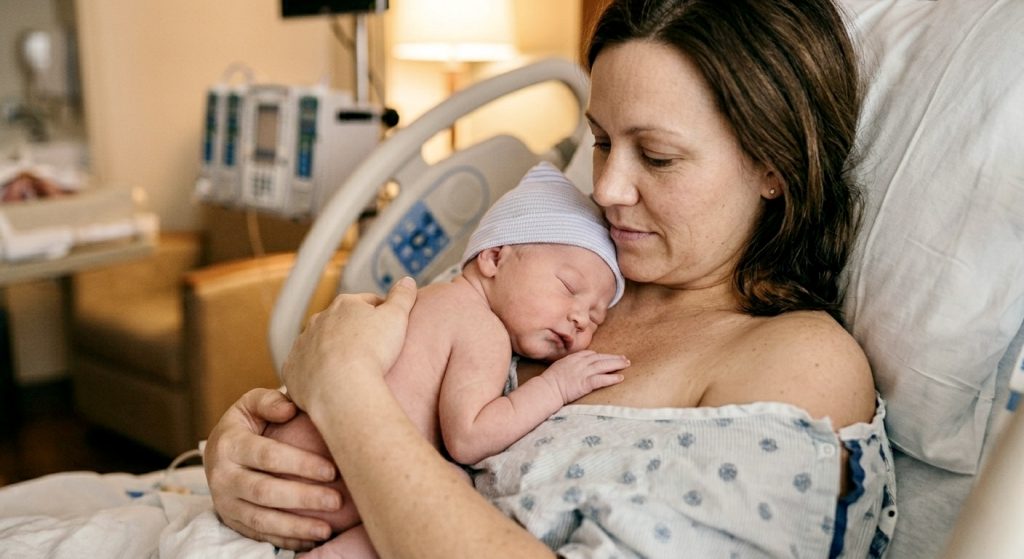
3. The Real Scale of Vitamin K Deficiency Bleeding in Babies That Most Parents Never Hear About
Here is something that catches many parents off guard: a baby who skips the vitamin K shot for newborns can look perfectly fine for weeks. No symptoms, no warning signs, just a happy, feeding, growing baby. And then, without any warning at all, something goes very wrong.
Vitamin K deficiency bleeding in babies, often called VKDB by doctors, can happen in three different windows of time. Some cases show up in the first day of life. Some happen in the first two weeks. But the most dangerous kind, late-onset VKDB, can appear anywhere between one week and six months after birth, and it almost never comes with a warning.
According to the Centers for Disease Control and Prevention, babies who do not receive the vitamin K shot for newborns are 81 times more likely to develop this late-onset bleeding than babies who do. Let that number sink in for a moment. Eighty-one times. And according to the same source, 1 in every 5 babies who develops vitamin K deficiency bleeding in babies will not survive.
The most heartbreaking cases involve bleeding inside the brain. There are no bruises to see, no obvious injury. The baby simply starts acting differently, maybe fussier than usual, maybe sleeping too much, maybe not feeding well. By the time parents realize something is seriously wrong and reach the emergency room, the damage is already done in many cases.
This is not meant to scare you. It is meant to make sure you have the full picture of what happens if baby doesn’t get vitamin K, because that information is rarely explained clearly in the delivery room.
The parents who wonder what happens if baby doesn’t get vitamin K almost always decline because they have heard something that worried them.
4. The 5 Most Dangerous Myths About the Vitamin K Injection That Keep Spreading Online
Social media has made it incredibly easy for well-meaning but inaccurate information to reach millions of parents overnight. The myths that make parents question is the vitamin K injection safe for babies are some of the most widespread, and some of the most dangerous, because they feel convincing and come from people who genuinely believe they are helping.
Myth 1: The Vitamin K Shot Causes Childhood Leukemia
This is probably the most frightening claim, and it has been around since a single study published in 1990 suggested a possible link. The problem is that every large, well-designed study done since then has found no such link. Researchers looked at hundreds of thousands of children and found no connection between the vitamin K shot for newborns and cancer of any kind. The American Academy of Pediatrics reviewed all of this evidence in their 2022 update and was very clear: the injection does not cause leukemia.
Myth 2: The Shot is Full of Toxic Ingredients
Some parents worry about a preservative called benzyl alcohol that appears in certain formulations of the injection. The amount in a single newborn dose is so small it falls far below any level that has ever been shown to cause harm. Many hospitals also offer a preservative-free version. When parents ask whether is the vitamin K injection safe for babies because of ingredients, the answer, backed by decades of research, is yes.
Myth 3: Delayed Cord Clamping Covers It
Delayed cord clamping is real, beneficial, and worth doing. It helps with iron levels and is recommended by many pediatricians. But it has nothing to do with vitamin K. The blood that passes through the cord does not carry enough vitamin K to make any meaningful difference. These are two separate practices, and one does not replace the other.
Myth 4: Eating Well During Pregnancy Protects the Baby
As we explained in the previous section, vitamin K barely crosses the placenta at all. A mother can eat perfectly throughout her entire pregnancy and still deliver a baby with very low vitamin K levels. This is not a nutrition failure. It is simply how the human body works, and it is precisely why newborns need vitamin K at birth through a direct injection rather than through what the mother eats.
Myth 5: The Oral Version Works Just as Well
The oral alternative exists. Some countries use it. The problem is that it requires multiple doses given precisely on schedule, and absorption is not guaranteed. One missed dose is enough to leave a window open. The injection closes that window in a single visit.
Each of these myths raises doubt about is the vitamin K injection safe for babies. But is the vitamin K injection safe for babies? The answer, from over 60 years of real-world use, is what you will find in the next section.
5. Is the Vitamin K Injection Safe for Babies? What Six Decades of Research Confirm
If there is one question every parent asks before agreeing to any procedure for their newborn, it is this one: is the vitamin K injection safe for babies? You deserve a straight answer, not a deflection.
Yes. It is safe.
It has been recommended by the American Academy of Pediatrics since 1961. That is more than 60 years of continuous use, monitoring, and research in hospitals all over the world. The World Health Organization also recommends it for every newborn everywhere. The most recent AAP policy statement, published in Pediatrics in 2022, went through all of the existing research and came back with the same conclusion it has always reached: the injection is safe, effective, and important.

What the 2022 AAP Review Actually Found
The 2022 update was written specifically to address parent concerns, which means it directly answered the questions you are probably asking right now.
Does it contain mercury? No. Is the dose too large for a tiny baby? No, it has been carefully calculated for newborn body weight. Is the preservative dangerous? No. Does it cause cancer? No. Is the vitamin K injection safe for babies born early? Yes, with a smaller adjusted dose. Is the vitamin K injection safe for babies who are jaundiced? Yes.
The side effects that do occasionally happen are mild: a little redness or tenderness at the spot where the injection was given, which fades quickly. Serious reactions are extremely rare, far rarer than the risk of the bleeding condition the shot prevents.
For parents who want to understand the full picture of what their newborn will receive in those first hours of life, looking at the bigger immunization plan can be really reassuring.
Wondering which vaccines your newborn will receive and when? Read our complete guide to your baby’s vaccination schedule to understand every step of early preventive care.
Now that we have established the safety picture clearly, it is time to look honestly at the other side. What happens if baby doesn’t get vitamin K? The next section does not sugarcoat it.
6. What Happens If a Baby Doesn’t Get the Vitamin K Shot
This is the part of the conversation that often gets left out in the delivery room, because nobody wants to frighten a new parent. But you came here for honest information, so here it is.
When a baby doesn’t get vitamin K, nothing bad usually happens right away. The baby goes home, feeds well, sleeps, and seems completely fine. For days, sometimes weeks. This is part of what makes the decision feel safe to many parents who decline it. If nothing bad is happening, the thinking goes, maybe the risk was overstated.
But what happens if baby doesn’t get vitamin K is that the window of danger does not close. It stays open for up to six months. And when vitamin K deficiency bleeding in babies does strike during that time, it often starts with signs that look like ordinary newborn fussiness: not feeding as well as usual, sleeping more than normal, a little more irritable than the day before.
Then things can escalate very quickly. Seizures. Unusual bruising appearing from nowhere. Bleeding from the nose, the mouth, or the belly button. A soft spot on the head that feels swollen or tense. By the time a family reaches the emergency room with these signs, the bleeding has often already reached the brain.
Doctors do everything they can. They give high doses of vitamin K, blood transfusions, and sometimes surgery. But the sad reality is that in many of these cases, the damage to the brain cannot be undone. Some babies survive with lifelong disabilities. Some do not survive at all.
This is what happens if baby doesn’t get vitamin K in the worst-case scenario. It does not happen to every unprotected baby, but there is no way to know in advance which babies it will happen to. These are the cases that make it into the medical literature. They are not hypothetical.
Knowing the warning signs can make a real difference if you are ever worried about your baby.
Learn which symptoms require urgent medical care from the very first days of life. Read our complete guide to newborn illness warning signs that every parent must recognize.
If you are a parent who declined the vitamin K shot for newborns for a previous child and everything turned out fine, please know that luck is not the same as safety. And if you are reading this because something did go wrong, there is no judgment here. You made the best decision you could with the information you had.
Not sure when a symptom is serious enough to go to the ER? Read our guide on when to take your baby to the emergency room and learn every scenario you need to know.
7. How Breastfeeding Affects Your Baby’s Vitamin K Levels and What You Can Do About It
Breastfeeding is one of the most beautiful and beneficial things you can do for your baby. It protects against illness, supports brain development, and builds a bond that nothing else quite replicates. But there is one honest limitation that every breastfeeding parent deserves to know about, and it connects directly to why newborns need vitamin K at birth.
Breast milk is naturally low in vitamin K. Not because there is something wrong with it, but because that is simply how human milk is made. Formula, on the other hand, is fortified with vitamin K during manufacturing. This means that a baby who is exclusively breastfed and does not receive it is at a higher risk of vitamin K deficiency bleeding in babies than a baby who is formula-fed.
The same three reasons why newborns need vitamin K at birth apply here with extra importance. The placenta did not pass along enough vitamin K. The liver is still developing. And now, breast milk, which is doing so many wonderful things for your baby, is not able to make up for the gap in vitamin K. Breastfeeding and this injection are not competing choices. They work together.
Some mothers ask whether eating more vitamin K-rich foods or taking a supplement can change their breast milk enough to protect their baby. It is a thoughtful question, and the honest answer is: not enough to be protective. Eating more leafy greens or taking vitamin K2 supplements can slightly increase the vitamin K in your milk, which is a good thing for your own health and a small bonus for your baby. But it does not come close to replacing the protection offered by the injection.
➡️ Supporting your nutritional health while breastfeeding benefits both you and your baby. See the Natures Craft Kids Vitamin D3 K2 Drops – Organic Vitamin D for Kids for Strong Bones & Joints and the Natures Craft Liquid Vitamin D3 with K2 for Adults – Organic Drops 2000IU per Serving Vegan Bone Muscle Heart & Immune Support MCT Oil Enhanced Absorption – 2Fl Oz. on Amazon.com
For everything else you need to know about caring for your newborn in those first weeks, we have put together a guide that covers it all.
Want to feel fully prepared for every aspect of caring for your newborn? Read our complete guide to essential newborn baby care tips that every new parent needs from day one.

8. What to Expect During the Vitamin K Shot and How to Comfort Your Newborn Afterward
For a lot of parents, the hardest part of agreeing to it is not the science or the statistics. It is the thought of watching someone give their brand-new baby a needle in the first hour of life. That is such an understandable feeling. You just met this person. Your whole instinct is to protect them.
So here is exactly what happens, step by step.
The injection goes into the outer thigh muscle, which is the safest and most effective spot for a newborn. The nurse will hold your baby’s leg gently, clean the area, and give the injection. The whole thing takes about three seconds. Most babies cry for a moment and then stop, especially if they are being held or are skin-to-skin with a parent immediately after.
How to Comfort Your Baby Before, During, and Right After
Hold your baby skin-to-skin. Research consistently shows that babies who are held skin-to-skin during minor procedures cry less and settle faster. If your hospital allows it, ask whether it can be given while your baby is on your chest. Many hospitals already do this as standard practice, but it never hurts to ask.
Nurse right after, or offer a pacifier. The act of suckling is one of the most powerful calming tools a newborn has. Whether you are breastfeeding or using a pacifier, offering it immediately after the shot helps your baby settle much more quickly.
Ask about sweet water. Some hospitals dip a pacifier in a small amount of sugar water before the injection. Studies show this actually reduces how much pain a newborn feels during a procedure. It sounds almost too simple, but it works.
Three seconds of discomfort. Six months of protection. That is what this injection offers, and most parents who were anxious about it beforehand describe it afterward as much less dramatic than they expected.
Keeping a record of everything your baby receives in those early days is something a lot of parents wish they had started from day one.
➡️ Keep every vaccination, procedure, and health milestone organized from birth. See My Child’s Health Record Keeper (Log Book) on Amazon.com

Conclusion
If you have made it to the end of this post, you now know more about the vitamin K shot for newborns than most parents do when they walk into the delivery room. And that matters.
This decision is not about following rules or trusting blindly in the medical system. It is about understanding why newborns need vitamin K at birth, what vitamin K deficiency bleeding in babies actually looks like, and what happens if baby doesn’t get vitamin K when something goes wrong.
It is about a 60-year track record of safety. It is about 81 times more risk for babies who skip it. It is about a three-second procedure that stands between your baby and a danger that strikes silently and without warning.
The decision is yours, and it always will be. We just want to make sure you make it with your eyes open.
Looking for a trusted, comprehensive guide to caring for your newborn from birth to age two? Read our guide to essential baby care for new parents and start your journey fully prepared.
Looking for comprehensive guidance on caring for your baby? Our book ‘How to Care for Children: From Birth to Age 2’ combines professional childcare expertise with evidence based child development research. Written by Kelly and Peter, this guide provides clear, reliable advice rooted in real world childcare. Available in English, Spanish, and Portuguese on Amazon.
Click the link below your preferred language to get your copy!


1. What is the vitamin K shot for newborns?
The vitamin K shot for newborns is a small injection given to your baby within the first hour after birth, usually in the outer thigh. It contains a concentrated form of vitamin K that helps your baby’s blood clot properly. Without it, babies are at risk for a dangerous condition called vitamin K deficiency bleeding in babies, which can cause serious internal bleeding in the first months of life. The American Academy of Pediatrics has recommended this shot for every newborn since 1961.
2. Why do newborns need vitamin K at birth if they were born healthy?
Even a perfectly healthy baby is born with very low vitamin K levels. This is why newborns need vitamin K at birth: vitamin K barely passes through the placenta during pregnancy, the newborn liver is still too immature to fully use what little vitamin K is available, and the gut has not yet developed the bacteria that help produce it. None of this is anyone’s fault. It is simply how newborn biology works, and the injection is the safe, simple solution.
3. What is vitamin K deficiency bleeding in babies?
Vitamin K deficiency bleeding in babies, or VKDB, happens when a baby’s blood cannot clot properly because there is not enough vitamin K in their system. It can show up in the first day of life, in the first two weeks, or as late as six months after birth. The most dangerous form, late-onset VKDB, often begins with no visible symptoms and can involve bleeding inside the brain. According to the CDC, 1 in 5 babies who develops vitamin K deficiency bleeding in babies will die.
4. Is the vitamin K injection safe for babies with no prior health concerns?
Yes, absolutely. It is one of the safest and most studied newborn procedures in the world. The 2022 review by the American Academy of Pediatrics confirmed it does not cause cancer, does not contain harmful levels of any ingredient, and is not associated with any serious long-term harm. For a complete and parent-friendly overview, HealthyChildren.org has a trusted guide on this topic as well.
5. Does the vitamin K shot cause leukemia?
No, it does not. This fear comes from a single study published in 1990 that suggested a possible link. Every large study done since then has found no connection at all between it and childhood cancer of any kind. When researchers specifically looked at whether is the vitamin K injection safe for babies from a cancer standpoint, the answer was clear: there is no risk. The AAP’s 2022 update addressed this directly.
6. What happens if a baby doesn’t get the vitamin K shot?
What happens if baby doesn’t get vitamin K is that the risk of VKDB is 81 times higher, according to the CDC. Many babies will be fine, but there is no way to know in advance which ones will develop vitamin K deficiency bleeding in babies. When it does happen, it can cause bleeding in the brain, permanent neurological damage, and in some cases, death. Our post on newborn illness warning signs can help you recognize when something needs urgent attention.
7. Can breastfeeding replace the vitamin K shot?
No. Breast milk is wonderful in so many ways, but it is naturally low in vitamin K. This is part of why newborns need vitamin K at birth through an injection rather than through feeding. Breastfed babies who do not receive it face a higher risk of VKDB than formula-fed babies. Even if a nursing mother takes vitamin K supplements, the amount that passes into breast milk is not enough to provide real protection.
8. Is oral vitamin K as effective as the injection?
Oral vitamin K drops are used in some countries, but they require multiple doses over several weeks and only work if every dose is given correctly and absorbed properly. Research consistently shows that the injection provides more reliable protection, especially against the most dangerous late-onset form of VKDB. The AAP recommends the injection over oral drops for exactly this reason.
9. What are the warning signs of vitamin K deficiency bleeding in babies?
Early warning signs of vitamin K deficiency bleeding in babies include unexplained bruising, bleeding from the nose, belly button, mouth, or circumcision site, and blood in the stool or urine. If bleeding reaches the brain, you may notice your baby becoming very fussy, unusually sleepy, vomiting, or having a seizure. The soft spot on top of the head may also feel swollen or firm. If you see any of these signs, go to the emergency room immediately.
10. How can I make the vitamin K shot easier for my newborn?
The best thing you can do is hold your baby skin-to-skin right before and after the shot. This has been shown to reduce crying and help babies settle faster. Nursing immediately after the shot or offering a pacifier also helps a lot. Some hospitals offer a little sugar water on a pacifier before the injection to reduce pain, so it is worth asking. The whole procedure takes about three seconds, and most babies calm down very quickly when held close.
➡️ Want to stay organized and track every vaccination and newborn procedure from day one? See a Baby Health and Immunization Record Keeper on Amazon.
