

Medical note: This article is for education only and does not replace medical advice from your pediatrician. Read our Medical Disclaimer.
If you have been searching for clear, honest information about autism, you are in exactly the right place. Whether your pediatrician flagged a concern at a routine visit, or you have been quietly noticing something in your child for months, the questions that follow are often overwhelming. What is autism, exactly? Is what I am seeing really a sign? How does the diagnosis work, and what happens after?
This post is your starting point. It covers what autism is, how it shows up differently in every child, the three official levels, and what the diagnosis process looks like from the first screening through the final evaluation. The other posts in this series go deeper into daily care, feeding, schooling, and early intervention. But everything starts here.
According to data published by the Centers for Disease Control and Prevention, autism in children during early childhood now affects approximately 1 in 36 children in the United States. That number has shifted significantly over the past two decades, not because autism is more common than it used to be, but because our ability to identify and describe it has improved dramatically.
You are not alone in navigating this. And the more clearly you understand what autism is, the better equipped you will be to advocate for your child from day one.
👩🏻💻 👨🏻💻 This is Part 1 of a 6-part series on autism in children.
Disclosure: This post contains affiliate links. If you make a purchase through these links, we may earn a small commission at no additional cost to you. This helps us keep providing free, quality content for parents everywhere.
Written by Kelly, Childcare Specialist, and Peter, Researcher and Child Development Advocate.
Table of Contents
What Autism in Children Actually Looks Like (and Why Every Child Is Genuinely Different)
Autism is not one thing.
That is the most important sentence in this entire post, and it is worth sitting with for a moment. Autism spectrum disorder (ASD) is a neurodevelopmental condition that affects how a person communicates, relates to others, and processes the world around them. The word spectrum is critical because two children with the same diagnosis can look completely different from each other. One child may be highly verbal, deeply focused on specific interests, and struggle mostly with social cues. Another may have very limited speech, intense sensory sensitivities, and need significant support with daily routines.
Both are autistic. Both deserve accurate understanding and the right kind of help.
The core features fall into two main areas according to the diagnostic criteria used by clinicians today. The first involves social communication and interaction, which includes things like difficulty making and maintaining eye contact, trouble understanding social rules, limited back-and-forth conversation, and challenges reading facial expressions or body language.
The second involves restricted, repetitive patterns of behavior, which can look like a strong attachment to routines, repetitive physical movements (often called stimming), intense focused interests, and unusual responses to sensory input such as sounds, textures, lights, or smells.
Children on the autism spectrum are not broken. They are wired differently.
Still, understanding the challenges is essential. Social communication difficulties affect friendships, classroom dynamics, and family relationships in ways that can be frustrating and isolating, both for the child and for the parents watching it unfold.
It affects families across every racial, ethnic, and socioeconomic group. What does vary significantly is access to early evaluation and services. That gap in access is one reason awareness and early recognition matter as much as they do. When parents understand what autism looks like, they can connect their child with the professionals who help far sooner.
Autism in children during early childhood has become far better understood in the past 20 years, and that progress is directly visible in the quality of early intervention tools and educational support now available to families. The research base around it continues to grow every year, which means the guidance available to you today is stronger than it has ever been.
When parents have clear, grounded information, they can build environments that work with their child instead of against them. The next question most parents ask is always the same: what signs should I have been watching for, and did I miss something?
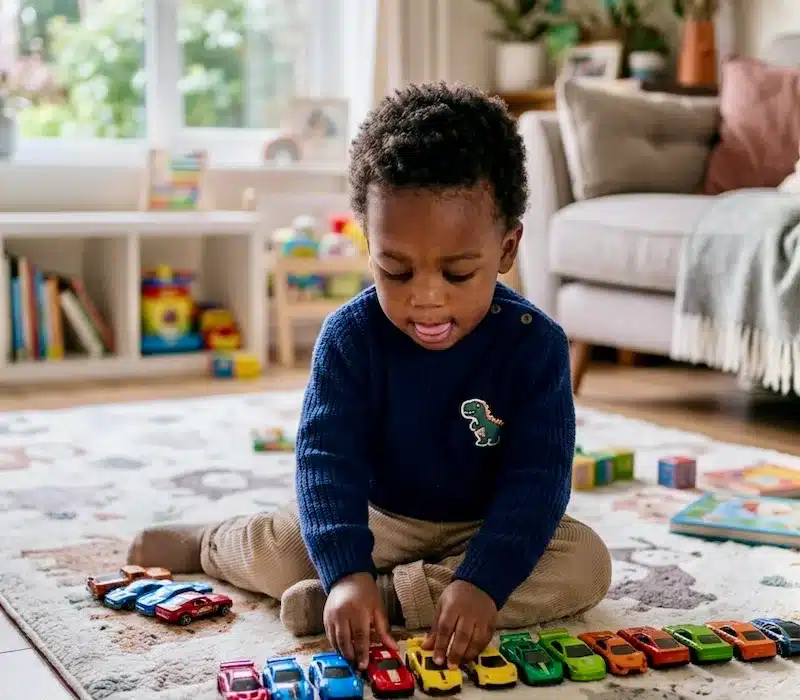
The Early Signs of Autism in Babies and Toddlers Parents Often Miss
Most parents do not catch autism at 6 months. That is not a failure.
The early signs of autism in babies are often subtle, and some do not become visible until a child is exposed to social situations or language demands that simply were not present before. That said, the earlier families and professionals notice something and act on it, the better the outcomes for the child. Early intervention during the first years of life, when the brain is at its most flexible, can make a significant difference in language development, social skills, and long-term independence.
Knowing what is typical for each age makes it much easier to notice when something feels different. You can find a detailed breakdown of what to expect month by month in our post on baby’s first-year development milestones.
Here are the signs that often appear first, before a formal concern is ever raised:
By 6 months: No big smiles or warm, joyful expressions directed at people. Limited eye contact, or eye contact that seems fleeting and inconsistent.
By 9 months: No back-and-forth sharing of sounds, smiles, or facial expressions with a caregiver. Inconsistent or absent responses to their own name.
By 12 months: No babbling with the rhythm of conversation. No gestures such as pointing, waving, or showing objects to others. Joint attention, meaning the ability to follow someone else’s gaze or point and share interest in the same object, is often absent or limited.
By 16 months: No single words spoken. Limited imitation of sounds, faces, or actions.
By 24 months: No two-word phrases that are spontaneous, not just repeated from TV or from other people. Language regression, meaning a child loses words they already had, is one of the most significant red flags at this age.
Recognizing the early signs of autism in babies is not about diagnosing your child at home. It is about having specific, documented observations ready to bring to your pediatrician. Parents who track the early signs of autism in babies over several weeks come to appointments better prepared, receive faster referrals, and move through the evaluation process more efficiently.
Autism symptoms in toddlers often become more visible as the social environment becomes more demanding. A child who seemed quiet and self-directed at 15 months may show much more pronounced signs by age 2.5, simply because daily expectations now require more social engagement and verbal responsiveness than they did before. This is not a sudden change in the child. It is the spectrum becoming more visible as expectations increase. This shift is one of the more confusing parts of autism symptoms in toddlers for parents trying to make sense of it in the moment.
Some autism symptoms in toddlers show up more clearly around ages 2 to 3, when social expectations increase outside the home. A child who seemed manageable at 12 months may show clearer signs of sensory overload, intense meltdowns, or social withdrawal once they are regularly around other children.
One sign alone does not mean autism. Many children have speech delays, sensory sensitivities, or intense interests without being on the spectrum. What matters is the pattern, the combination of signs, their persistence over time, and how they affect daily functioning.
Many of these signs also overlap with other conditions that affect child development. Understanding the broader picture of what qualifies as a developmental concern helps parents know when to act. Our post on developmental delays in children gives a clear breakdown of the warning signs that warrant professional attention.
This is not about alarm. It is about clarity. The sooner a child is seen by the right professionals, the sooner the right doors open.
The 3 Autism Spectrum Disorder Levels: What Each One Really Means for Your Child
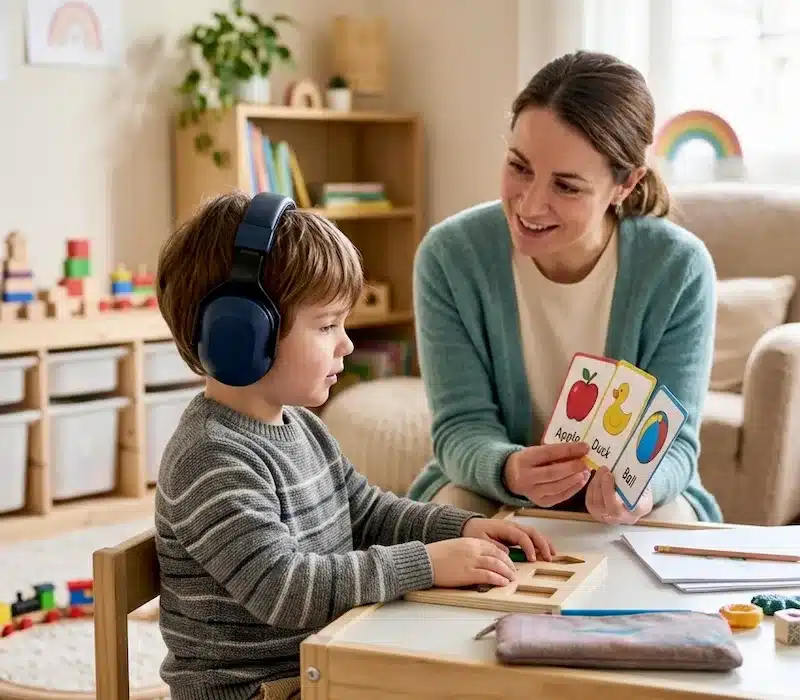
The National Institute of Mental Health describes autism spectrum disorder as a complex neurodevelopmental condition that affects individuals across a wide range of functional abilities. In 2013, the DSM-5 (Diagnostic and Statistical Manual of Mental Disorders, 5th Edition) replaced the older categories of classic autism, Asperger’s syndrome, and PDD-NOS with a single unified diagnosis: autism spectrum disorder, organized into three levels based on how much support a person needs.
Understanding the autism spectrum disorder levels helps parents translate a diagnosis into practical expectations. It also helps when communicating with schools, therapists, and insurance providers. Autism in children during early childhood affects each family differently, and that difference is exactly why individualized support matters.
For parents who are new to this framework, it helps to know that the autism spectrum disorder levels are not a ranking of severity in the way a school grade might suggest. They are a clinical description of how much support a child needs right now, in this stage of development. Many families of children at every level report that the label itself matters far less than the specific, individualized plan that follows it.
Level 1: Requiring Support
Children at Level 1 have noticeable difficulties with social communication, but they can speak in sentences and manage basic daily routines with some support. They may struggle with conversational back-and-forth, have trouble making and keeping friends, and become significantly distressed when routines change. Without targeted support, these difficulties affect academic performance and social relationships deeply, even when the child appears to function well from the outside.
This level was previously associated with what many people called Asperger’s syndrome. Children at Level 1 are sometimes described as high-functioning, but many autism advocates prefer to avoid that term because it can minimize the real challenges these children face every single day.
Level 2: Requiring Substantial Support
Children at Level 2 have more marked challenges with social communication and show more noticeable restricted and repetitive behaviors. Speech may be present but limited, and conversations are often one-sided or narrowly focused. Changes in routine cause significant distress. Self-regulation, the ability to manage emotional and sensory responses, requires ongoing external support throughout the day.
At this level, occupational therapy, speech therapy, and structured behavioral support are almost always part of a child’s program. This layered mix of therapies is common for autism in children during early childhood, since a single approach rarely covers every need at once.
Level 3: Requiring Very Substantial Support
Level 3 describes children with severe challenges in social communication. Verbal speech may be absent, minimal, or very difficult to understand. Repetitive behaviors significantly interfere with daily functioning. These children need intensive, consistent, and highly individualized support across all areas of life.
Adaptive behavior, meaning the practical skills needed to live and function with some independence, is the primary focus at this level. With the right support, many children at Level 3 make significant and meaningful progress over time. But the support system must be robust, consistent, and built around the child’s specific needs.
Understanding the autism spectrum disorder levels your child’s team identifies gives you a shared language across every professional involved in your child’s care. The autism spectrum disorder levels framework makes it significantly easier to coordinate between therapists, educators, and medical providers, because everyone is working from the same starting point and planning toward the same goals.
Level is not a ceiling. Children can and do make substantial progress as they grow and receive appropriate, timely intervention. A child who needs very substantial support at age 3 may require considerably less direct assistance at age 10 with the right early intervention in place.
What matters right now is understanding where your child is, so you can meet them exactly there. Families navigating autism in children during early childhood at this level often say that consistency, more than any single therapy, is what makes the biggest difference.
The Autism Diagnosis Process: What to Expect Before, During, and After

Many parents describe the road to an autism diagnosis process as long, confusing, and emotionally exhausting. And they are right. For some families, the process takes months. For others, it stretches into years. Knowing what the process actually involves removes a significant layer of anxiety and helps you advocate more effectively at every step.
The American Academy of Pediatrics recommends universal autism screening at 18 and 24 months as part of routine well-child visits. This screening is typically done using a standardized tool called the M-CHAT (Modified Checklist for Autism in Toddlers), a short questionnaire completed by parents. A positive screen does not mean a diagnosis. It means a closer, more structured look is needed.
The autism diagnosis process in the United States follows a structured sequence that, while it can feel slow, is designed to be thorough rather than rushed. Each step builds on the one before it, and understanding the full sequence helps parents arrive at each appointment knowing what to expect and what questions to ask. Families who understand the autism diagnosis process before their first referral consistently report feeling less overwhelmed, because the unknowns become smaller when the roadmap is visible.
Step 1: Developmental Screening
Your pediatrician will use the M-CHAT or a similar tool at the 18 and 24-month visits. If the score raises concern, they will refer your child for a more detailed evaluation. You do not need to wait for a scheduled visit if you have concerns at any other age. Bring them up directly at any appointment.
Step 2: Comprehensive Developmental Evaluation
A formal autism diagnosis process requires a multidisciplinary evaluation, meaning a team of specialists assessing your child from multiple angles, not just one doctor. This team typically includes a developmental pediatrician, a speech-language pathologist, and a psychologist. Each specialist evaluates a different domain of your child’s development. This multidisciplinary team is standard practice throughout the autism diagnosis process, regardless of where a family lives.
Step 3: The ADOS-2
The gold-standard tool used in most autism evaluations is the ADOS-2 (Autism Diagnostic Observation Schedule, Second Edition). This is a structured, play-based assessment in which the examiner creates opportunities to observe how your child communicates, socializes, and plays. It is not a test your child can pass or fail. It is a careful, trained observation.
Step 4: Parent and Caregiver Interviews
You are an essential source of information in this process. Clinicians will ask detailed questions about your child’s developmental history, early milestones, behavior at home, and how your child relates to family members. Some clinicians use a structured interview tool called the ADI-R (Autism Diagnostic Interview, Revised).
Step 5: The Diagnosis Meeting
Once all evaluations are complete, the team meets to review findings and reach a conclusion. You will then receive a feedback session in which the results are explained clearly, along with the diagnosis (or ruling out of autism) and a full set of recommendations. Ask for everything in writing. That documentation is critical for accessing services and school accommodations.
The diagnosis meeting can be emotional. It is completely normal to feel relief, grief, confusion, and love all at the same time. What comes next is not a waiting room. It is a roadmap. For families just beginning this journey, one of the most useful things to know is that it is not diagnosed based on a single test or a single observation. It is a clinical picture built from multiple sources over time. That thoroughness is not a bureaucratic hurdle. It is what makes the diagnosis meaningful and the recommendations that follow it reliable. Many families say having that paperwork in hand is what finally makes the autism diagnosis process feel complete.
Moving Forward With Clarity and Confidence After a Diagnosis

A diagnosis is a door opening, not a door closing.
After an autism diagnosis, families often feel the pull to do everything at once. Therapy schedules fill up rapidly. Information piles up from every direction. Well-meaning relatives say things that help and things that genuinely do not. It can feel like a sprint when what you actually need is a sustainable, well-planned pace.
The most important step in the weeks after a diagnosis is to request an early intervention evaluation if your child is under 3, or to contact your local school district to begin the process for an Individualized Education Program (IEP) if your child is 3 or older. These services are legally available to your child, and you do not have to navigate the system alone.
Applied behavior analysis (ABA) is the most widely studied and commonly recommended therapy for autism in children during early childhood. It focuses on understanding behavior, building communication skills, and reducing barriers to learning. Speech therapy addresses language, both expressive (what your child says) and receptive (what your child understands). Occupational therapy works on sensory processing, fine motor skills, and the practical daily activities that affect your child’s ability to function in the world.
Language-rich environments benefit all children, including those on the spectrum. You can read more about building that early language foundation in our post on the importance of talking to your baby. After a diagnosis, many families also find that simple daily activities become powerful tools for growth; our post on activities that support toddler developmentincludes ideas that can be easily adapted for children on the spectrum.
Two things are worth saying clearly here. First, no therapy can or should try to make your child less autistic. The goal of all good autism intervention is to help your child communicate, connect, and function with greater independence, on their own terms. Second, the research on early intervention consistently shows that children who receive appropriate support earlier in life have measurably better long-term outcomes in language, social skills, and adaptive behavior.
The other posts in this series go deeper into each area of daily life with an autistic child. From feeding challenges and school support to stimulation techniques and prenatal risk factors, each post builds directly on the foundation you now have.
Your child is not a diagnosis. They are a whole person with a full future ahead of them. Most families end up combining more than one of these therapies once autism in children during early childhood is confirmed.
Conclusion
Understanding autism in children during early childhood is not about reaching a label and calling it finished. It is about seeing your child clearly, the levels, the early signs, and the diagnosis process included, so that every decision from here forward comes from real information instead of fear.
You now know what the spectrum actually looks like, how the three levels translate into real support needs, and what the diagnosis journey involves from the first screening to the final feedback session. That knowledge changes how you advocate for your child, how you read a therapist’s report, and how you speak with your child’s school. A diagnosis is not a ceiling. Walking through the autism diagnosis process once, even just on paper, makes it far less intimidating if a sibling is ever evaluated down the line.
👩🏻💻 👨🏻💻 Once you understand what autism is and how the spectrum levels work, Part 2, daily routine for autistic child, walks you through building a routine that actually works for your child.
👩🏻💻 👨🏻💻 If mealtime is already a daily challenge in your home, Part 3, Autism in Children: 11 Proven Feeding Strategies (Part 3), is worth reading next.
👩🏻💻 👨🏻💻 If you are ready to think ahead to the school years, Part 4, Autism in Children: 13 Critical School Strategies, covers the classroom accommodations and IEP process every parent needs to understand.
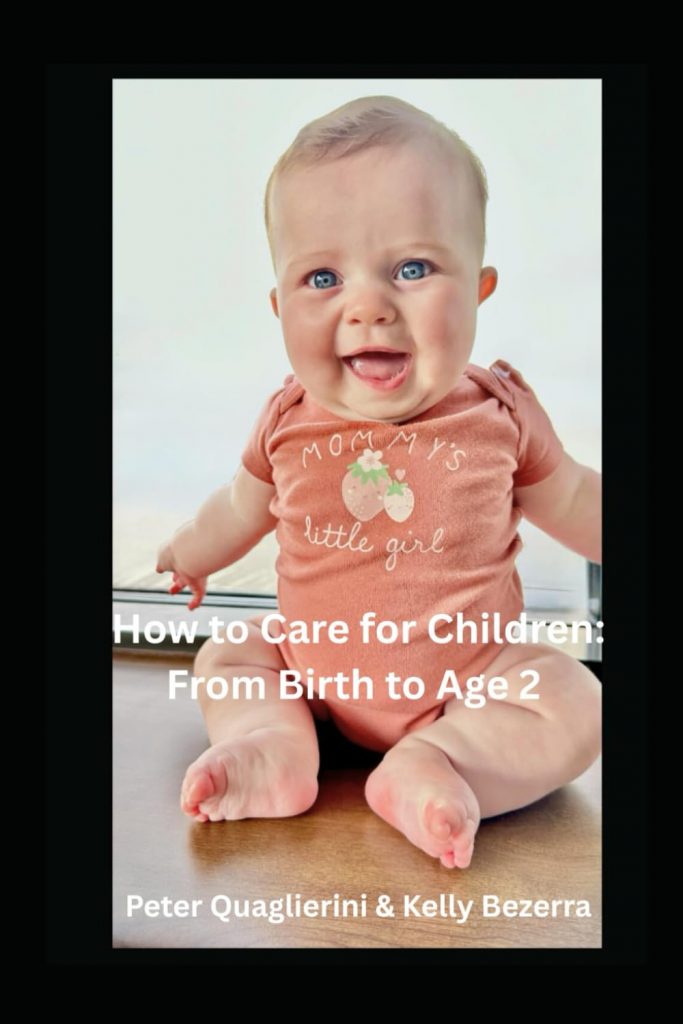
Looking for comprehensive guidance on caring for your baby? Our book ‘How to Care for Children: From Birth to Age 2’ combines professional childcare expertise with evidence-based child development research. Written by Kelly and Peter, this guide provides clear, reliable advice rooted in real-world childcare. Available in English, Spanish, and Portuguese on Amazon.
Click the link below your preferred language to get your copy!



1. At what age is autism usually diagnosed?
Most children go through the autism diagnosis process between ages 2 and 4, though diagnosis can happen at any age. The American Academy of Pediatrics recommends routine autism screening at 18 and 24 months. Some children, particularly those at Level 1 or girls with more subtle presentations, are not diagnosed until school age or even adolescence. Earlier diagnosis consistently leads to earlier intervention, which produces better developmental outcomes across all studies reviewed to date. For most families, understanding when this typically gets identified helps set realistic expectations for the evaluation timeline.
2. Can autism be diagnosed in infants under 12 months?
The formal autism diagnosis process before age 2 is possible but less common, because many of the behavioral markers used in diagnostic tools are not fully observable in very young infants. Some research has identified early biomarkers in children as young as 6 months, including differences in eye tracking and social attention patterns. If you have concerns about your infant, speaking with your pediatrician and requesting an early developmental evaluation is always the right step, regardless of age.
The early signs of autism in babies can be subtle before 12 months, which is precisely why a professional evaluation carries more weight than home observation alone. Researchers continue to study these early signs of autism in babies to identify which children might benefit from evaluation even sooner.
3. Is there a difference between autism and Asperger’s syndrome?
Since 2013, Asperger’s syndrome is no longer a separate diagnosis in the United States. It is now included within the autism spectrum disorder diagnosis at Level 1 (requiring support). Children and adults who received an Asperger’s diagnosis before 2013 continue to use that term as part of their identity, and that is entirely valid. Clinically, however, all new evaluations use the unified ASD diagnosis with the appropriate level designation. This distinction matters for families whose child received an older diagnosis, as the support needs remain just as real regardless of the label used.
4. What causes autism in children?
Autism does not have a single known cause. Current research indicates that autism results from a combination of genetic and environmental factors. Multiple genes are involved, and researchers have identified hundreds of genetic variants associated with autism risk. Certain prenatal factors are also being studied. Vaccines do not cause autism.
This has been studied extensively in large populations across multiple countries, and the original study that suggested a link was fully retracted due to scientific fraud. Researchers studying the autism diagnosis process have found no credible link between vaccines and ASD, a finding replicated across dozens of independent studies.
5. How is autism different in girls compared to boys?
Autism is diagnosed about 4 times more often in boys than in girls, but research increasingly suggests that autism in girls is underdiagnosed rather than genuinely less common. Girls on the spectrum often show stronger social motivation and develop coping strategies, sometimes called masking, that make their autism less visible to clinicians and teachers. As a result, many girls receive their diagnosis later, which delays access to support. If your gut is telling you something is different in your daughter, trust that instinct and push for a full evaluation. This pattern, girls being diagnosed later, is one of the most important gaps in current clinical practice.
6. Can autism symptoms in toddlers be confused with other conditions?
Yes, and this is one of the key reasons a comprehensive evaluation matters so much. Distinguishing autism symptoms in toddlers from these overlapping conditions is exactly what that evaluation is designed to do. Speech and language delays, sensory processing disorder, ADHD, anxiety, and intellectual disabilities can all share features with autism. Some children have autism alongside one or more of these conditions simultaneously. A thorough multidisciplinary evaluation considers all possibilities and distinguishes between them as clearly as the current evidence allows. Recognizing autism symptoms in toddlers early, even when other conditions are present, helps families access the right support sooner.
7. Is the autism diagnosis process the same in every state?
The evaluation process follows national clinical guidelines, so the tools used (ADOS-2, ADI-R, M-CHAT) are consistent across most clinical settings. However, wait times, the availability of specialists, and the cost of evaluation vary significantly by state and by whether you are working within the public school system, a private practice, or a hospital system. In most states, children under 3 can be evaluated through the federally funded Early Intervention program at no cost to families. Regardless of location, understanding the autism diagnosis process before your first appointment helps families advocate more effectively from day one.
8. What sensory tools can help autistic children at home?
Many families find that sensory tools, visual schedule systems, and communication aids make daily routines significantly more manageable. Weighted blankets and lap pads can support self-regulation in children who are sensory-seeking. Visual timers reduce the distress around transitions. For children who are non-verbal or minimally verbal, AAC (Augmentative and Alternative Communication) devices, ranging from low-tech picture boards to high-tech speech-generating apps, can be genuinely transformative for the whole family.
➡️ Sensory tools and visual supports make a real difference in daily routines for children on the spectrum. Explore autism-friendly sensory tools and communication aids, as Joyreal AAC Device for Autism, Non Verbal Communication Tools for Speech Therapy & Stroke Rehab and Communication Tablet, Autism Talking Aids with 8 Programmable Buttons & Adjustable Volume on Amazon and check current availability and parent reviews for the options that match your child’s specific needs.
9. Can an autistic child live a full, independent life?
Many autistic individuals live fully independent lives, maintain careers, form deep relationships, and raise families. Others need varying degrees of support throughout their lives. The range of outcomes is wide, and it is directly influenced by the quality and timing of early intervention, the support of family and community, and the match between the individual’s strengths and the demands of their environment. No diagnosis at age 2 or 3 can predict a child’s full potential.
10. What is the difference between high-functioning and low-functioning autism?
These are informal terms that are widely used but increasingly discouraged by autism researchers and advocates because they are imprecise and often misleading. A child described as high-functioning may struggle intensely with anxiety, sensory overload, or social isolation in ways that are entirely invisible from the outside. The DSM-5 levels (1, 2, and 3) are the clinically accurate way to describe support needs and should replace these informal terms in all professional and educational contexts.
