
Medical note: This article is for education only and does not replace medical advice from your pediatrician. Read our Medical Disclaimer.
Your precious baby’s natural curiosity and rapid development create a heartwarming journey of discovery yet this same beautiful exploration instinct places them in constant danger from hazards that lurk in even the most seemingly safe environments. As your little one grows from helpless newborn to mobile explorer, each developmental milestone brings new abilities alongside devastating accident risks that can transform your home from a sanctuary into a minefield of potential tragedies.
The terrifying reality is that unintentional injuries represent the leading cause of death and disability in children, with babies and toddlers facing the highest risks due to their developmental inability to recognize danger combined with their irrepressible drive to explore everything within reach. Most of these accidents occur in familiar environments where parents feel most secure, making these tips and comprehensive prevention strategies absolutely essential for protecting your child and your family’s peace of mind.
This life-saving guide will transform you from a reactive parent into a proactive safety expert, equipped with the knowledge and strategies needed to anticipate dangers before they threaten your baby and create protective environments that allow safe exploration and healthy development.
Disclosure: This post contains affiliate links. If you make a purchase through these links, we may earn a small commission at no additional cost to you. This helps us keep providing free, quality content for parents everywhere.
Written by Kelly, Childcare Specialist, and Peter, Researcher and Child Development Advocate.
Table of Contents
1. Understanding Developmental Risk Patterns
Baby safety by developmental stage means understanding how each new milestone creates new accident risks. What seems harmless to a newborn can become deadly dangerous to a mobile infant, and safety measures must evolve constantly to match your baby’s increasing capabilities.
The American Academy of Pediatrics emphasizes that baby safety by developmental stage means anticipating your child’s next stage rather than reacting to current abilities. By the time your baby demonstrates a new skill, they may have been capable of that movement for days or weeks, creating windows of vulnerability when safety measures haven’t yet been updated.
Understanding this progression allows parents to implement safety measures proactively, preventing accidents before new abilities create new dangers. Each month brings dramatic changes in mobility, reach, strength, and curiosity that require corresponding updates to safety strategies.
Take a look this post: ➡️ Essential Vaccination Schedule to Keep Your Baby Healthy and Protected
2. Choking Prevention: The Silent Killer Strategy
Choking represents one of the most immediate and deadly threats to babies and toddlers, with incidents occurring rapidly and often silently, leaving little time for intervention. Recognizing the full range of choking hazards for babies at home requires understanding both obvious and hidden risks while implementing multiple layers of protection.
Size and Shape Assessment: The toilet paper tube test provides a practical way to identify choking hazards: any object that fits through an empty toilet paper roll can potentially cause choking in children under 3 years old. This includes common household items like coins, buttons, batteries, and small toy parts that parents might not immediately recognize as dangerous.
Food-Related Choking Prevention: High-risk foods require special preparation or complete avoidance. Whole grapes, cherry tomatoes, nuts, popcorn, hard candies, and chunks of meat pose severe choking risks. Safe preparation involves cutting grapes lengthwise, quartering cherry tomatoes, and avoiding high-risk foods entirely until children develop adequate chewing skills.
Hidden Household Hazards: Some of the least obvious choking hazards for babies at home include latex balloons (leading cause of suffocation deaths in children), small magnets that can cause internal damage if swallowed, button batteries that can cause chemical burns, and small parts from broken toys or household items.
Emergency Preparedness: Knowing infant CPR and choking relief techniques is essential, and we cover exactly how in the emergency preparedness section below.
Take a look this article: ➡️ CDC Choking Prevention
3. Fall Prevention: Gravity’s Deadly Threat

Falls represent the most common cause of non-fatal injuries in children, and they are a clear example of baby safety by developmental stage in action, since babies facing particular risks due to their disproportionate head size, developing motor skills, and inability to break falls safely. Comprehensive fall prevention requires addressing multiple risk scenarios throughout the home.
Elevation Safety: Basic baby safety means never leaving babies unattended on elevated surfaces including changing tables, beds, sofas, or chairs. Babies can roll or wiggle off surfaces long before parents expect them to be mobile. Use safety straps on changing tables and consider floor-level changing alternatives to eliminate fall risks entirely.
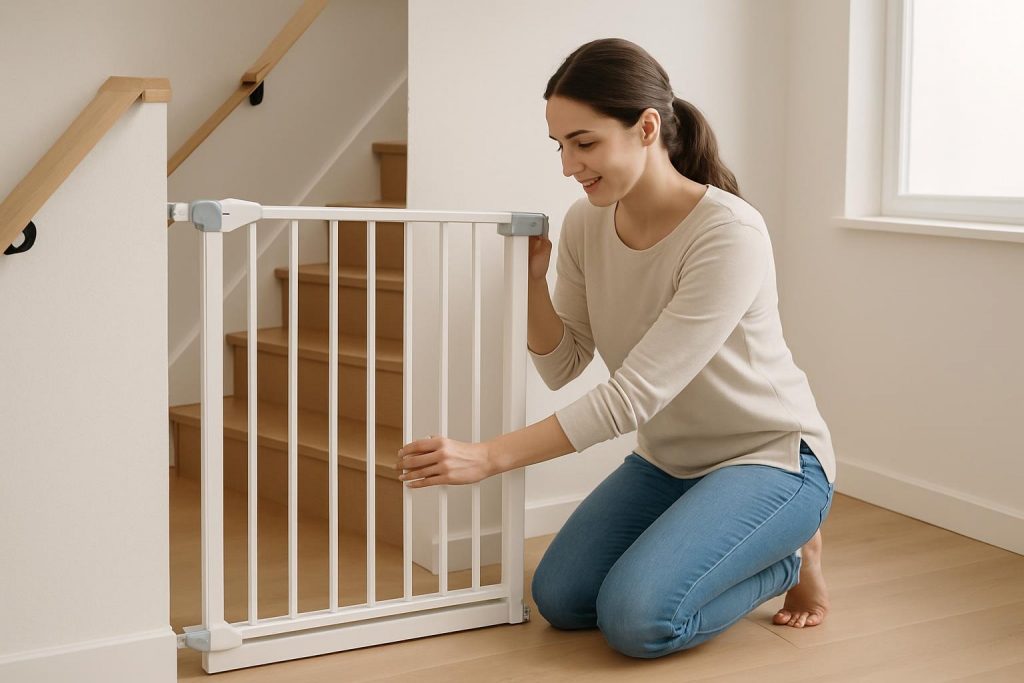
Stair and Step Protection: Install safety gates at both the top and bottom of stairs before babies begin crawling. Hardware-mounted gates provide superior safety compared to pressure-mounted options, especially at the top of stairs where gate failure could cause serious falls.
Window Safety: Install window guards or stops that prevent windows from opening more than 4 inches. Never place furniture near windows where children could climb and fall out. Window screens are designed to keep insects out, not children in, and cannot prevent falls.
High Chair and Equipment Safety: Ensure all baby equipment includes proper safety restraints and use them consistently. High chairs, bouncy seats, and other elevated baby gear can tip over or allow babies to fall if safety straps aren’t used properly.
4. Drowning Prevention: The Silent Emergency
Drowning can occur in surprisingly small amounts of water as little as 2 inches making it a hidden danger in many household locations beyond obvious water sources like pools and bathtubs. Comprehensive drowning prevention requires identifying and securing all water hazards throughout the home environment.
Bathroom Safety: As part of any childproofing checklist by room, never leave children unattended in bathtubs, even for seconds. Babies can drown silently and quickly in minimal water. Use non-slip mats, maintain water temperature below 120°F, and consider anti-scald devices to prevent burns. Empty all water containers immediately after use.
Hidden Water Hazards: Buckets, mop containers, pet water bowls, and even toilet bowls can pose drowning risks. Babies and toddlers are naturally drawn to water and may fall headfirst into containers, becoming trapped due to their disproportionate head size and inability to lift themselves out.
Pool and Spa Safety: Multiple layers of protection are essential around pools and spas,including perimeter fencing with self-closing and self-locking gates, pool enclosures, and constant adult supervision. Even inflatable pools and water tables require vigilant supervision and should be emptied when not in use.
Swimming Skills and Supervision: While swimming lessons can provide some protection,they cannot protect small children from drowning. Constant, undivided adult supervision remains essential around any water source, regardless of a child’s swimming ability or the presence of safety equipment.
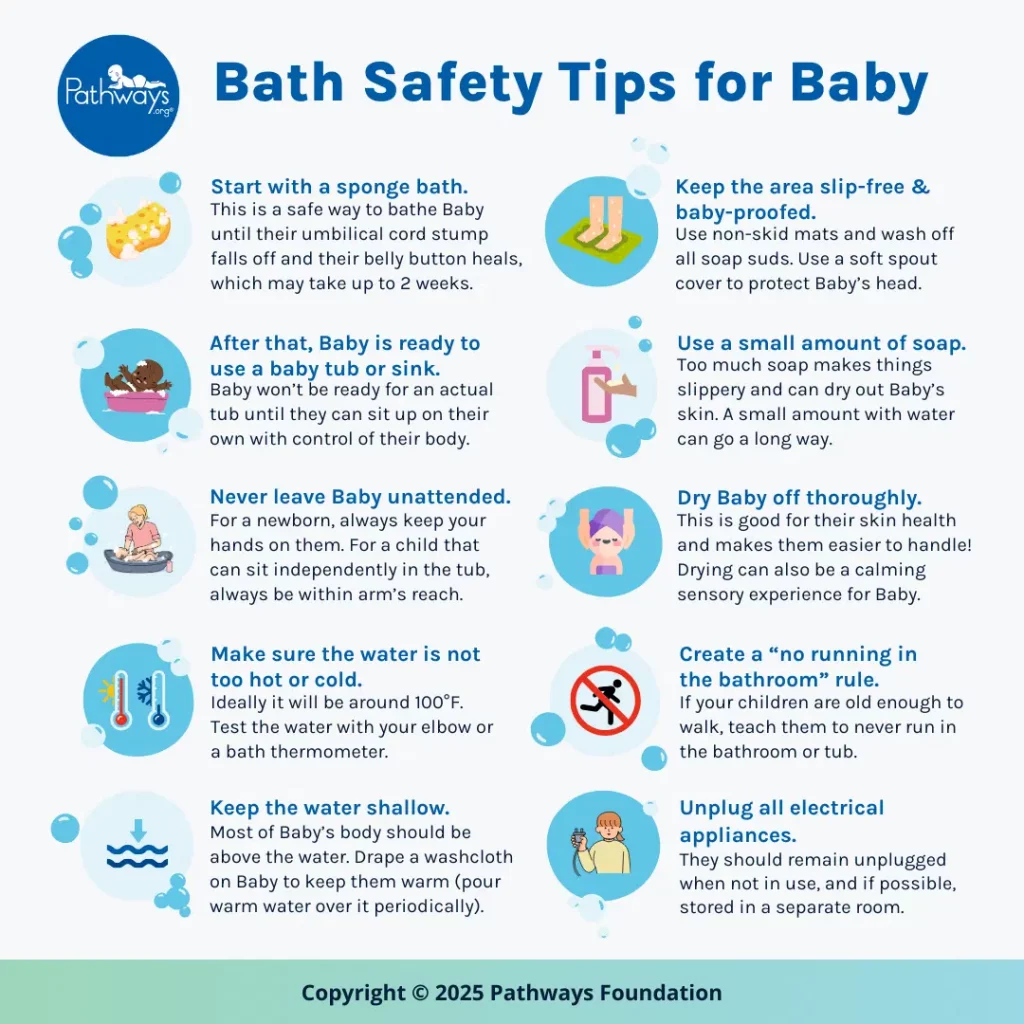
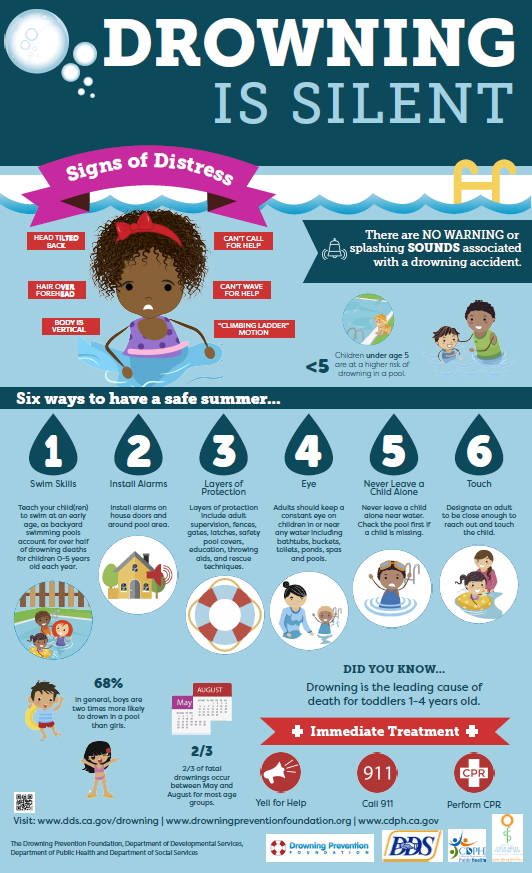
Credit of the images to Pathways Foundation and DDS: Department of Developmental Services
Take a look at this post: ➡️ Toddler Safety: Essential Tips to Keep Your Child Safe and Secure
5. Poisoning Prevention: The Hidden Chemical Threat
Poisoning incidents in children most commonly involve everyday household products that seem harmless to adults but can cause serious injury or death when ingested by curious babies and toddlers. Comprehensive poison prevention requires securing chemicals while maintaining emergency preparedness for accidental exposures.
Medication Safety: All medications, including vitamins and over-the-counter medications, should be stored in locked containers or cabinets. Child-resistant packaging offers some protection, but it is not foolproof, as small children can open child-resistant containers given enough time. Iron supplements pose specific risks, causing serious poisoning even in small amounts.
Household Chemical Hazards: On any childproofing checklist by room, cleaning products, laundry detergent pods, automotive fluids, and personal care products rank among the most dangerous, causing severe chemical burns, poisoning, or death. Store all chemicals in original containers with labels intact, and never transfer chemicals to food containers where children might mistake them for drinks or snacks.
Plant and Outdoor Toxins: Many common houseplants and outdoor plants are toxic if ingested. Research all plants in your home and yard to identify potential hazards. Additionally, be aware of seasonal dangers like antifreeze, which has a sweet taste that attracts children but is extremely toxic.
Lead Exposure Prevention: Older homes may contain lead paint or lead pipes that can cause poisoning through dust or water contamination. Have your home tested for lead hazards, especially if built before 1978, and address any contamination professionally.
Poison Control – 1-800-222-1222
6. Burn Prevention: The Scalding and Fire Safety System
Burns can occur from multiple sources in the home environment, and knowing what to do if one happens is a core part of emergency preparedness for parents, requiring comprehensive prevention strategies that address heat sources, electrical hazards, and fire safety. Young children’s skin burns more easily and severely than adult skin, making prevention particularly critical.
Water Temperature Safety: Set water heater temperature to 120°F or below to prevent scalding. Install anti-scald devices on faucets and showerheads in areas where children might be exposed. Test bath water temperature with your elbow or a thermometer before placing children in tubs.
Kitchen Safety Protocols: Use back burners when possible and turn pot handles toward the center of the stove to prevent children from grabbing hot cookware. Install stove knob covers and oven locks to prevent children from turning on appliances. Keep children away from cooking areas using safety gates or high chairs positioned safely away from heat sources.
Electrical Safety: Cover all electrical outlets with safety plugs or sliding outlet covers. Secure electrical cords out of reach to prevent children from chewing on them or pulling on electrical appliances. Replace any damaged cords immediately and consider cord shorteners to eliminate excess length.
Fire Safety Planning: Install smoke detectors in every bedroom, hallway, and level of your home. Test batteries monthly and replace detectors every 10 years. Develop and practice fire escape plans that account for safely evacuating with young children, including alternate routes and meeting points.
Take a look this offer: Safety 1st Child Proof Stove Knob Covers, Clear View Stove Knob Safety Covers (Set of 5)
7. Sharp Object and Tool Safety
Sharp objects pose cutting and puncture risks that can cause severe injuries requiring emergency medical care, and belong on every childproofing checklist by room, not just the kitchen. Comprehensive sharp object safety involves securing dangerous items while teaching appropriate safety awareness as children develop.
Kitchen Knife Safety: Install magnetic knife strips high on walls or use locked knife blocks to secure sharp knives. Drawer latches prevent children from accessing sharp utensils and tools. Never leave sharp objects on counters or in sinks where children might reach them.
Tool and Hardware Safety: Store all tools, screws, nails, and hardware in locked toolboxes or cabinets. Power tools should be unplugged and locked away when not in use. Garden tools and outdoor equipment require similar security measures.
Glass and Breaking Hazards: Secure or replace glass objects that could break and create sharp fragments. Consider replacing glass coffee tables and decorative items with safer alternatives during your child’s early years. Install safety film on glass doors and windows to prevent shattering.
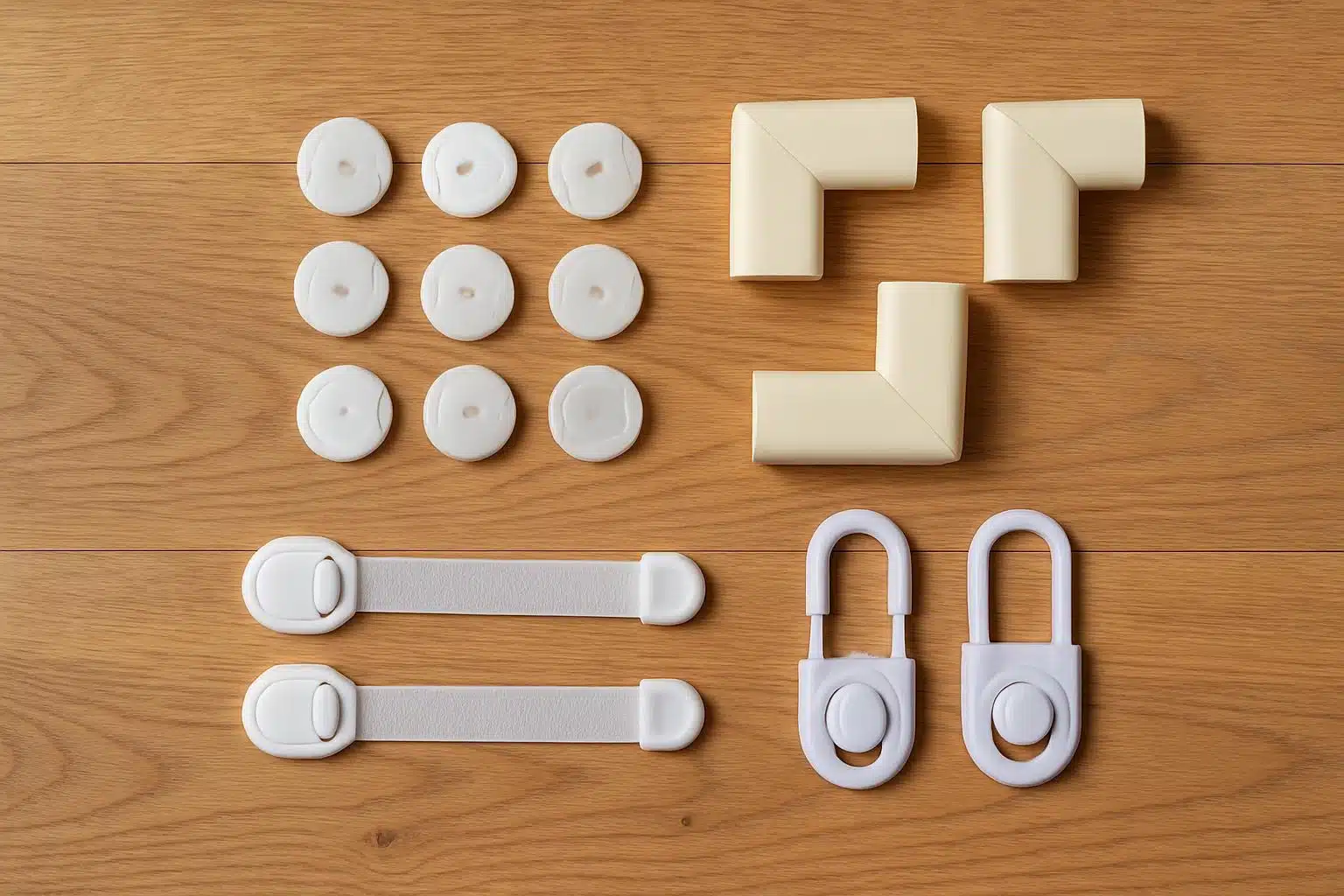
Sharp Corner Protection: Add corner guards to sharp furniture edges and table corners. Babies learning to walk frequently fall and can suffer serious injuries from sharp corners. Temporary padding provides protection during the most vulnerable periods of baby safety by developmental stage.
8. Creating Safe Sleep Environments
Safe sleep practices are one of the clearest examples of baby safety by developmental stage, preventing suffocation, strangulation, and falls while supporting healthy development and reducing SIDS risk.
Crib Safety Standards: Use only cribs that meet current safety standards with slats no more than 2⅜ inches apart and mattresses that fit snugly with no gaps. Remove all soft bedding, bumpers, toys, and pillows from the crib. Position cribs away from windows, blinds, and hanging decorations.
Sleep Surface Safety: Always place babies on their backs to sleep on firm surfaces with fitted sheets. Avoid soft surfaces, couches, adult beds, and other areas where babies might become trapped or experience breathing difficulties.

Room-Sharing Safety: Room-sharing without bed-sharing reduces SIDS risk while keeping babies close for feeding and comfort. Use bassinets or co-sleepers designed for safe room-sharing rather than bringing babies into adult beds.
Monitor Placement: Position baby monitors and their cords at least 3 feet away from cribs to prevent strangulation hazards. Mount video monitors securely to walls rather than placing them on unstable surfaces.
Common Mistakes That Put Children at Risk
Even well-intentioned parents make critical errors that compromise their children’s protection, often because they lose track of baby safety by developmental stage as their child grows. Understanding these common mistakes helps families avoid dangerous gaps in their accident prevention strategies.
Delaying Safety Measures Until Mobility Develops
One of the most dangerous mistakes involves waiting until babies show mobility before implementing protection measures. By the time babies demonstrate rolling, crawling, or pulling up, they’ve likely possessed these capabilities for days or weeks. Proactive childproofing requires anticipating developmental milestones rather than reacting to them. Effective strategies involve installing gates, securing furniture, and covering outlets before babies need these protections, creating safe environments ready for exploration.
Inconsistent Enforcement
Many families implement excellent safety measures but fail to maintain them consistently. Leaving safety gates open just for a minute, forgetting to lock cabinet latches, or allowing older siblings to leave small toys within baby’s reach all create safety gaps. Comprehensive safety demands consistent application of protective measures by everyone in the household. All caregivers, visitors, and family members must understand and follow baby safety protocols without exception.
Underestimating Supervision Needs
Perhaps the most critical error, and a real gap in emergency preparedness for parents, involves overestimating the protection that childproofing provides while underestimating supervision requirements. Even the most comprehensive safety measures cannot replace attentive adult supervision. Babies develop new capabilities constantly, and equipment can fail. Active supervision represents the most important strategy, with physical barriers and safety devices serving as backup protection rather than primary safeguards.
Neglecting Safety in Unfamiliar Locations
Parents often maintain rigorous baby safety standards at home while relaxing vigilance at grandparents’ houses, friends’ homes, or vacation rentals. Inconsistent supervision across different locations creates dangerous situations when babies encounter unfamiliar hazards without appropriate protection.
Failing to Update Safety Measures
Baby safety isn’t a one-time project but rather an ongoing process requiring regular updates as children grow and develop. Safety measures appropriate for three-month-olds become inadequate for mobile nine-month-olds. Effective childproofing demands reassessing and updating protection strategies every few months, ensuring safety measures evolve alongside developmental changes.
Room-by-Room Checklist for Complete Home Protection
Comprehensive safety requires systematic evaluation of every space where babies spend time. This childproofing checklist by room helps parents identify and address hazards throughout their homes, one space at a time.
Kitchen Essentials
The kitchen presents multiple choking hazards for babies at home alongside its other challenges, requiring careful attention. Implement these critical baby safety measures: install stove knob covers and oven locks, use cabinet locks on all lower cabinets containing dangerous items, store sharp objects in locked drawers or high cabinets, keep cleaning products in locked upper cabinets, secure heavy appliances that could tip, and maintain a gate preventing unsupervised kitchen access. Kitchen safety also involves keeping hot liquids and cooking pots away from counter edges where babies might pull them down.
Bathroom Baby Safety Protocols
As part of your childproofing checklist by room, bathrooms contain numerous hazards including drowning risks, poisoning dangers, and burn hazards. Essential bathroom baby safety measures include: installing toilet locks to prevent drowning and accessing toilet water, securing all medications and cosmetics in locked cabinets, setting water heater temperature to 120°F or below, using non-slip mats in tubs and showers, keeping electrical appliances unplugged and stored away from water sources, and installing cabinet locks on all storage areas.
Never leave babies unattended in bathrooms, as even comprehensive baby safety measures cannot replace supervision.
Living Area Strategies
Living rooms and family areas, where many choking hazards for babies at home hide in plain sight, require thorough attention. Critical living area measures include: anchoring all furniture to walls, covering electrical outlets, securing TV and entertainment equipment, removing or padding sharp furniture corners, keeping small objects and choking hazards out of reach, securing window blind cords, and removing toxic houseplants. Regular inspections of living areas identify new hazards as babies develop climbing and reaching abilities.
Bedroom Fundamentals
Sleep spaces demand special considerations, another clear case of baby safety by developmental stage, to prevent SIDS and suffocation risks. Essential bedroom measures include: using cribs meeting current safety standards, maintaining clear sleep surfaces without soft bedding or toys, positioning cribs away from windows and hanging decorations, securing furniture and avoiding placing items on dressers where babies might pull them down, and installing window guards preventing falls. Bedroom also involves maintaining appropriate room temperature and ensuring smoke detectors function properly.
Outdoor Requirements
Yards and outdoor spaces, often overlooked on a childproofing checklist by room, present unique prevention challenges requiring specific attention. Outdoor prevention measures include: installing pool fencing with self-closing gates, securing outdoor chemicals and tools in locked sheds, removing poisonous plants, maintaining safe play equipment, creating shaded areas protecting from sun exposure, and eliminating standing water preventing mosquito breeding and drowning hazards. Regular outdoor safety inspections identify seasonal hazards and maintenance needs.
Emergency Preparedness and Response
Comprehensive accident prevention includes preparing for emergencies when prevention measures fail. Emergency preparedness for parents means maintaining systems that enable rapid, effective responses when accidents happen despite every precaution.
Emergency Contact Systems: Good emergency preparedness for parents starts with programming emergency numbers into all phones and posting written emergency contact information in easily accessible locations. Include pediatrician, poison control (1-800-222-1222), and local emergency services. Ensure all caregivers know how to access emergency information quickly.
First Aid Preparedness: Maintain well-stocked first aid kits and ensure all caregivers know basic first aid techniques. Include emergency medications like children’s fever reducers and any prescribed emergency medications like epinephrine auto-injectors.
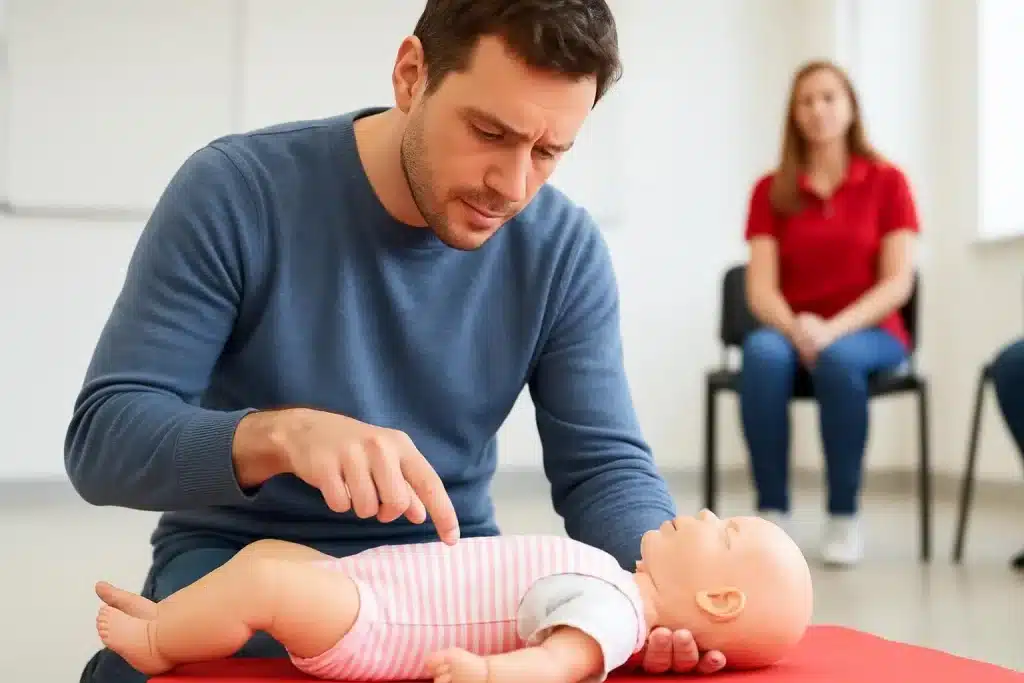
CPR and Choking Response: Strong emergency preparedness for parents means all caregivers maintain current CPR certification and know infant choking relief techniques. These skills require regular practice and updates as techniques evolve and skills fade over time.
Emergency Communication Plans: Develop plans for communicating with emergency services and family members during crises. Include backup communication methods and ensure babysitters and caregivers understand emergency procedures.
Your commitment to baby safety creates protective environments that allow your baby to explore, learn, and develop safely, and that commitment pays dividends in peace of mind for years to come.
Conclusion
Baby-proofing is not a checklist you finish once. It is a mindset of ongoing awareness and adjustment that grows alongside your child. By implementing these tips, understanding developmental stages, and proactively adjusting your environment, you create a home where your baby can explore, grow, and thrive safely.
No home will ever be completely risk-free, and that is not the goal. The goal is stacking enough layers of protection, gates, locks, supervision, and preparedness, that a single missed moment does not turn into a tragedy. Let this guide empower your family to protect what matters most: your child’s life and future.
Looking for comprehensive guidance on caring for your baby? Our book ‘How to Care for Children: From Birth to Age 2’ combines professional childcare expertise with evidence-based child development research. Written by Kelly and Peter, this guide provides clear, reliable advice rooted in real-world childcare. Available in English, Spanish, and Portuguese on Amazon.
Click the link below your preferred language to get your copy!




1. When should I start baby-proofing my home?
Begin baby-proofing before your baby becomes mobile, ideally around 4 to 6 months of age. This is baby safety by developmental stage in practice: babies often demonstrate new capabilities days or weeks before parents notice. Start with securing furniture, covering electrical outlets, and installing safety gates, then expand as your baby’s abilities increase. The American Academy of Pediatrics recommends anticipating your child’s next stage rather than reacting to current abilities.
2. What are the most dangerous household items for babies and toddlers?
The most dangerous choking hazards for babies at home include small objects like coins, batteries, and toy parts, plus toxic substances such as cleaning products, medications, and laundry pods, water sources, heavy furniture that can tip over, and window blind cords. Button batteries are especially dangerous, causing chemical burns within hours if swallowed. Any object that fits through a toilet paper tube can potentially cause choking in children under 3. Secure all dangerous items in locked cabinets, and remember that child-resistant packaging is not foolproof.
3. How can I prevent my baby from drowning when I live in a home with a pool?
Pool baby safety requires multiple layers of protection. Install a four-sided isolation fence at least 4 feet high with self-closing, self-latching gates that fully enclose the pool, not just use the house as one side. Add door and pool alarms, remove toys from the pool area when not in use, and designate a water watcher who does nothing but supervise, switching every 15 minutes. Enroll in infant CPR and keep rescue equipment poolside. Even with every precaution in place, never leave children unattended near water, even for a few seconds.
4. What emergency preparedness measures should every parent have in place?
Emergency preparedness for parents starts with a few non-negotiables. All caregivers should have current CPR and infant choking relief certification, and Poison Control (1-800-222-1222) should be programmed into every phone. Keep well-stocked first aid kits at home and in the car, practice an evacuation plan, and test smoke and carbon monoxide detectors regularly. Keep an emergency contact list accessible to every caregiver, including babysitters, and consider a full infant and child first aid course covering choking, burns, falls, and poisoning.
5. How do I know if my childproofing efforts are actually effective?
Test your childproofing checklist by room by getting down to your child’s eye level in each space to spot hazards from their perspective. Conduct regular safety checks as new abilities emerge, since what was safe last month may not be safe now, and pay close attention to near-misses, which often reveal gaps before a real accident happens. Remember that no home is 100% accident-proof, which is why supervision remains the most important layer. Update your safety measures every 3 to 6 months and whenever your child visits grandparents or other caregivers.
6. Do I need to childproof if I only visit other homes occasionally, like grandparents’ houses?
Yes. A significant number of injuries happen in homes that are not babyproofed, precisely because parents let their guard down in unfamiliar environments. Bring a portable childproofing kit with outlet covers, cabinet locks, and door stoppers when visiting regularly, and do a quick hazard scan of any new environment, checking for unsecured medications, choking hazards for babies at home, and unfenced water sources, before your baby starts exploring.
7. How do I babyproof a home with multiple children of different ages?
Babyproofing with an older sibling in the house requires two layers of strategy: standard childproofing for the baby, plus teaching the older child to keep their own small toys, snacks, and belongings out of reach. Use high shelves or locked bins for the older child’s small items, and involve them in safety routines so they understand why certain rules exist, rather than feeling punished by them.
8. When can I stop worrying about most baby safety hazards?
Most acute hazards like choking, drowning in small water sources, and crib-related risks decrease significantly after age 3, as children develop better judgment and physical coordination. However, baby safety by developmental stage continues into the preschool years with different concerns, such as street safety, stranger awareness, and swimming pool supervision. Safety measures should evolve, not disappear.
9. Are baby safety products like corner guards and outlet covers actually effective?
Yes, when installed and used correctly. Corner guards reduce the severity of fall-related injuries, and outlet covers prevent a significant cause of childhood electrical injuries. That said, products are a backup layer, not a replacement for supervision, and determined toddlers can sometimes remove poorly installed covers or guards, so periodic checks matter as much as the initial installation.
10. What should be in a babyproofing walkthrough before my baby starts crawling?
Get down on your hands and knees and move through each room at your baby’s eye level. Look for choking hazards for babies at home within reach, unsecured cords, unstable furniture that could tip, exposed outlets, and anything sharp at low height. This simple walkthrough, repeated every time your baby reaches a new developmental milestone, is one of the most effective and low-cost baby safety habits a parent can build.