
Medical note: This article is for education only and does not replace medical advice from your pediatrician. Read our Medical Disclaimer.
Every parent eagerly awaits their baby’s first steps, those magical moments when tiny feet turn into confident strides. One day your baby is cruising along the couch, gripping tightly with both hands, and a few weeks later they let go for half a second before plopping back down, delighted with themselves either way.
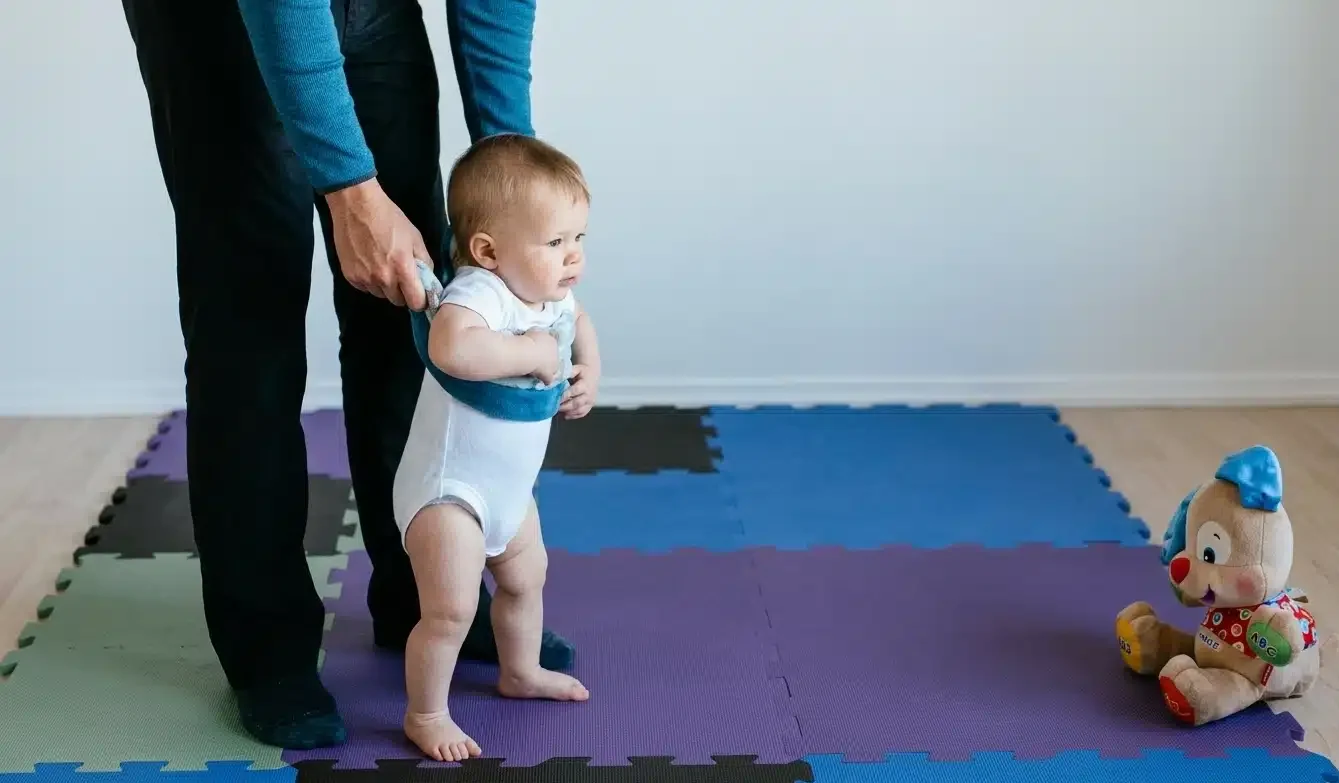
While many children reach this milestone on their own, nanny walking methods are designed to gently guide and accelerate the process using expert strategies rooted in child development. Much of that guidance starts on the ground: consistent floor time walking techniques build the core strength and balance babies need long before that first wobbly step happens, and they matter just as much as anything that comes after.
Disclosure: This post contains affiliate links. If you make a purchase through these links, we may earn a small commission at no additional cost to you. This helps us keep providing free, quality content for parents everywhere.
Written by Kelly, Childcare Specialist, and Peter, Researcher and Child Development Advocate.
Table of Contents
Why Confidence Matters More Than Muscles
Walking represents one of humanity’s most complex motor achievements. Unlike crawling, which develops naturally, walking requires sophisticated coordination between the brain, muscles, and balance systems. Professional nannies understand that confidence plays a role just as crucial as physical readiness in this developmental process.
Research indicates that babies who develop walking confidence through structured, confidence-building approaches demonstrate superior balance, coordination, and fearlessness in physical activities throughout childhood.
Expert nannies leverage this knowledge to create nurturing environments where babies feel secure enough to take risks and explore their mobility potential.
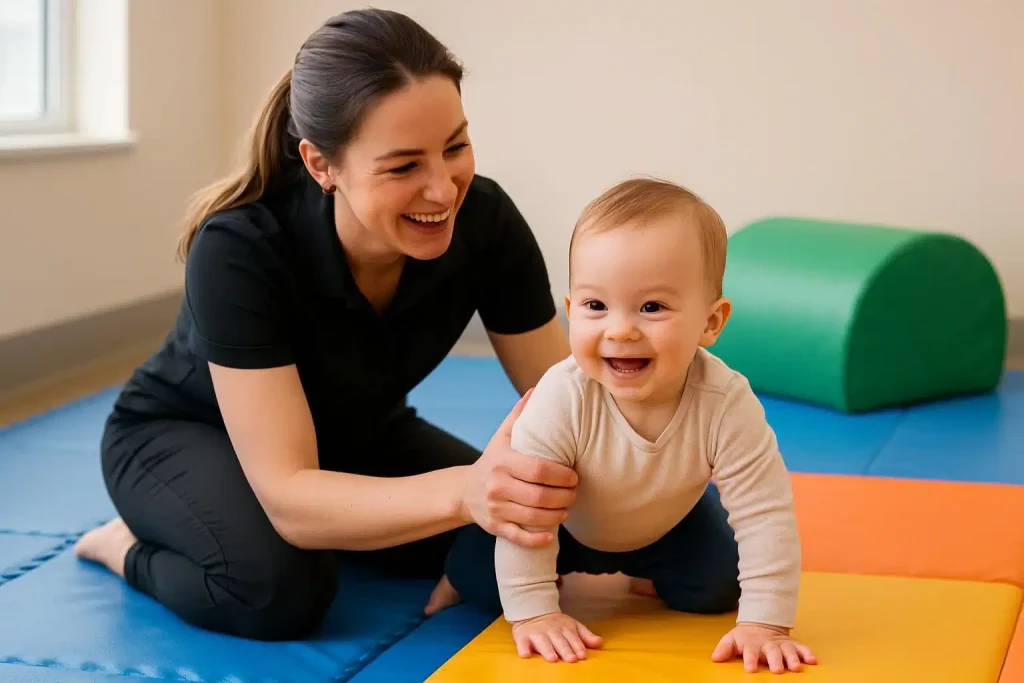
This is really what confident walking development comes down to: emotional readiness as much as physical skill.
Motor Development Constraints and Sensory-Motor Integration – Science Direct
Method 1: Floor Time That Builds Real Strength
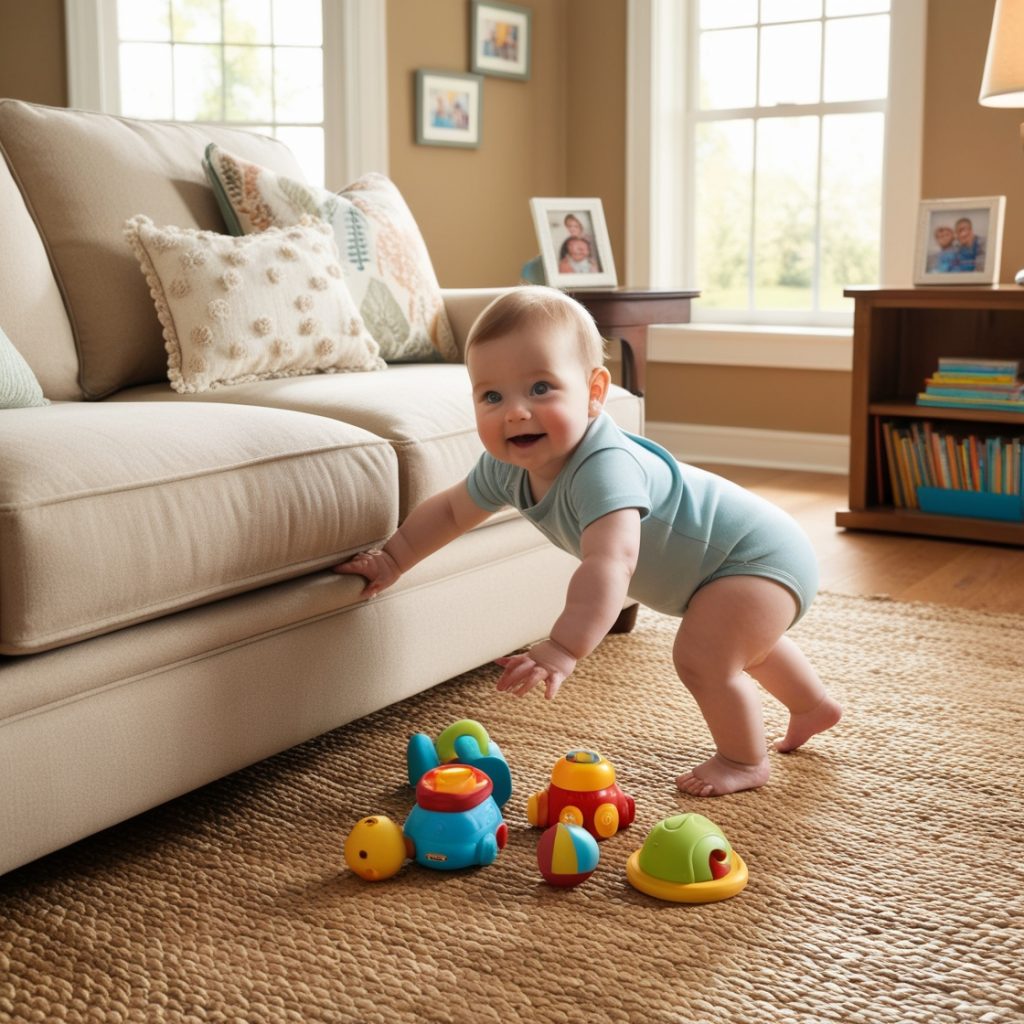
The foundation of professional nanny walking education begins with strategic floor time. Rather than rushing baby walking confidence into walking devices, experienced caregivers prioritize extensive terrestrial exploration. This approach strengthens core muscles, develops proprioception, and builds the fundamental stability required for confident walking.
Nannies create designated movement zones using soft play mats, strategically placed pillows, and discreet obstacles. These environments encourage babies to transition between sitting, crawling, and standing positions naturally. The key lies in making these movements feel like play rather than structured exercise.
Professional caregivers understand that babies learn through repetition and positive reinforcement. They celebrate every micro-achievement from pulling up to standing, to taking that first tentative step. This constant encouragement builds neural pathways associated with confidence and accomplishment.
This is the foundation every one of these floor time walking techniques builds on.
Take a look at this post: ⬇️
Baby Milestones: What to Expect in the First Year
Turn Your Living Room Into a Practice Zone
Experienced nannies transform furniture cruising into a comprehensive walking preparation program. They strategically arrange stable furniture pieces to create cruising circuits that gradually increase in complexity and challenge.
The technique involves placing favorite toys or snacks at specific intervals along the cruising path, motivating babies to move while maintaining their grip on supportive surfaces. As confidence grows, nannies gradually increase the distances between support points, encouraging babies to take independent steps.
This method proves particularly effective because it honors babies’ natural developmental progression while subtly challenging their comfort zones. The furniture provides psychological security, allowing babies to focus on developing walking mechanics without fear of falling.
Setups like this quietly build baby walking confidence long before the first independent step happens.
Method 2: Sensory Games That Don’t Feel Like Practice
Professional nannies incorporate sensory experiences that enhance walking development through multisensory engagement. These techniques recognize that confident walking requires integration of visual, tactile, and proprioceptive feedback systems.
Textured walking surfaces, such as yoga mats, grass, sand, or textured fabrics, provide valuable sensory input that strengthens foot muscles and improves balance awareness. Nannies create sensory pathways that encourage babies to experience different textures while practicing walking movements.
Music and rhythm play crucial roles in these educational approaches. Nannies use songs, clapping, and musical instruments to help babies develop timing and coordination. The rhythmic elements create natural movement patterns that support balanced walking development.
Beyond the feet, this method also strengthens the vestibular system and upper body. Gentle rocking activities, controlled tilting games, and supervised climbing on exercise balls, rocking horses, or stability cushions challenge balance progressively, while supported handstands against walls, crawling up inclines, and pulling up on furniture build the arm and shoulder strength babies need to catch themselves during falls.
Balance beam activities using low, wide boards or even painted lines on the floor round this out, helping babies develop linear walking skills and spatial awareness, often disguised as an adventure game like crossing a bridge to reach a favorite toy.
Together, these sensory walking games do more for confident walking development than repetitive drills ever could.
Encouraging Independent Steps:
Expert nannies understand that verbal encouragement significantly impacts walking confidence. They develop specific language patterns that reinforce positive associations with walking attempts, regardless of outcomes.
Instead of expressing concern about falls or wobbles, professional caregivers use phrases like Great trying! or Look how strong you are! This linguistic approach prevents babies from developing walking anxiety and maintains their willingness to practice.
Nannies also narrate the walking process, describing what babies are doing: You’re balancing so well! or Your feet are learning to step! This commentary helps babies understand their own capabilities and builds self-awareness of their developing skills.
Language like this shapes baby walking confidence just as much as any physical exercise.
Take a look at this post : Ultimate Childcare Basics: Nurturing Children from the Start
Method 3: One Swap That Makes Babies Want to Move
Professional nannies excel at creating walking-friendly environments that maximize safety while encouraging exploration. They remove traditional protective barriers for babies that can limit opportunities for movement, instead focusing on creating safe spaces for unrestricted practice.
These modifications include securing furniture to prevent tipping, installing soft flooring in practice areas, and removing small objects that could pose choking hazards. The goal is creating environments where babies can move freely without constant no messages that might inhibit their confidence.
Strategic lighting also plays a role in walking development. Nannies ensure practice areas are well lit, helping babies judge distances and navigate obstacles confidently. Natural lighting, when possible, provides the best visual input for developing walking skills.
It’s a small change, but it’s one of the nanny walking methods that makes the biggest difference in how freely babies move.
Take a look at this article: ⬇️
Sensory Integration Therapy – Healthy Children
Letting Go, One Hand at a Time:
Experienced nannies understand that walking confidence develops through carefully graduated independence. They begin with maximum support and gradually reduce assistance as babies demonstrate readiness for increased challenges.
This approach involves holding both hands initially, then transitioning to one hand, then fingertips, and finally encouraging independent steps. The timing of these transitions requires careful observation of each baby’s comfort level and physical readiness.
Professional caregivers never force independence before babies feel ready. They recognize that pushing too quickly can create walking anxiety that persists long after the physical skills are mastered. Patience and observation guide every transition decision.
This gradual release is central to confident walking development, more than any single exercise.
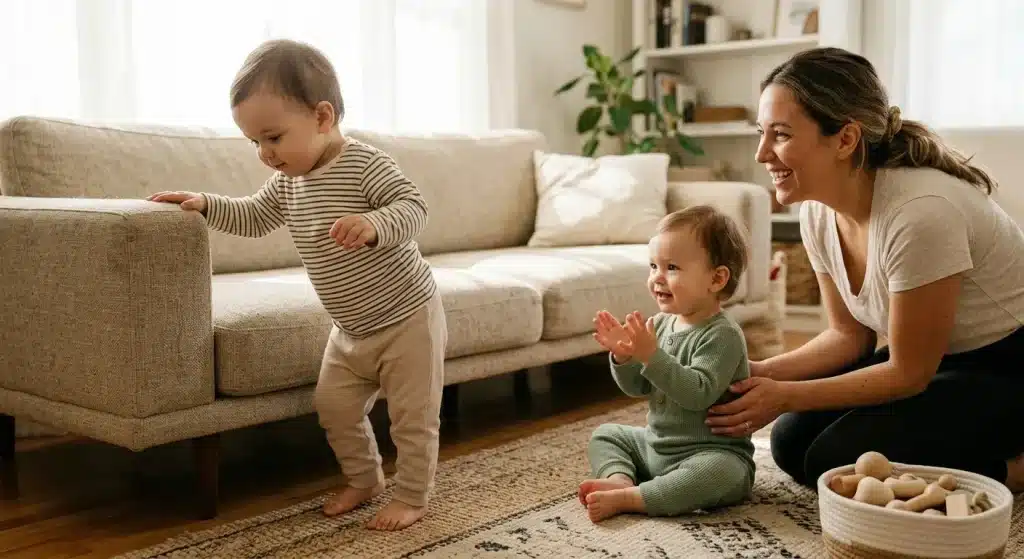
Method 4: Why Babies Walk Sooner Around Other Kids
Professional nannies leverage social dynamics to accelerate confident walking development through peer interaction and group play scenarios. This method recognizes that babies often demonstrate greater motivation and courage when observing or interacting with other children who are walking or attempting to walk.
Experienced caregivers organize structured playdates or playgroup sessions where babies at various walking stages interact together. Pre-walking babies observe more advanced peers, creating natural motivation to achieve similar mobility. The social component transforms walking practice from isolated exercises into engaging communal experiences.
Nannies facilitate these interactions by creating group walking games that encourage collective movement. Activities like circle time with walking transitions, group toy retrieval challenges, and collaborative movement songs create joyful walking contexts that build confidence through shared experiences and mutual encouragement.
The social motivation framework also incorporates older siblings or cousins as walking mentors. Professional caregivers coach older children on how to encourage and support baby walking attempts through gentle guidance, enthusiastic praise, and patient assistance. These multi-age interactions create powerful learning dynamics that accelerate walking development.
It’s one of the more overlooked nanny walking methods, since it relies on motivation rather than instruction.
Fitting Practice Into a Day With No Extra Time
These nanny walking methods achieve maximum effectiveness when integrated seamlessly into daily care routines rather than implemented as isolated training sessions. Expert caregivers understand that confidence develops most robustly through consistent practice throughout everyday activities and interactions.
Success comes from weaving floor time practice into natural play periods, transforming ordinary moments into powerful developmental opportunities. This might include encouraging babies to walk toward favorite toys during playtime, practicing standing transitions during diaper changes, or incorporating sensory games into outdoor exploration activities.
Confidence increases dramatically when these techniques feel like joyful play rather than structured lessons. Professional caregivers excel at disguising developmental exercises as engaging games, maintaining babies’ enthusiasm and participation throughout this progression.
Even five minutes here and there is enough for real floor time walking techniques to add up.
Shoes or Bare Feet? What Really Helps
Experienced nannies possess detailed knowledge about how footwear choices impact walking development and confidence building. They understand that barefoot walking provides optimal sensory feedback and strengthens foot muscles most effectively during early walking stages.
Professional caregivers create safe barefoot walking environments by maintaining clean, temperature-appropriate floors free from sharp objects or hazardous materials. They recognize that direct foot contact with various surfaces provides invaluable proprioceptive information that supports balance and coordination development.
When footwear becomes necessary for outdoor activities or cold weather, expert nannies select shoes with specific characteristics that support rather than hinder walking development. They choose flexible, lightweight options with minimal heel elevation and non-restrictive toe boxes that allow natural foot movement and ground feel.
Surface variety plays a crucial role in comprehensive walking skill development. Nannies expose babies to diverse walking surfaces including carpet, hardwood, grass, sand, and textured mats. Each surface type challenges balance and coordination differently, creating well-rounded walking abilities that transfer across environmental contexts.
Surface variety like this turns into some of the simplest sensory walking games a family can try without any setup.
Is Your Baby Actually Ready to Walk?
Professional nannies excel at recognizing individual babies’ readiness for different walking challenges rather than following rigid developmental timelines. They understand that walking readiness varies significantly based on temperament, physical development, and previous mobility experiences.
Expert caregivers assess multiple readiness indicators including pulling to stand consistently, cruising furniture confidently, standing independently for several seconds, and demonstrating interest in independent walking. They never force walking attempts before these prerequisites are established, recognizing that premature pushing can create anxiety and resistance.
Nannies also consider emotional readiness alongside physical capabilities. Some physically capable babies require additional time to build confidence before attempting independent steps. Professional caregivers honor these individual differences, providing extra emotional support and graduated challenges that respect each baby’s unique comfort level.
The timing of walking practice sessions also influences success and confidence building. Experienced nannies schedule walking activities when babies are well-rested, fed, and in positive moods. They avoid practice during fatigue, hunger, or stress periods when babies’ physical and emotional resources are depleted.
Reading these signs matters more for confident walking development than hitting any specific age.
What’s Worth Tracking, and What Isn’t
Good nanny walking methods include systematic progress tracking that documents both motor abilities and emotional readiness, not just milestones reached. Tracking typically covers independent standing duration, cruising distances, number of consecutive steps, and confidence shown during floor time and sensory activities.
Video documentation adds another layer of insight. Recorded walking attempts let caregivers analyze technique, spot areas needing extra support, and share real progress with parents, while doubling as treasured family memories. Progress journals that include emotional observations, not just physical ones, such as how a baby recovers from a fall or reacts to a new challenge, round out a complete picture that guides personalized next steps.
Tracking effort and enjoyment, not just steps, says more about real baby walking confidence than any single milestone.
Getting Every Caregiver on the Same Page
Experienced nannies understand that walking confidence develops most effectively when all caregivers implement consistent approaches and techniques. They actively educate parents and other family members about professional walking support methods, ensuring babies receive coherent guidance across all care contexts.
Professional caregivers provide hands-on training to parents, demonstrating proper support techniques, appropriate challenge levels, and effective encouragement strategies. They explain the developmental reasoning behind specific approaches, empowering families to understand and implement walking confidence-building methods independently.
Nannies create written guides or visual demonstrations that families can reference when practicing walking activities without professional supervision. These resources might include photographs of proper hand positioning, descriptions of progressive exercise sequences, and lists of appropriate encouragement phrases.
Regular communication between nannies and parents ensures everyone remains informed about current walking development stages and appropriate next steps. Professional caregivers schedule brief daily updates or weekly detailed consultations that keep families engaged in walking progress while maintaining professional expertise guidance.
Consistency across caregivers is what makes nanny walking methods actually work over time, not just in isolated sessions.
Letting Your Baby Fall Safely, on Purpose
Expert nannies implement comprehensive safety systems that protect babies during walking practice while avoiding overprotection that could inhibit confidence development. They understand the delicate balance between preventing serious injuries and allowing minor tumbles that teach babies how to fall safely.
Professional caregivers create layered safety approaches including environmental modifications, strategic supervision positioning, and teaching babies protective reflexes. They ensure practice areas have soft landing surfaces, cleared obstacles, and secured furniture while remaining close enough to intervene if dangerous falls threaten.
Nannies teach babies to fall safely through gentle guided experiences where babies learn to catch themselves with hands, sit down when losing balance, and roll to absorb impact. These skills develop naturally through practice but can be enhanced through playful demonstrations and supported practice under professional guidance.
When falls occur, experienced nannies respond calmly without excessive alarm that might create walking fear. They assess for injuries quickly, provide comfort briefly, and encourage resumption of walking attempts promptly. This measured response teaches babies that falls are normal, manageable events rather than catastrophes requiring walking cessation.
This measured response is part of what builds confident walking development instead of walking anxiety.
Words That Build Confidence, and Ones That Kill It
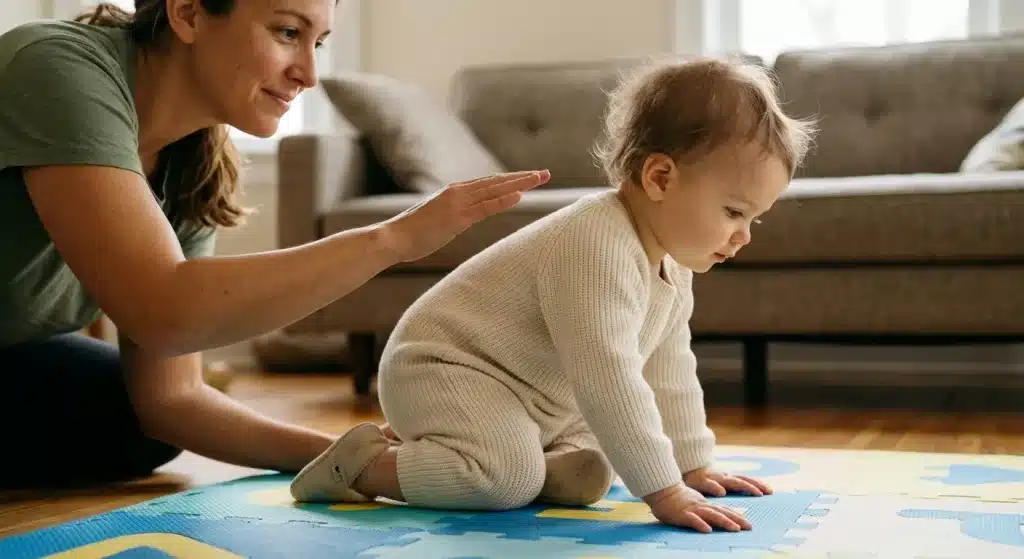
Central to these nanny walking methods is systematic baby walking confidence building through strategic positive reinforcement and encouragement. Professional caregivers recognize that emotional readiness determines timeline success just as significantly as physical capability, making encouragement an essential component of every session.
Specific verbal patterns reinforce self-belief without creating performance pressure. This involves celebrating effort regardless of outcome, using consistent praise language, and maintaining enthusiastic support throughout the process.
Sensory activities can also incorporate small rewards and celebrations that strengthen positive associations with walking. When babies achieve milestones during practice, immediate positive reinforcement creates powerful neural connections supporting continued progress.
The right words, repeated consistently, do more for baby walking confidence than any toy or gadget.
When Walking Practice Isn’t Going as Planned
Professional nannies possess extensive experience addressing common walking development obstacles. They recognize that some babies develop walking fears, while others become overly dependent on support systems.
For fearful babies, nannies implement gradual exposure techniques combined with extra emotional support. They might practice walking on soft surfaces initially, gradually introducing firmer ground as confidence builds. The key is maintaining positive associations with walking experiences.
Babies who resist independent walking often benefit from motivational games that make solo walking irresistible. Nannies might position themselves across the room with favorite toys or snacks, encouraging babies to walk independently to reach desired rewards.
Going back to basic floor time walking techniques for a few days often resolves this without any other change.
What Early Walking Confidence Sets Up for Later
Babies who learn walking through professional nanny techniques demonstrate lasting benefits that extend far beyond early mobility. These children typically show greater physical confidence, superior balance skills, and increased willingness to attempt new motor challenges.
Trust-building approaches used by expert nannies create positive associations with physical activity that persist throughout childhood. These early experiences lay foundations for active lifestyles and positive relationships with exercise and movement.
Professional walking education also strengthens the caregiver-child bond through shared achievements and positive interactions. The collaborative nature of these techniques creates trust and communication patterns that benefit overall development.
These nanny walking methods, when applied with patience and consistency, give every baby the foundation for confident, joyful steps.
It also shows how much sensory walking games and floor time walking techniques in infancy pay off years later.
Conclusion
Every baby walks in their own time. Your job is not to rush the timeline but to build the confidence that makes the timeline matter less. The 4 methods in this post work because they approach walking the way a baby actually learns it: through play, repetition, sensory feedback, and the secure knowledge that the person beside them is not going to panic when they fall. That calm, consistent presence is the most important technique of all, and it does not require any training to use.
When your baby takes those first independent steps, it will not be because of a device or a structured program. It will be because their body was ready and their confidence was ready too. You helped build both.
Looking for comprehensive guidance on caring for your baby? Our book ‘How to Care for Children: From Birth to Age 2’ combines professional childcare expertise with evidence-based child development research. Written by Kelly and Peter, this guide provides clear, reliable advice rooted in real-world childcare. Available in English, Spanish, and Portuguese on Amazon.
Click the link below your preferred language to get your copy!




1. When Should You Start Walking Practice?
Most babies show readiness for structured walking support between 9 and 15 months, though individual timelines vary. Begin when your baby consistently pulls to stand, cruises furniture confidently, and demonstrates interest in independent movement. Earlier preparation through floor time can start at 4 to 6 months when babies gain sitting stability. Watch for readiness signs including strong sitting balance, active pulling to stand, and curiosity about upright mobility.
2. Are Baby Walkers Actually Bad for Walking?
Research shows that wheeled baby walkers delay walking development and create serious safety hazards. Professional nannies strongly advise against traditional wheeled walkers as they allow movement without developing proper balance and coordination. The American Academy of Pediatrics recommends against walker use. Instead, choose stationary activity centers or sturdy push wagons that babies control while walking. Skipping them protects confident walking development instead of shortcutting it.
3. What If My Baby Seems Afraid to Walk?
Walking fear responds well to patience and graduated challenges. Create safe practice environments using soft surfaces and calm atmospheres. Use progressive support reduction: holding both hands, then one hand, then fingertips, and finally encouraging short independent steps. Celebrate efforts regardless of outcomes and avoid showing frustration. Never force walking attempts as pressure increases anxiety.
4. Is It Normal If My Baby Prefers Crawling?
Many babies continue preferring crawling after developing walking capability because crawling remains faster initially. This preference is normal and resolves as walking skills improve. Continue providing walking opportunities without forcing transitions. If your baby shows no interest in pulling to stand or attempting walking movements by 18 months, consult your pediatrician. This preference has nothing to do with baby walking confidence being low, it’s just efficiency.
5. What Should I Do When My Baby Falls?
Respond calmly and matter-of-factly, checking for injuries quickly while avoiding excessive alarm. Most walking falls result in minor bumps or no injury. Provide brief comfort, then encourage return to walking attempts promptly. Use neutral language and avoid making falls dramatic events. Remember that falls are inevitable and necessary parts of learning to walk.
6. Is My Baby’s Walking Progress Normal?
Normal progression includes pulling to stand around 8 to 10 months, cruising furniture by 9 to 12 months, standing independently around 10 to 14 months, and first independent steps between 9 and 17 months. Consult your pediatrician if your baby shows no interest in weight-bearing by 12 months, cannot pull to stand by 15 months, or isn’t walking independently by 18 months. Any of these timelines are consistent with healthy baby walking confidence.
7. Can Toys or Equipment Help My Baby Walk?
Push toys like sturdy wagons provide excellent walking support when chosen carefully. Select toys with adequate weight to prevent tipping and appropriate handle height. Stationary activity centers allow standing practice. Avoid equipment that restricts natural movement including jumpers and traditional wheeled walkers. The best support comes from natural floor time and furniture cruising opportunities.
8. How Long Until Walking Feels Confident?
The timeline typically spans 2 to 6 months. Most babies take first independent steps around 12 months but don’t walk consistently until 13 to 15 months. During transition, babies alternate between crawling, cruising, and independent steps. Some babies transition rapidly within weeks, while others take several months. Each baby’s timeline reflects their unique developmental pattern. This range is completely normal for confident walking development, not a sign of anything off.
9. What Makes These Methods Different?
Nanny walking methods are built from professional, hands-on experience supporting dozens of babies through this developmental stage, not generic tips. These approaches combine structured floor time, sensory walking games, and graduated independence techniques refined through repeated real-world practice. While general parenting advice often focuses on milestones alone, professional nanny walking methods address the emotional and physical sides of confident walking development together, which is why caregivers trained in these techniques can adapt quickly to each baby’s individual pace.
10. Can Parents Use These Methods Too?
Yes. While nanny walking methods originated with professional caregivers, parents and family members can apply the same principles at home with consistency and patience. Start with simple floor time walking techniques, introduce sensory walking games gradually, and use the verbal encouragement patterns outlined in this guide. The goal of baby walking confidence building does not require formal training, just attentive observation and a willingness to follow your baby’s individual readiness signals rather than a fixed timeline.
11. Why Do Sensory Games Matter Long-Term?
Sensory walking games engage multiple systems at once, vision, touch, and balance, which strengthens the neural pathways babies rely on for steady, confident movement. Unlike repetitive drills, these games keep babies motivated because each surface or texture feels like discovery rather than practice. Over time, this variety builds adaptability, so babies who experience diverse sensory walking games during early floor time walking techniques tend to navigate unfamiliar surfaces and environments with greater ease later in toddlerhood.