
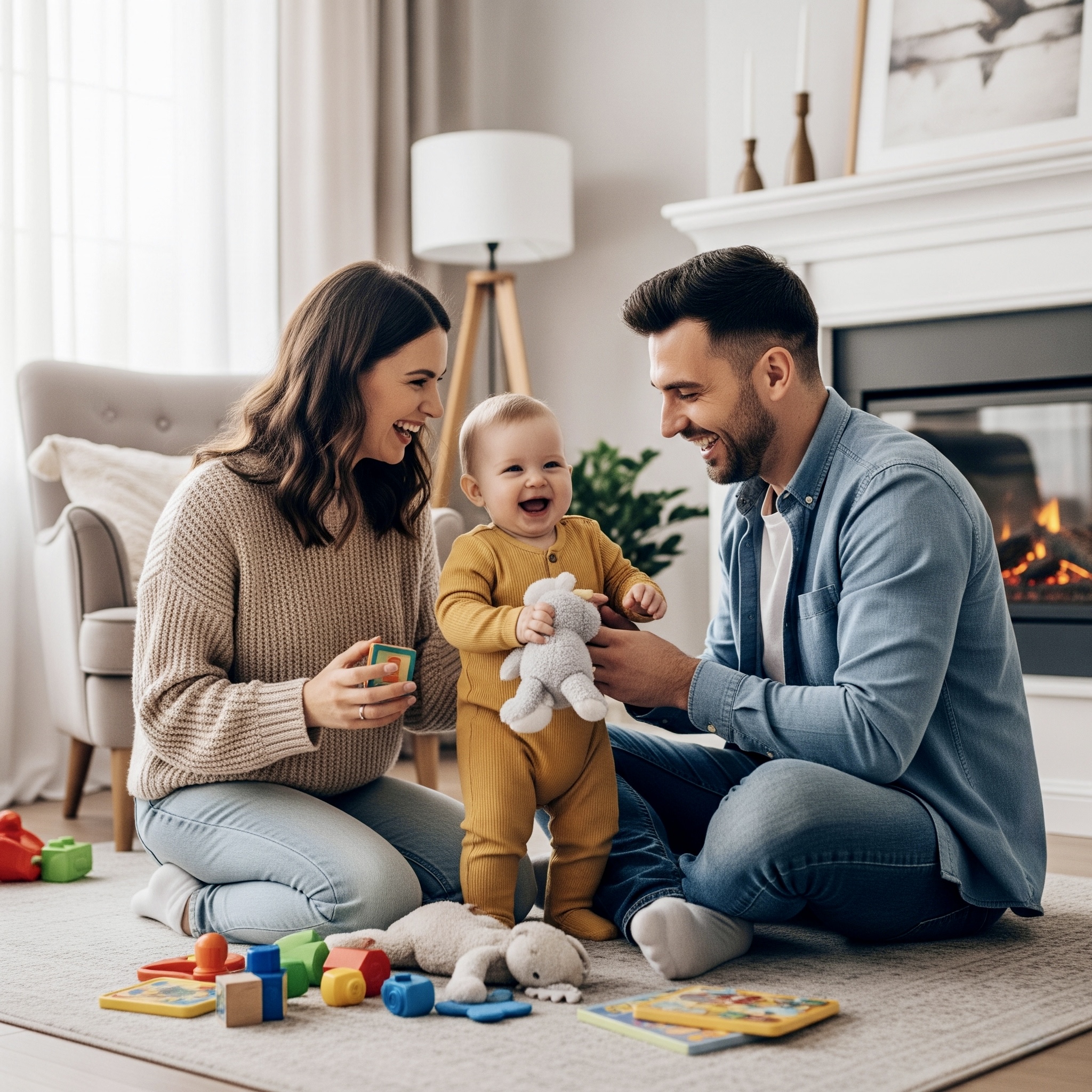
It might be a 2 a.m. feeding, humming the same lullaby your own mother once sang to you, or the way you always narrate what’s for dinner while your baby watches from the highchair. These small, unplanned repetitions are often where the most meaningful family traditions new baby households ever build truly begin.
Creating meaningful family traditions new baby doesn’t require elaborate planning or expensive preparations; it simply needs intention, consistency, and love. From the moment your little one arrives, you have the incredible opportunity to establish customs that will become the golden threads weaving through your family’s story for generations to come.
Research consistently shows that families with strong traditions raise children who feel more secure, have better emotional regulation, and develop stronger family bonds. These aren’t just sweet moments; they’re investments in your child’s emotional foundation and your family’s legacy.
Disclosure: This post contains affiliate links. If you make a purchase through these links, we may earn a small commission at no additional cost to you. This helps us keep providing free, quality content for parents everywhere.
Written by Kelly, Childcare Specialist, and Peter, Researcher and Child Development Advocate.
Table of Contents
Why Family Traditions Matter More Than Ever: Meaningful Baby Traditions

In our fast-paced, digitally connected world, creating these meaningful baby traditions becomes an anchor of stability and connection. These rituals provide predictability in an unpredictable world, creating safe spaces where your child learns about love, belonging, and what makes your family unique.
Research on family traditions and child development shows real, lasting benefits:
- Stronger emotional security and self-esteem
- Better stress management capabilities
- A stronger sense of family identity
- Improved communication skills
Researchers Marshall Duke and Robyn Fivush at Emory University found that children who know their family’s stories, the ones passed down through repeated traditions and rituals, show higher self-esteem, a stronger sense of control over their lives, and better emotional resilience than children who don’t.
Your baby might not understand these traditions initially, but they’re absorbing the love, consistency, and special attention that comes with each meaningful moment.
Take a look: Children Starting School: 7 Amazing Secrets to Transform Their Emotional Journey
1. The Morning Ritual That Makes Bonding Effortless
Start each day with intentional connection. Whether it’s singing the same welcome song when baby wakes up, sharing morning snuggles in your bed, or having coffee together while baby enjoys tummy time, morning rituals set a loving tone for the entire day. If your baby is still waking frequently at night, our guide on baby sleep techniques can help you build a restful routine that works for your whole family.
Pro tip: Create a special morning playlist that becomes your family’s wake-up soundtrack. Your baby will eventually associate these songs with comfort and family time, one of the simplest family bonding activities with baby you can start today, and a natural entry point into other baby first traditions ideas later on.
2. The Weekly Photo Habit Worth Keeping Forever
Designate one day each week for capturing your baby’s growth through themed photos. It could be Messy Monday with food exploration, Wonder Wednesday with new toys, or Snuggle Sunday with family pile-ups.
These weekly photo sessions become treasured documentation of your baby’s development while creating anticipated family time that everyone can participate in. It is one of the easiest family traditions new baby parents can keep up even during the busiest weeks.
By the time your baby turns one, these 52 weekly snapshots add up to something most parents never think to create on purpose: a full year of creating family memories newborn parents will treasure long after the sleepless nights are forgotten. Many families turn the collection into a simple printed photo book, a tangible keepsake that becomes part of the tradition itself.
Curious about the research behind why this matters so much? Family Traditions Help Kids Make Sense Of Life breaks it down in more detail.
3. The Bedtime Story Tradition That Outlives Childhood
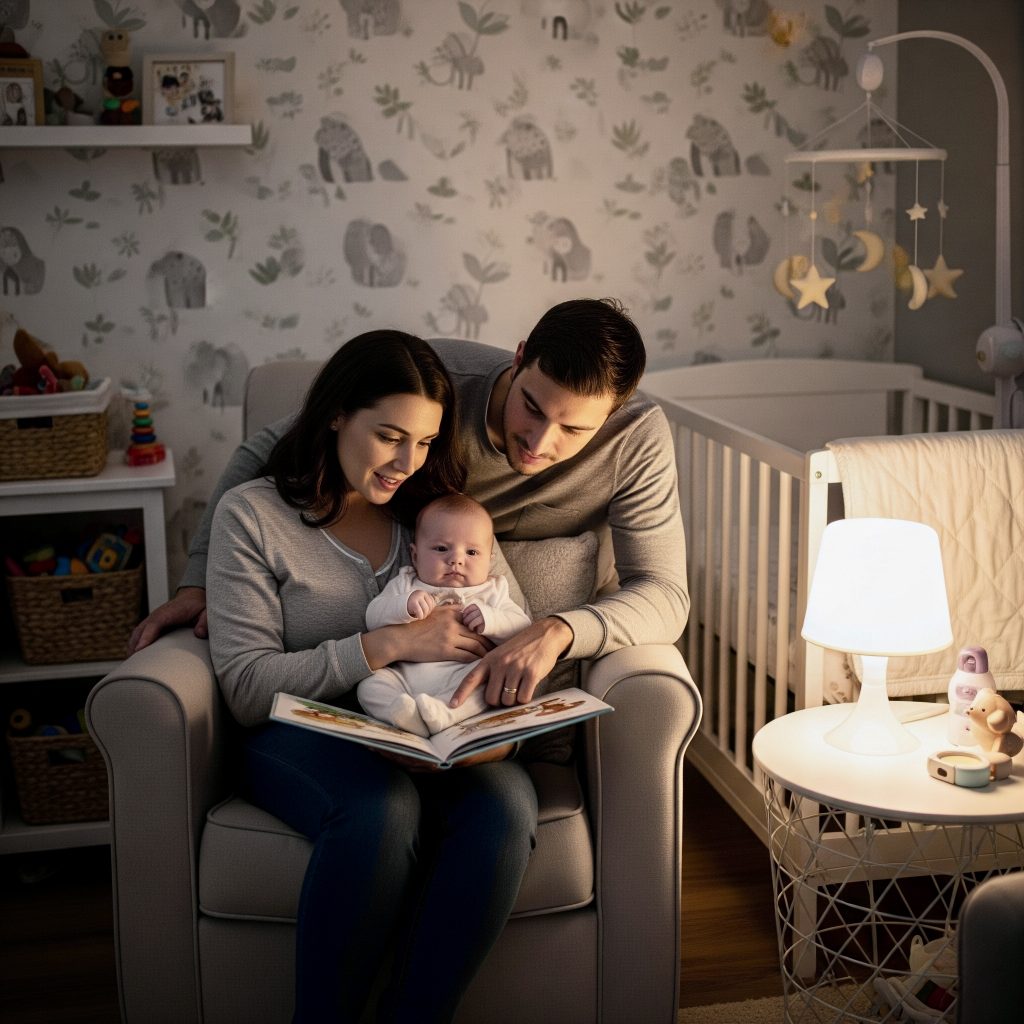
Transform bedtime reading into a multi-generational tradition by creating a special family story collection. Include books from your own childhood, stories about family history, and new discoveries you make together.
Make it special: Create a dedicated reading nook with soft lighting, comfortable seating, and a special blanket that only comes out for story time.
Even before your baby understands a single word, the sound of your voice, the same three books read in the same order, the same closing line every night, teaches their nervous system that the day is safely over. This kind of predictable wind-down is one of the simplest family bonding activities with baby you can offer, regardless of which specific books you choose, one of the simplest baby first traditions ideas to start on night one.
4. Why Every Milestone Deserves Its Own Celebration
Beyond birthday parties, celebrate monthly growing celebrations that acknowledge your baby’s development, another simple way of creating family memories newborn parents rarely plan for but always end up cherishing. Whether they’re rolling over, sitting up, or babbling new sounds, these mini-celebrations teach the importance of recognizing growth and effort.
Create a special milestone journal where you document these achievements with photos, date stamps, and short descriptions of the celebration. This kind of consistency is what turns family traditions new baby milestones into a habit your child will one day recognize as love.
Consider inviting grandparents onto a video call for the reveal, or keeping a small jar where you drop in a coin for every new milestone, cashing it in for a family outing once your baby turns one. Small, repeatable actions like these are what separate a real tradition from a one-time celebration, and another simple way of creating family memories newborn parents will look back on for years.

5. Seasonal Ceremonies That Teach Baby Life’s Rhythm
Creating meaningful traditions with your baby includes honoring the changing seasons together. Welcome each season with baby-appropriate activities: spring flower touching, summer water play, autumn leaf exploration, and winter texture discovery.
These seasonal transitions help your child develop awareness of natural rhythms while creating predictable excitement throughout the year.
Keep a simple box or bin where you store one object from each season, a pressed leaf, a seashell, a mitten. By your baby’s second birthday, opening that box together becomes its own small ceremony, a physical timeline of creating family memories newborn and toddler alike will grow to expect, and one of the more visual baby first traditions ideas parents tend to keep going the longest.
6. The Recipe Ritual That Turns Feeding Into Storytelling
Turn feeding time into cultural connection by introducing your baby to family recipes with ceremony and story, one more way of creating family memories newborn parents can start from the very first spoonful. Even if they’re only tasting pureed versions, explain the recipe’s history, who taught it to you, and why it’s special to your family.
Create a baby’s first foods photo album that documents their reactions to family favorites; these photos will become priceless family treasures, and one more thread in the fabric of your family traditions new baby will grow up recognizing.
If a recipe came from a grandparent who has since passed, this ritual carries extra weight: your baby is meeting a piece of family history they will never get to meet in person, one taste at a time. Even a simple recipe, repeated at the same time each month, becomes something your child associates with belonging long before they can explain why, one more of the small family bonding activities with baby that quietly builds identity over time.
7. The Music Ritual That Builds Brain and Bond
Establish regular dance parties, singing sessions, or instrument exploration time. Music creates powerful emotional memories and helps with brain development. Choose songs that represent your cultural background, family favorites, or new discoveries you make together.
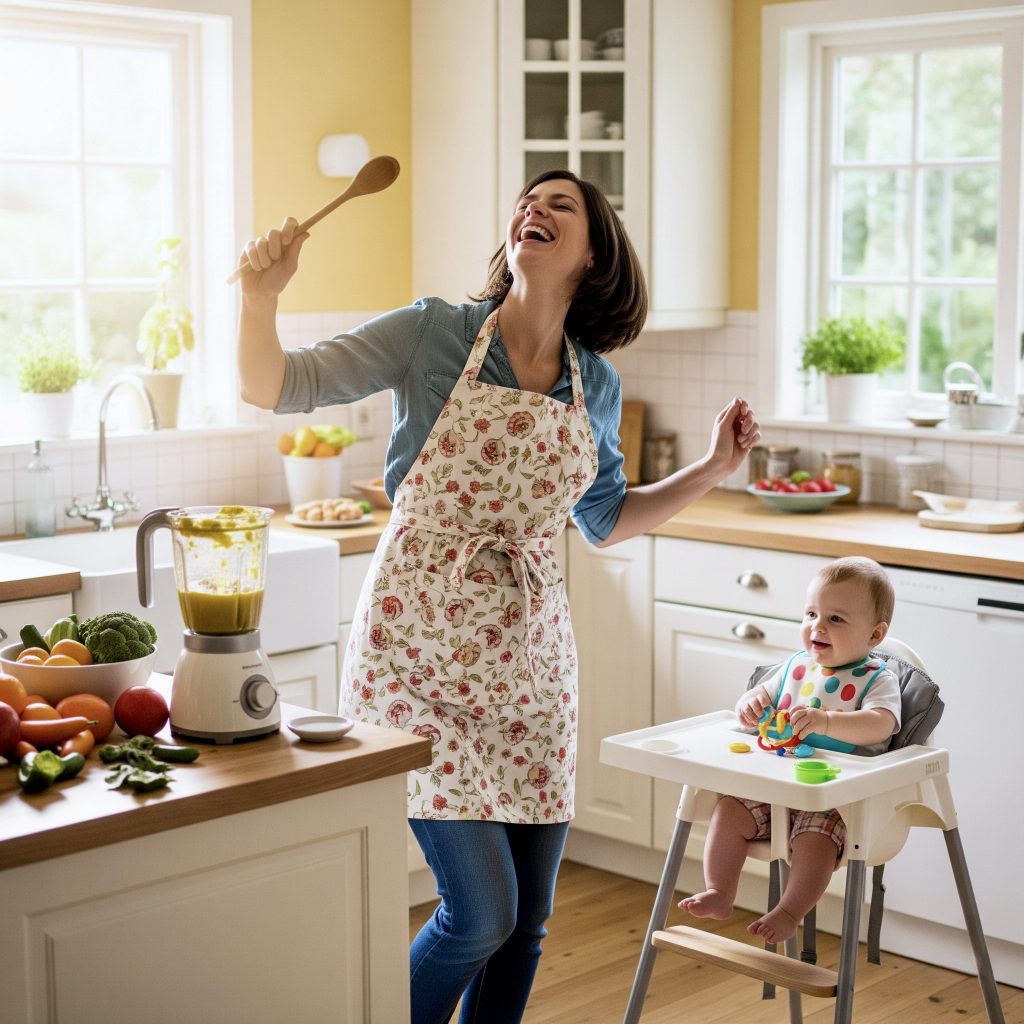
Implementation idea: Have kitchen dance parties while preparing baby’s food, or living room concerts where family members take turns performing for baby.
You don’t need musical training to make this meaningful. A parent humming off-key while swaying in the kitchen teaches a baby just as much about rhythm and connection as any polished lullaby. Over time, specific songs become shorthand for specific feelings, a wind-down song for bedtime, an energetic one for playtime, that your child will recognize instantly, a small proof that even the simplest baby first traditions ideas can carry real emotional weight.
8. The Walk That Becomes a Lifelong Ritual
Regularly take your baby outside for hello world walks where you describe surroundings, point out birds, feel different textures, and breathe fresh air together. These outdoor adventures become foundations for environmental appreciation and sensory development.
Create a nature journal with pressed flowers, leaves, or photos from your adventures together.
Even a five-minute walk around the block counts. Narrate what you see: the color of a neighbor’s door, a barking dog, leaves changing color. It costs nothing and is one of the easiest family traditions new baby households can start on day one, doubling as one of the simplest family bonding activities with baby around. For more structured ideas your baby can grow into as a toddler, borrow a few from Nature Activities for Babies and Toddlers.
9. Extended Family Traditions Worth Passing Down
Develop special ways to include grandparents, aunts, uncles, and close family friends in your baby’s routine, building some of the most meaningful baby traditions a child can grow up surrounded by. This might be weekly video calls with grandparents, monthly visits with special activities, or holiday traditions that bring everyone together.
This tradition-building extends beyond the nuclear family; it’s about building a supportive community around your child.
One tradition worth borrowing: ask each grandparent or aunt to record a short video answering the same question every month, what do you want this baby to know about our family someday? By the time your child is old enough to watch them back, you’ll have built an entire archive of family voices and love, one of the more meaningful baby first traditions ideas a family can start early.
10. The Ritual That Celebrates Every Bit of Growth
Create special ways to acknowledge your baby’s learning milestones. This could be a first words celebration dinner, a crawling achievement photo shoot, or a new skills demonstration for family members.
These celebrations teach your child that growth and learning are valued and celebrated in your family, one of the simplest family traditions new baby households can start without any planning at all.
These moments don’t need an audience of dozens. A single grandparent on speakerphone, a homemade sign, a favorite meal that night, all of it communicates the same message: what you just did matters to this family. That message, repeated consistently, shapes a child’s confidence far more than any single grand gesture ever could.
Family Celebration Rituals Across Different Traditions and Cultures
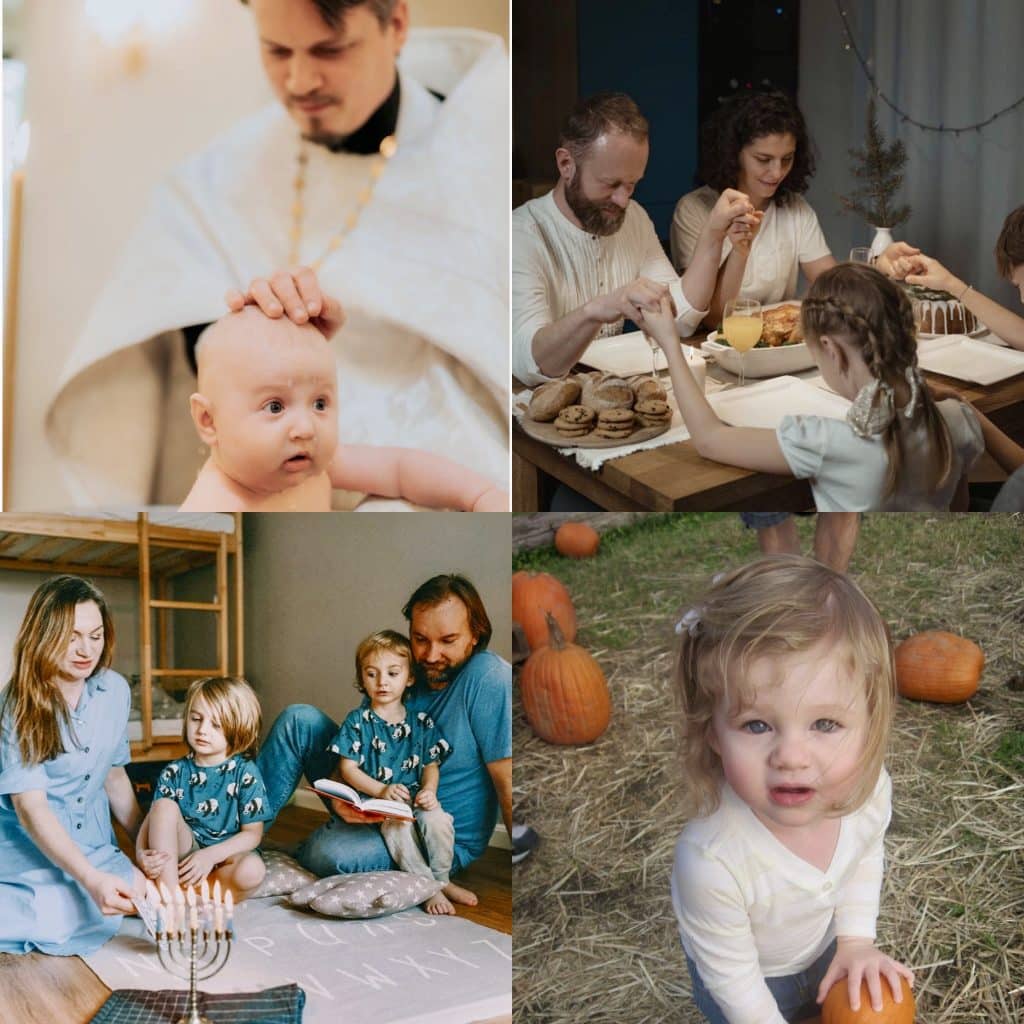
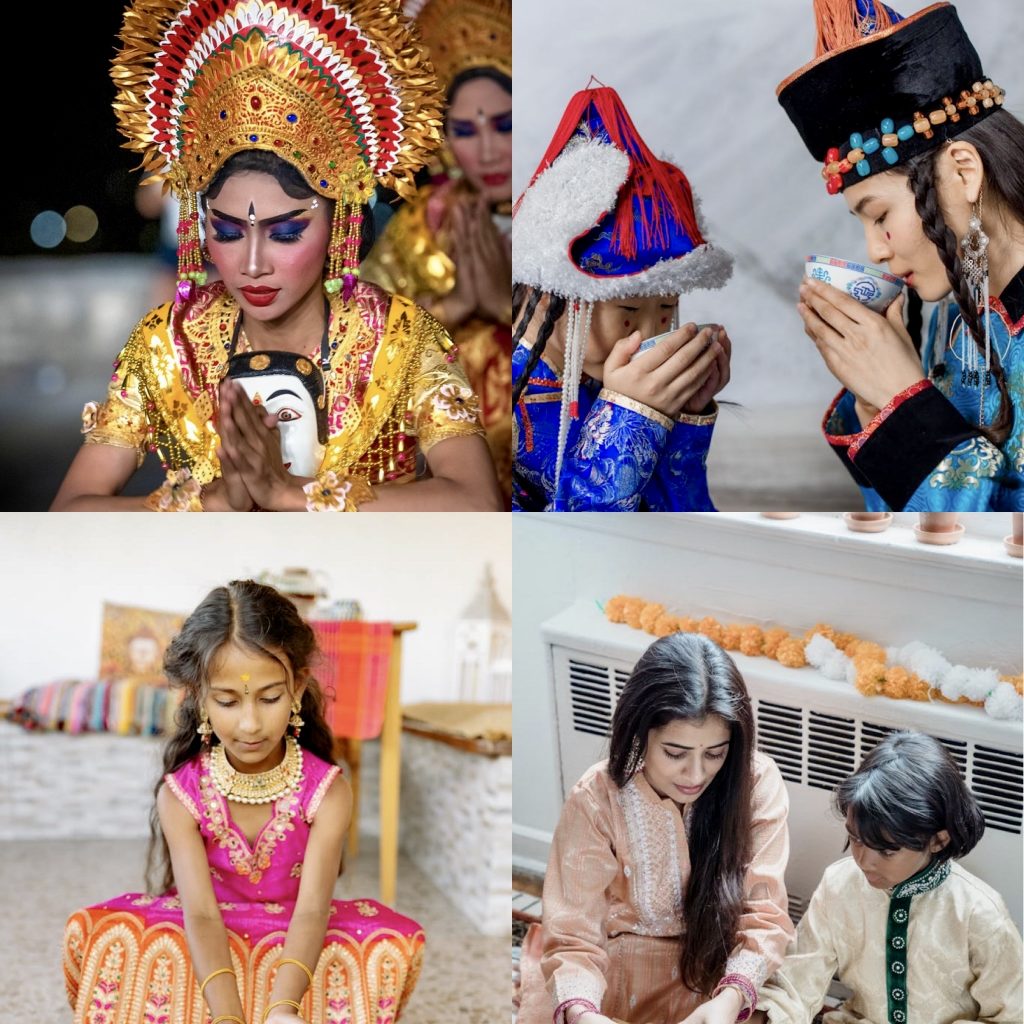
Every culture brings its own rhythm to family life, and blending those customs into your baby’s earliest days is one of the most meaningful baby traditions you can offer. Some families light candles together each Friday evening, others gather for a Sunday meal that has been passed down for three generations, and some simply mark the changing seasons with a shared meal or song.
None of these customs need to be elaborate to matter. What makes them powerful is repetition: the fact that your baby will grow up knowing exactly what happens on a given day, in a given season, within your family. Over time, these small, culturally rooted rituals become part of your child’s sense of identity, showing them not only who their family is, but where they come from.
From Meaningful Baby Traditions to Lifelong Memories
Every photograph in this collection represents something deeper than a moment captured. They are proof that family bonding activities with baby do not require perfection, only presence. Whether it is a quiet feeding ritual, a bath time song, or a cultural ceremony passed down through generations, these are the experiences that shape who your child will become.
This is what your baby will remember, even before memory itself begins.
Creating family memories with your newborn is not about grand gestures. It is about the small, repeated acts of love that accumulate over time and become the stories your family tells for decades. A first holiday meal, a handmade ornament, a song sung in your grandmother’s language; these are the threads that weave a family’s identity together.
If you are just beginning to think about baby first traditions ideas, start with what feels natural and meaningful to your own family. There is no right or wrong way to build a legacy of love. The only requirement is that you show up, consistently, with intention and warmth.
Making Traditions Stick: Practical Implementation Tips
Start small and build gradually. Don’t try to implement all family traditions new baby ideas at once. Trying to launch five new rituals in the same month usually means all five quietly disappear by week three. Choose 2-3 that resonate most with your family and let them become automatic before adding the next.
Be flexible. Traditions should serve your family, not stress you out. A ritual that requires an exact location, exact timing, or a particular mood from everyone involved will eventually break under real life. Build in room to adapt: a bedtime story can happen in the car if you’re traveling, a photo session can move to Saturday if Sunday gets busy.
Document the journey. Photos, journals, or short videos of your traditions become treasured family artifacts over the years. You don’t need a fancy camera or an elaborate system, a shared phone album labeled by month is enough. What matters is having somewhere to look back, since creating family memories newborn parents can actually revisit is the whole point of documenting at all.
Include everyone. Partners, siblings, and extended family all belong in these rituals. Even a sibling who is only three years old can hold the camera, choose the song, or help pick what goes in the memory box. Giving every family member a real role is what turns a parent’s idea into a family tradition.
Age-Appropriate Tradition Evolution
Remember this beautiful journey is just the beginning. Plan how these traditions will evolve as your child grows:
Infant stage (0-12 months): Focus on sensory experiences, routine comfort, and bonding. Your baby cannot participate in any traditional sense yet, but they are absorbing tone of voice, physical closeness, and the predictability of a routine repeating in the same order. This is the foundation every later stage builds on.
Toddler stage (1-3 years): Add participation elements, choice-making, and simple responsibilities. This is also the phase when emotional outbursts are common, so our post on toddler tantrums offers practical strategies to navigate those moments with calm and connection. It’s also the age where a toddler might start requesting the ritual by name, or protesting loudly if a step gets skipped, a clear sign the tradition has taken root.
Preschool stage (3-5 years): Include storytelling, tradition explanations, and creative contributions. By now, your child can help plan the next celebration, suggest their own additions, or explain the tradition’s meaning in their own words, turning a family custom into part of their identity.
The Ripple Effect of Family Traditions
When you invest in creating meaningful traditions with your baby, you’re not just building memories; you’re establishing patterns of connection that will influence how your child approaches relationships, handles stress, and creates their own family someday.
These traditions become your family’s unique fingerprint. Pairing strong family traditions with a positive approach to discipline creates a powerful foundation for raising confident, secure children. Our post on positive discipline for toddlers shows you how to guide behavior with love and consistency.
Adults who grew up with strong family traditions tend to be:
- More likely to create traditions with their own families
- Better at maintaining long-term relationships
- More resilient during difficult times
- Stronger in their sense of personal identity
Creating Your Family’s Tradition Blueprint: Baby First Traditions Ideas
Building these customs is about intentionality, not perfection. Choose traditions that reflect your values, cultural background, interests, and lifestyle. The most important element is consistency and the love you pour into each moment.
Your baby won’t remember these early traditions consciously, but they will carry the emotional imprint of feeling loved, valued, and special. These feelings become the foundation for their emotional security and their understanding of what family means.
Start today, start small, but start with intention. The traditions you create with your baby today will become the stories they tell their children tomorrow, creating a beautiful legacy of love that extends far beyond your current imagination.
Conclusion
The traditions that stay with your child forever are rarely the elaborate ones. They are the song you sang every morning, the same blanket at story time, the silly dance in the kitchen while you made dinner together.
Your baby will not remember the details of these early moments. But they will carry the feeling, the sense of being loved, anticipated, and celebrated in the ordinary minutes of an ordinary day. That feeling becomes the foundation for everything else. Start with one tradition this week. Keep it simple. Keep it consistent. The rest will build itself.
Looking for comprehensive guidance on caring for your baby? Our book ‘How to Care for Children: From Birth to Age 2’ combines professional childcare expertise with evidence based child development research. Written by Kelly and Peter, this guide provides clear, reliable advice rooted in real world childcare. Available in English, Spanish, and Portuguese on Amazon.
Click the link below your preferred language to get your copy!

1. When should I start establishing family traditions with my new baby?
You can begin creating meaningful traditions from birth. While newborns won’t consciously understand traditions, they benefit from consistent routines and loving interactions. Start with simple daily rituals like morning songs, bedtime stories, or gentle massage routines. Research shows that babies begin forming emotional memories around 6 months, making this an ideal time to establish family traditions new baby will begin to recognize and anticipate, through simple family bonding activities with baby repeated at the same time each day.
2. What are the easiest family bonding activities with baby for busy parents?
The most sustainable traditions integrate seamlessly into existing routines. Consider morning welcome songs while changing diapers, special bedtime stories in a dedicated reading nook, weekly photo sessions on the same day each week, kitchen dance parties during meal preparation, and consistent goodnight rituals. Focus on consistency rather than complexity, choosing 2 to 3 daily rituals you can maintain even during busy weeks.
3. How do family traditions benefit child development?
These meaningful baby traditions provide multiple developmental benefits. Emotional security develops through consistent routines that help babies feel safe and loved. Brain development strengthens as repeated positive experiences create neural pathways. Language acquisition improves through regular songs, stories, and conversations that boost communication skills.
Social bonding deepens as special family moments strengthen attachment relationships between parents and baby. Cultural identity forms as traditions connect babies to family heritage and values, which is really just another way of creating family memories newborn parents will draw on for years.
4. Should I include extended family in these traditions?
Absolutely! Including grandparents, aunts, uncles, and close family friends in your baby’s early celebrations creates a stronger support network and richer experiences. Consider weekly video calls with distant relatives, monthly visits with special activities planned, holiday traditions that bring everyone together, sharing photos and updates of daily rituals, and creating specific roles for extended family in milestone celebrations, all genuinely simple baby first traditions ideas any relative can join without much planning.
5. How often should we practice these traditions?
The frequency depends on the specific tradition and your family’s schedule. Daily traditions like morning songs or bedtime stories work well for establishing security and routine. Weekly traditions such as photo sessions or special outings provide anticipated excitement without overwhelming busy schedules. Monthly celebrations for milestones offer opportunities for more elaborate baby first traditions ideas. It’s better to have simple daily traditions you never miss than elaborate weekly ones you can’t sustain during busy periods.
6. What if my baby doesn’t seem to respond to our traditions yet?
Every baby develops at their own pace, and responses to family rituals vary greatly. Some babies show immediate engagement with smiles and excitement, while others may appear indifferent initially. Continue maintaining consistent traditions because babies benefit from routine even when they don’t show obvious responses. Most babies begin showing clear responses between 4 to 8 months, which is exactly why consistency matters more than instant reaction when building meaningful baby traditions.
7. How do I adapt these traditions as my child grows?
Successful family bonding practices evolve naturally with your child’s development. During the infant stage (0 to 12 months), focus on sensory experiences and consistent routines. In the toddler stage (1 to 3 years), add participation elements and simple choices. During the preschool stage (3 to 5 years), include storytelling and creative contributions. The core elements remain consistent while the complexity and participation level increase.
8. Can family traditions replace structured baby classes?
While these traditions provide tremendous benefits, they complement rather than replace structured developmental activities. Family traditions build emotional security, family bonding, and cultural identity through consistent loving interactions at home. Structured classes provide social interaction with other babies, expert guidance on developmental milestones, and specific skill development in organized settings. Combining both approaches creates a well rounded environment for your baby’s growth.
9. How do family traditions help with difficult transitions?
Consistent rituals provide stability during challenging transitions like returning to work, moving homes, or welcoming siblings. Morning routines, bedtime stories, and weekend traditions become anchors of security when other aspects of life feel uncertain. Research shows that children raised with consistent family traditions new baby rituals included adapt more successfully to major life changes, maintaining emotional continuity through familiar, comforting routines.
10. What should I do if my partner and I have different cultural traditions for our baby?
Blending different cultural backgrounds creates rich opportunities for meaningful baby traditions your child will cherish. Start by discussing which traditions from each culture feel most meaningful and align with your family values. Create fusion traditions that honor both heritages, such as celebrating holidays from both cultures or combining storytelling traditions in both languages. Introduce cultural foods, music, and celebrations from each background, so your baby grows up appreciating their diverse heritage, one of the richer family traditions new baby families with mixed backgrounds can offer.
I love the tips!!! Thank you!
Thank you so much!
Muito Obrigada!
Amazing suggestions
Thank you!