
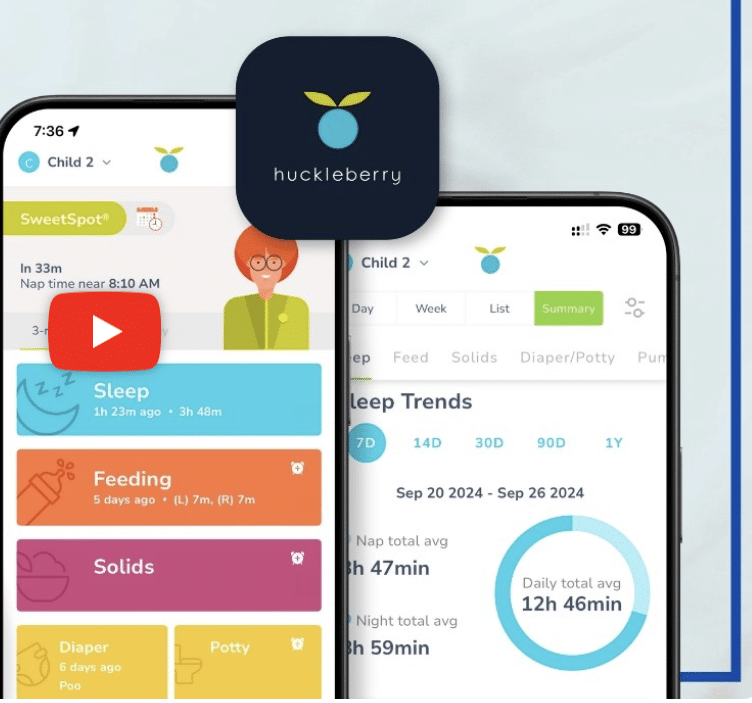
Every new parent dreams of peaceful nights and healthy baby growth. Technology has transformed how parents care for their newborns, offering reliable tools that combine science, data, and comfort. Choosing the best baby sleep monitoring apps and the right development gadgets can make a real difference in your baby’s safety, sleep quality, and early milestones.
Some baby sleep monitoring apps are more than just technology. A baby sleep monitoring apps is more than a piece of technology. It is a modern parenting assistant that tracks sleep cycles, detects movement, and turns raw data into insights you can act on tonight.
These tools read sound, movement, and in some cases breathing patterns. With accurate tracking, parents spot early sleep problems, build better routines, and stop guessing at three in the morning.
These apps use sound, movement, and even breathing patterns to help parents understand their baby’s needs. With accurate tracking, parents can identify early sleep problems, set up better routines, and reduce nighttime stress.
15 Amazing Baby Essentials Every Parent Needs in 2026
Disclosure: This post contains affiliate links. If you make a purchase through these links, we may earn a small commission at no additional cost to you. This helps us keep providing free, quality content for parents everywhere.
Written by Kelly, Childcare Specialist, and Peter, Researcher and Child Development Advocate.
Table of Contents
What to Look for Before Buying Any Baby Sleep Monitor (Most Parents Miss This)
Not all sleep monitoring apps are built the same way, so it helps to know exactly what separates a genuinely useful app from one that just looks impressive in the app store.
1. Accuracy and Real-Time Monitoring
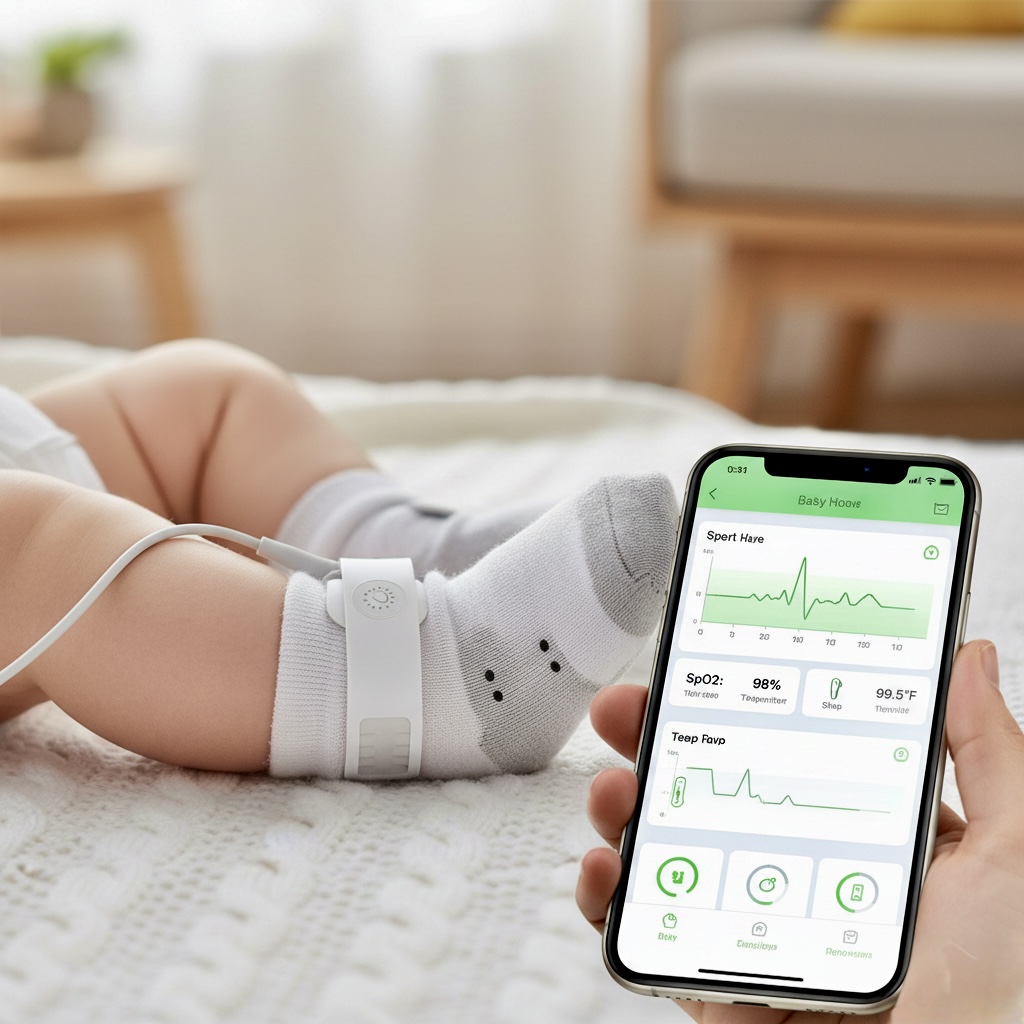
Accuracy is the foundation of any smart baby monitor. Look for apps connected to devices that use sensors to track motion, sound, and breathing. Apps like Nanit, Owlet Dream, and Sense-U provide real-time insights about oxygen levels, temperature, and sleep positions.
When data is reliable, parents can act quickly if their baby needs attention. This creates a safer and more predictable sleep routine.
American Academy of Pediatrics (AAP)
2. Safety and Data Privacy
Baby monitoring apps collect sensitive information. Before installing any app, check whether the company complies with privacy regulations such as COPPA or GDPR. Choose apps that encrypt your baby’s data and do not share it with third parties.
3. Integration with Smart Devices
Modern baby care technology integrates with smart home systems. Some apps connect to cameras, nightlights, or white noise machines. Integration allows parents to adjust room conditions, control lighting, or play soothing sounds from their phones without waking the baby.
4. Customizable Alerts and Reports
The best apps send instant alerts if something unusual happens, such as breathing pauses or crying. They also offer weekly or monthly sleep reports that help track long-term progress.
5. Ease of Use
A newborn sleep tracker should be intuitive enough to use with one hand, in the dark, while holding a baby. That sounds like a small detail until the first night you need it. Check whether the live video opens directly from the notification or requires you to unlock, open the app, and navigate through menus first. Look for how many taps separate you from the current room temperature and the last feeding time, because those are the two numbers you will check most at three in the morning. Apps that require repeated logins or that log you out after inactivity add friction exactly when you have the least patience for it.
A good smart baby monitor should feel like it disappears into the background of your routine, not add one more thing to manage.
Maintaining the right room temperature and humidity can significantly reduce health risks for newborns. Read the complete Baby Gear Guide 2026 for room environment monitoring recommendations.
The 7 Sleep Monitoring Apps That Parents Are Choosing Over Everything Else in 2026
These sleep monitoring apps range from simple sound trackers to advanced wearables with biometric sensors, giving parents options at every budget and comfort level.
1. Nanit Pro App
Nanit remains one of the most trusted baby sleep monitoring apps. It provides HD video, motion detection, temperature tracking, and personalized sleep tips. Parents can view sleep summaries every morning, making it easier to understand sleep patterns and adjust routines.
2. Owlet Dream App
Paired with the Owlet Dream Sock, this app measures oxygen levels and heart rate. It alerts parents when the baby’s vitals fall outside the safe range, offering peace of mind during naps and overnight sleep.
3. Sense-U Baby Monitor App
Sense-U tracks breathing, temperature, and sleep position. The app is ideal for parents who want accurate data without complex setup.
4. Cubtale Baby Tracker
Cubtale focuses on sleep, feeding, and diaper logs, offering a holistic view of baby care. The app helps identify sleep disruptions caused by feeding schedules.
5. HubbleClub by Motorola
This app offers real-time video streaming, sound alerts, and humidity control. The combination of video and environment tracking makes it one of the best for nursery safety.
6. Lollipop Smart Baby Monitor App
Lollipop’s design blends with any nursery decor. It tracks noise levels and crying detection while providing visual sleep data that helps parents understand rest quality.
7. Bluebell Baby Tracker
Bluebell integrates a wearable monitor, mobile app, and base station. It tracks breathing, temperature, and daily activity while generating customized sleep recommendations.
7 Baby Development Gadgets That Are Genuinely Worth Every Dollar
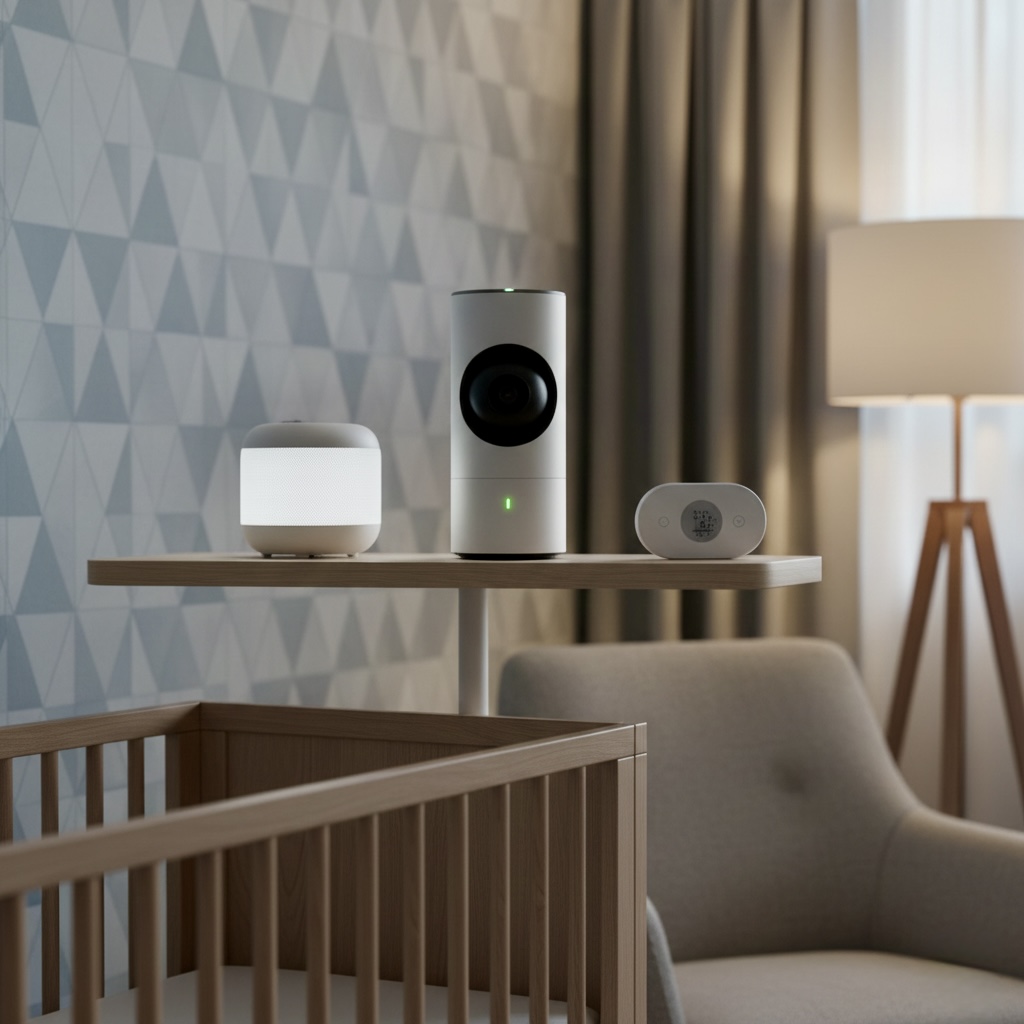
Not all gadgets on the market are worth the hype. The goal is to select devices that genuinely support your baby’s growth, comfort, and safety. Here are the most valuable baby development gadgets to consider in 2026. Several of these baby development gadgets pair directly with your existing setup, extending what a single device alone can track.
1. Bedside Bassinet for Easier Night Feedings
➡️ Parents report their babies sleep significantly longer with smart motion. See the top-rated smart bassinets on Amazon and check current pricing and availability.
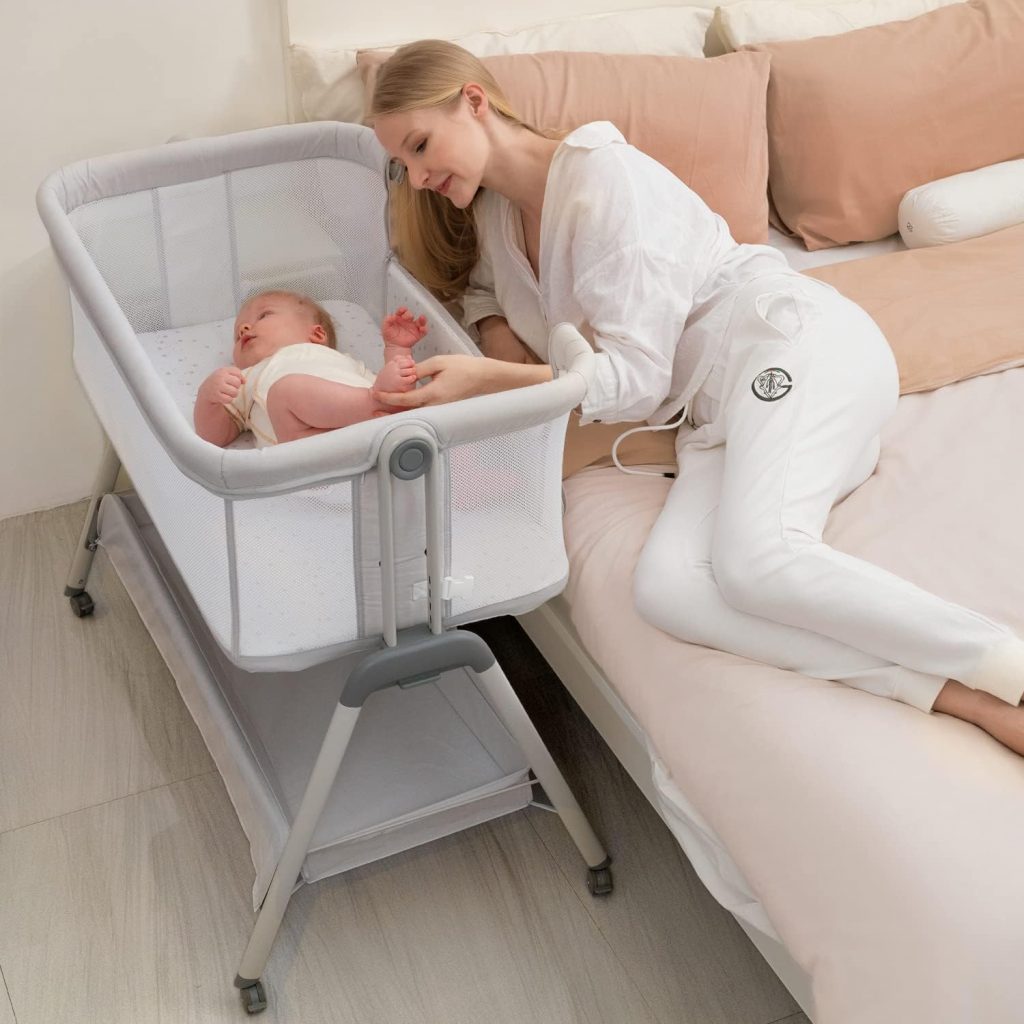
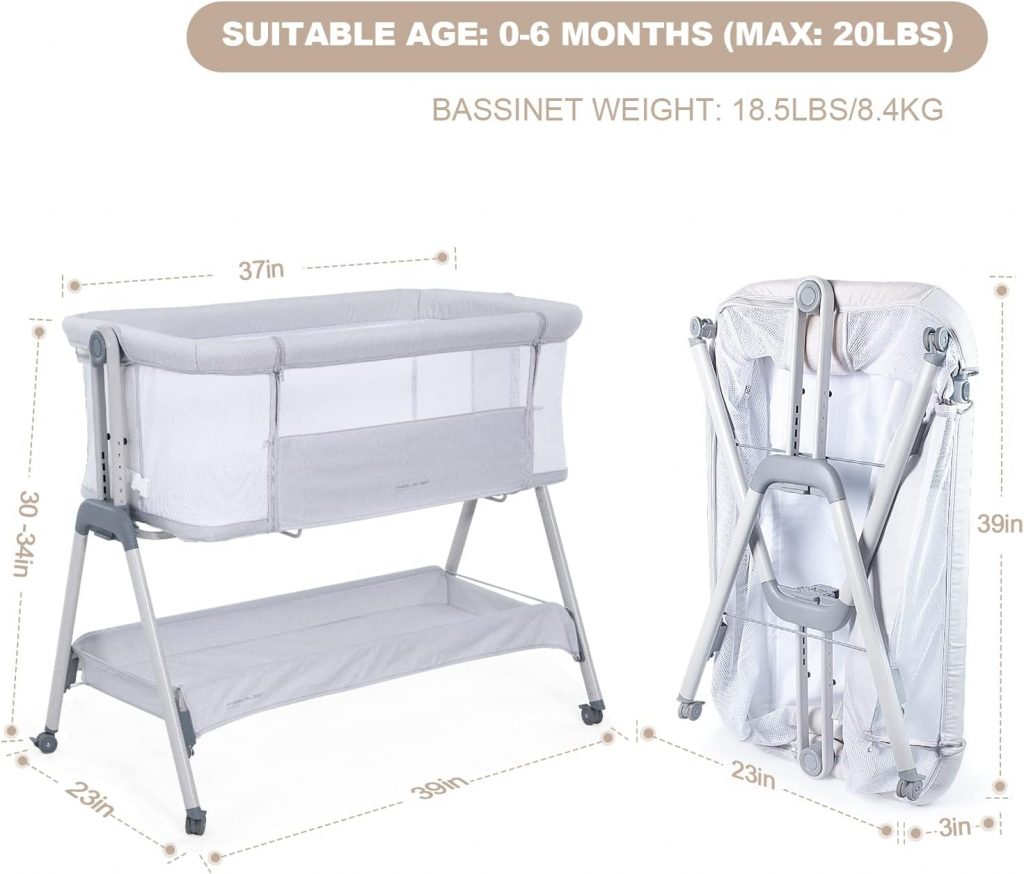
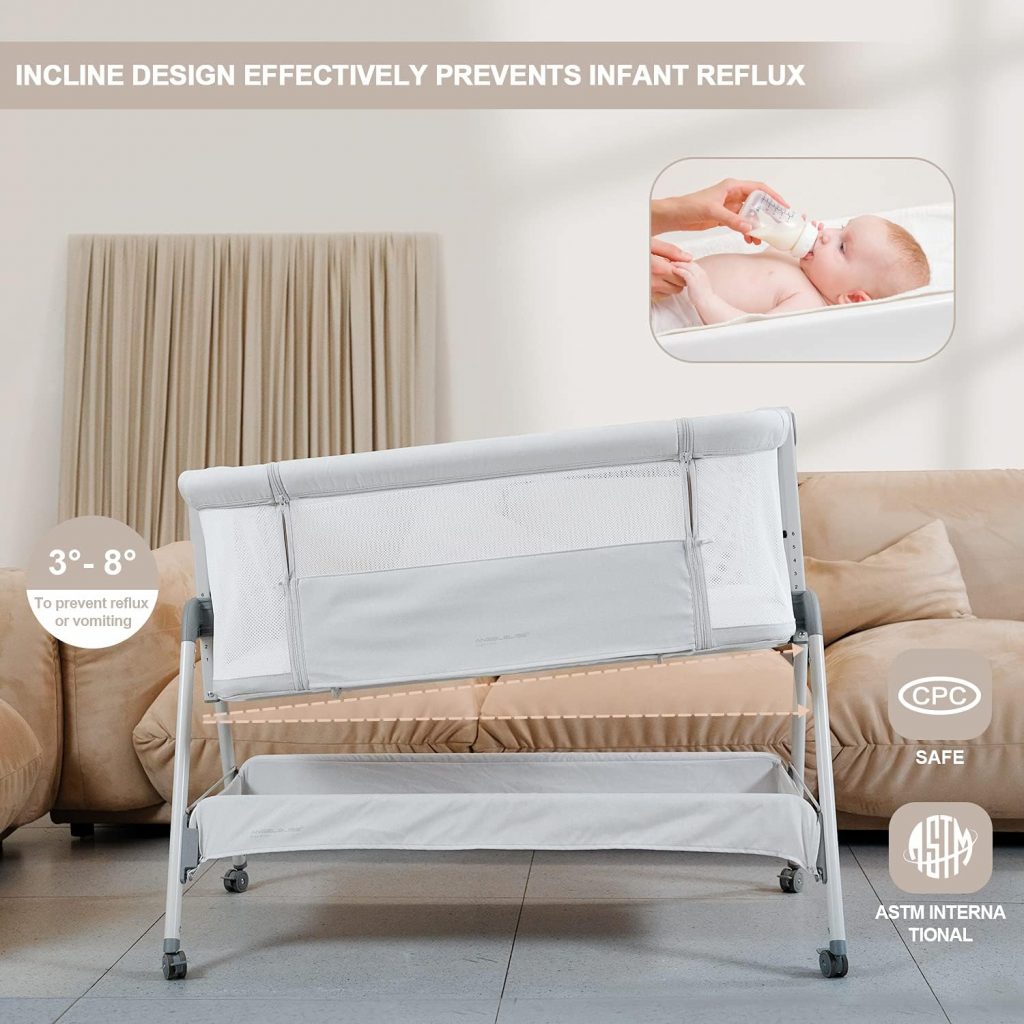
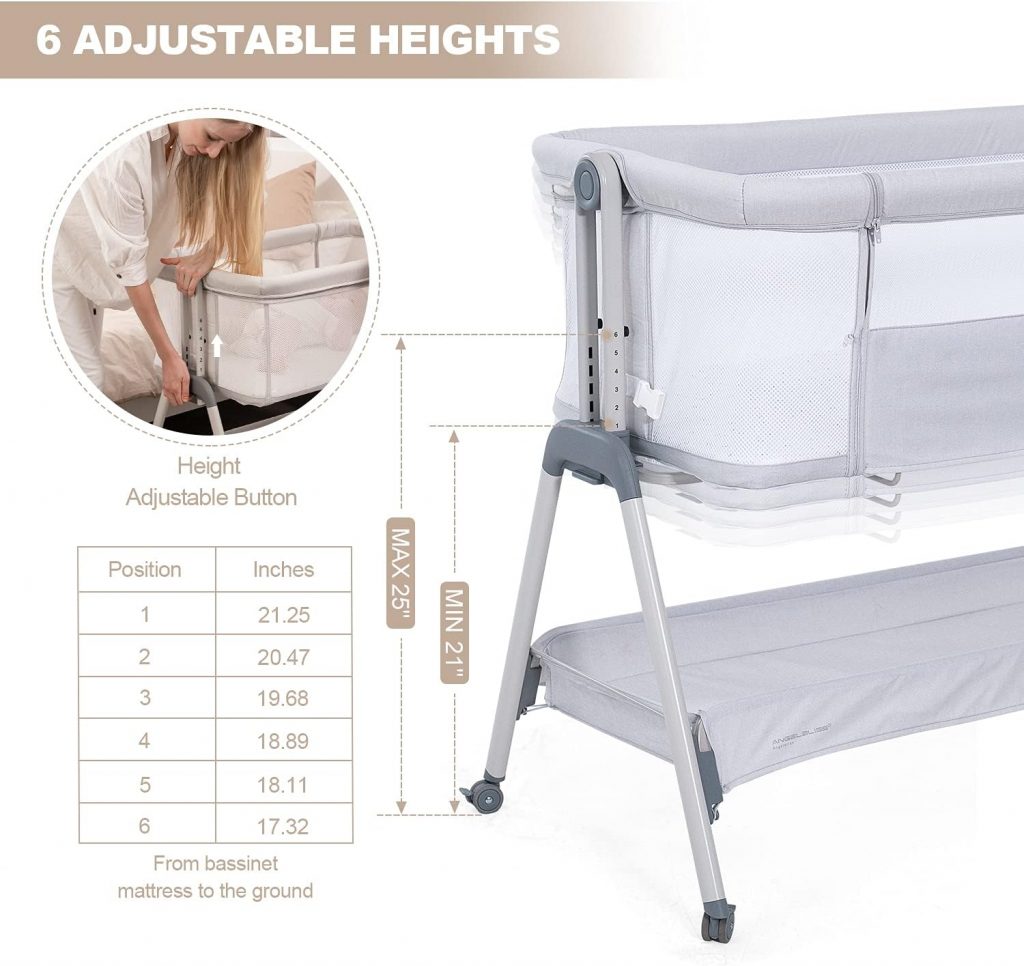
The ANGELBLISS Bedside Bassinet keeps your newborn within arm’s reach throughout the night, making those frequent nighttime feedings significantly easier and less disruptive for both baby and parents. The adjustable height feature allows the bassinet to align perfectly with your bed, creating a safe co-sleeping environment without the risks associated with bed-sharing.
The included mattress and breathable mesh sides provide a comfortable, well-ventilated sleep surface that meets current safe sleep guidelines. The wheels allow parents to move the bassinet quietly between rooms without waking a sleeping baby, and the easy folding design makes it practical for travel or compact storage during the day.
2. Smart Sound Machine and Nightlight
➡️ One of the most consistently recommended purchases by new parents worldwide. See white noise machines on Amazon and find the right sound and volume options for your nursery.

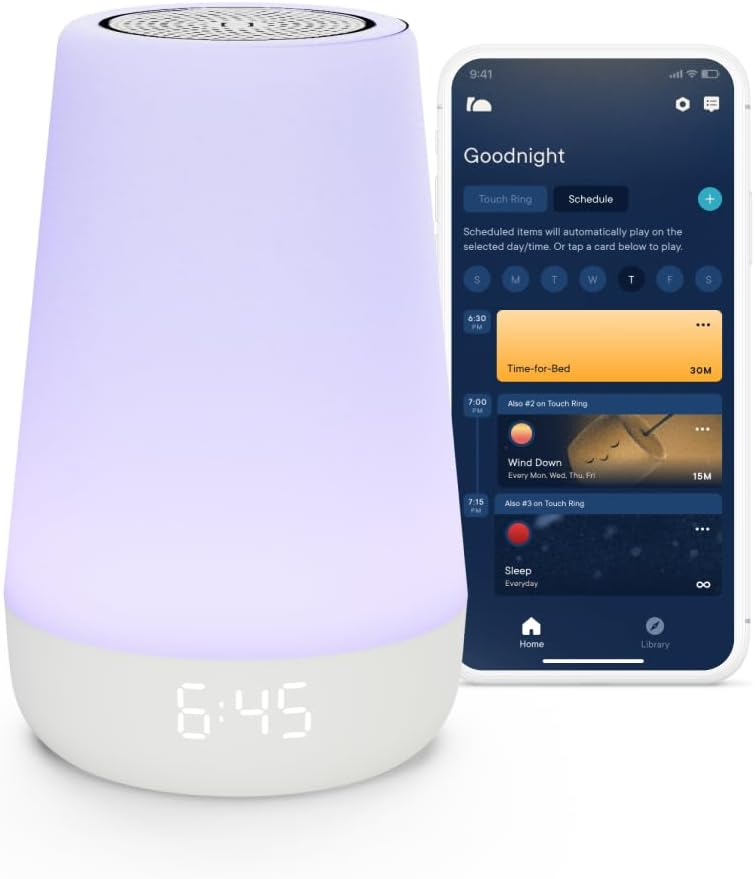
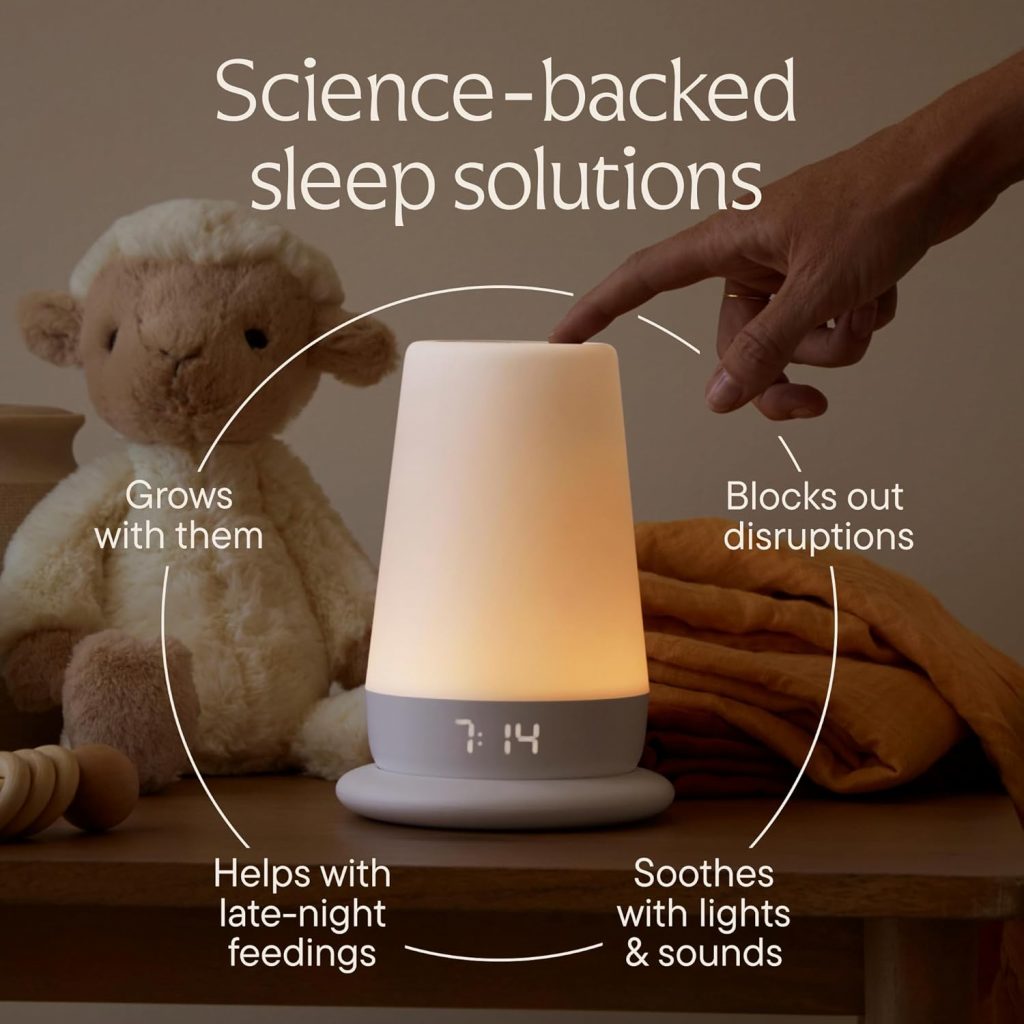
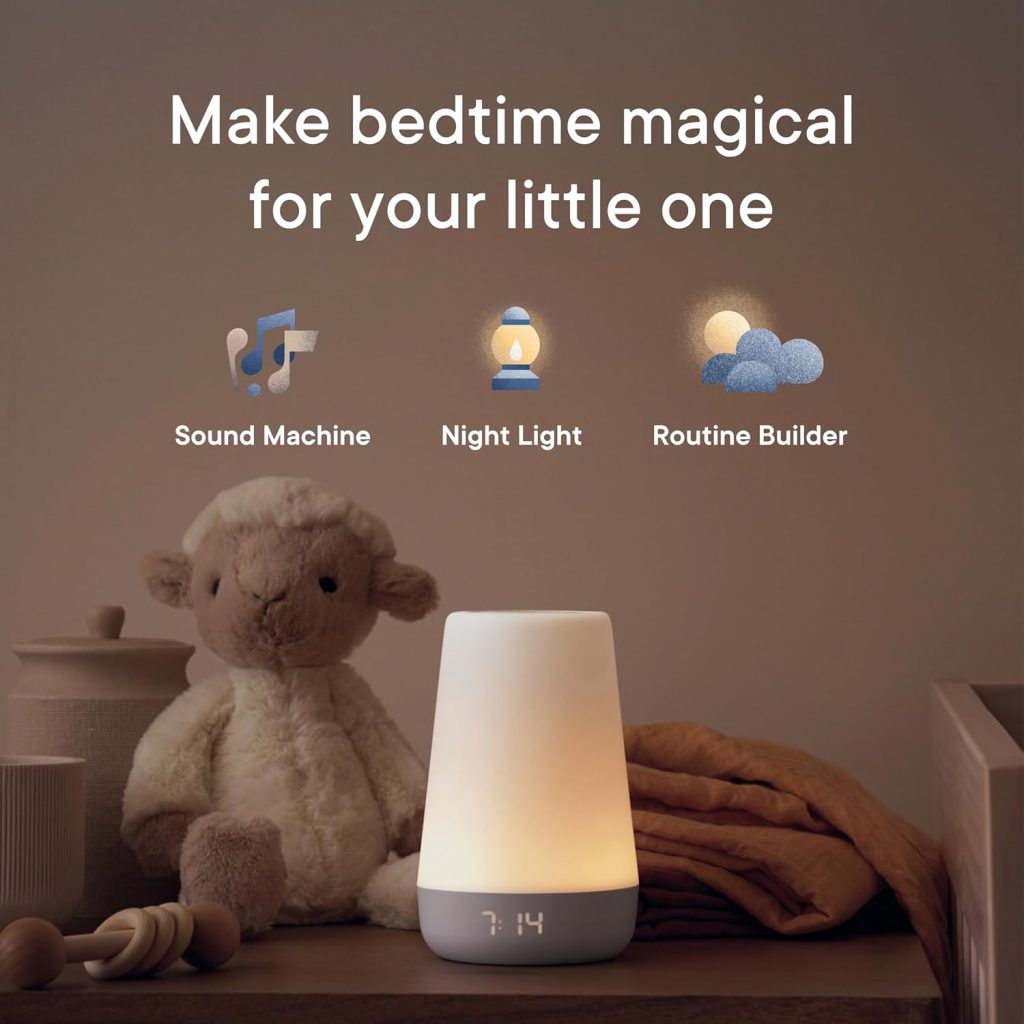
The Hatch Rest Sound Machine is one of the most complete sleep support tools available for nurseries in 2026, combining white noise, a customizable nightlight, a routine builder, and a time-to-rise alarm clock in a single device. Parents control every setting remotely through the Hatch app without entering the nursery, adjusting volume, light color, and brightness without ever risking waking a sleeping baby.
The white noise feature masks household sounds that cause light sleepers to stir, helping babies fall asleep faster and stay asleep through the natural transitions between sleep cycles. The soft nightlight provides just enough illumination for midnight feeds and diaper changes without flooding the room with disruptive light. As your baby grows into a toddler, the time-to-rise feature teaches children when it is appropriate to wake up, extending those precious morning sleep hours for the whole family.
The WiFi connectivity allows parents to create and save personalized sleep routines directly from their phone, making bedtime consistent and predictable, which pediatric sleep specialists consistently identify as the foundation of healthy infant sleep habits.
3. Musical Crib Mobile for Early Visual Focus
➡️ Visual stimulation in the first weeks directly supports brain development. See pediatrician-approved interactive mobiles on Amazon and choose one that adapts to your baby’s mood.
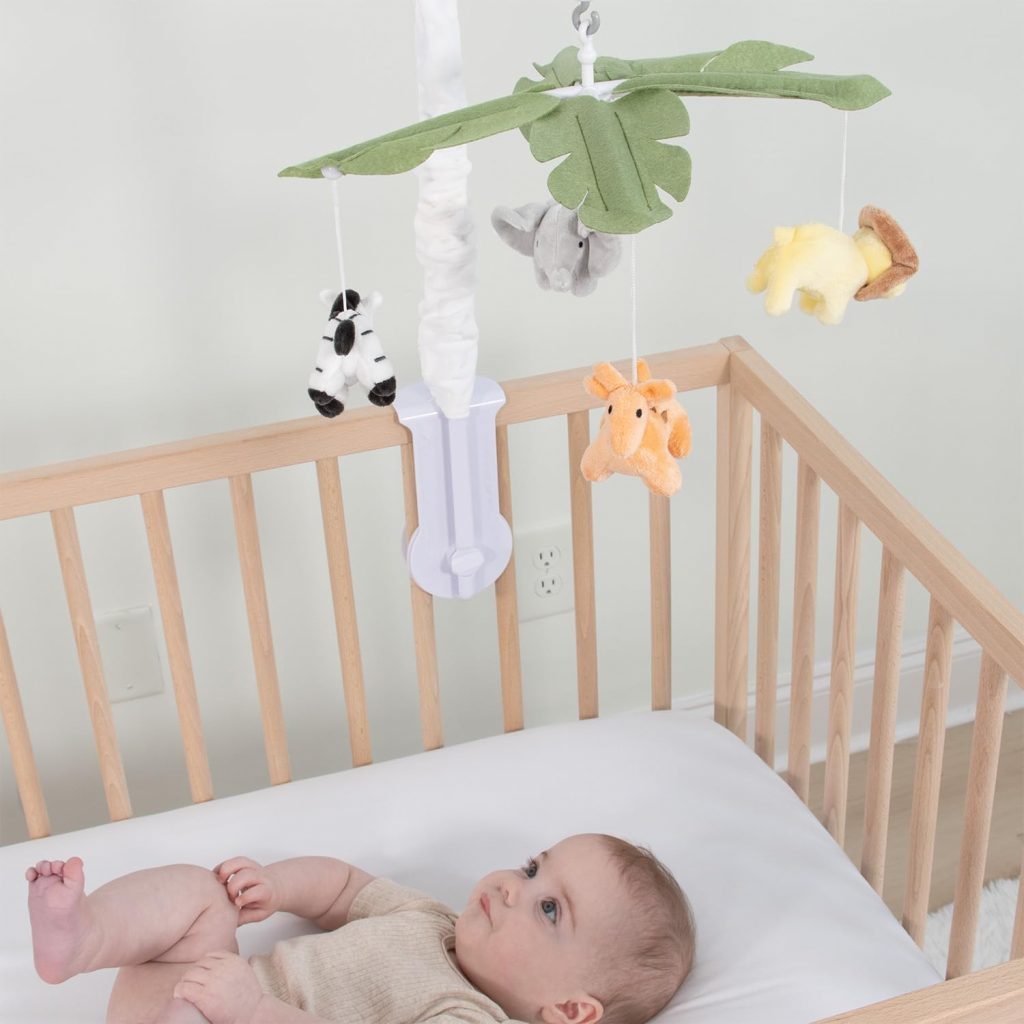
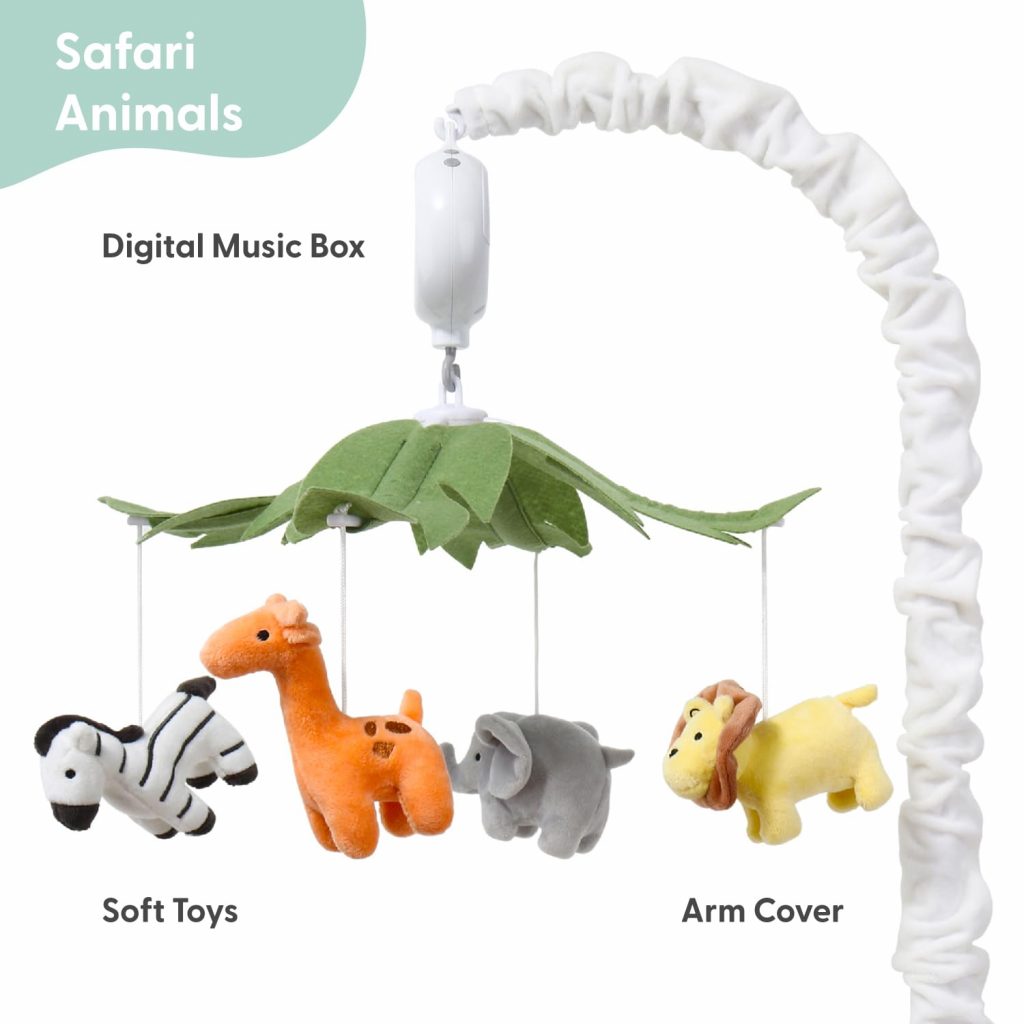
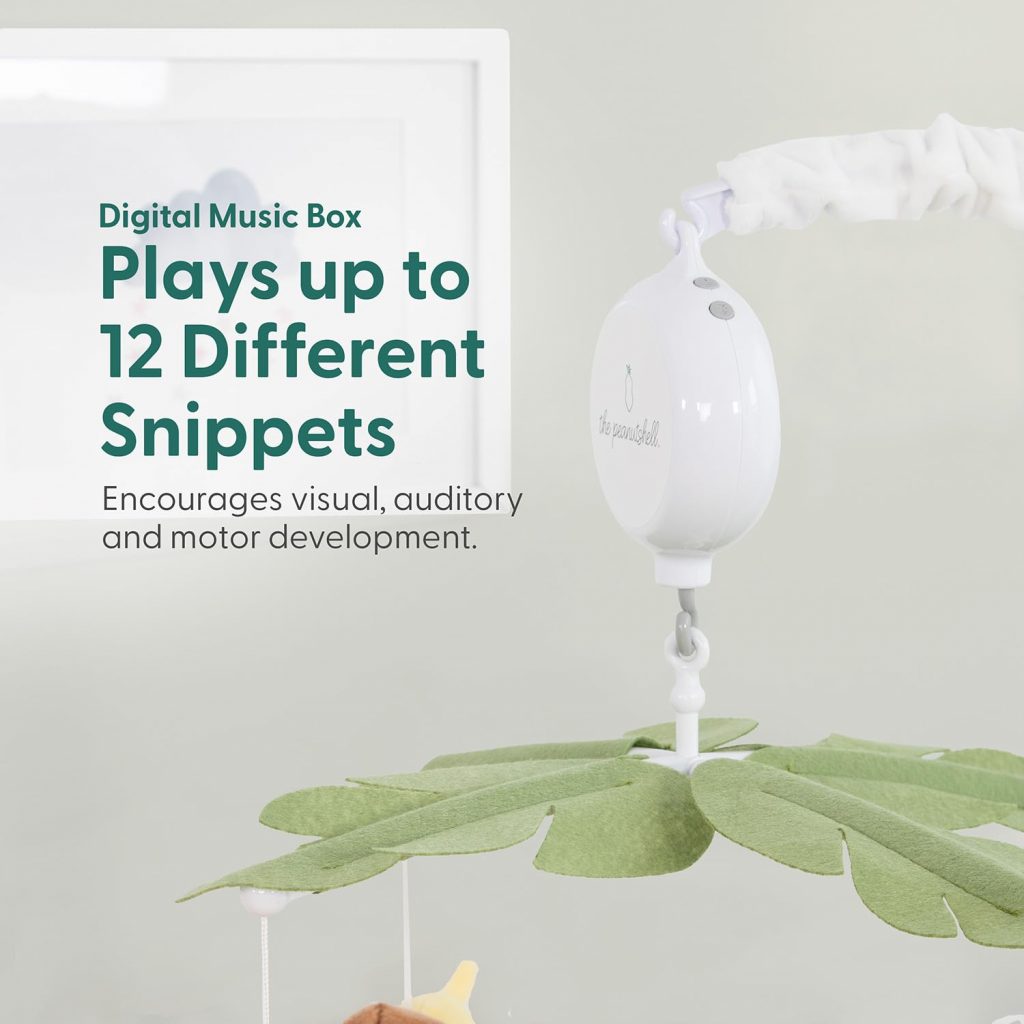
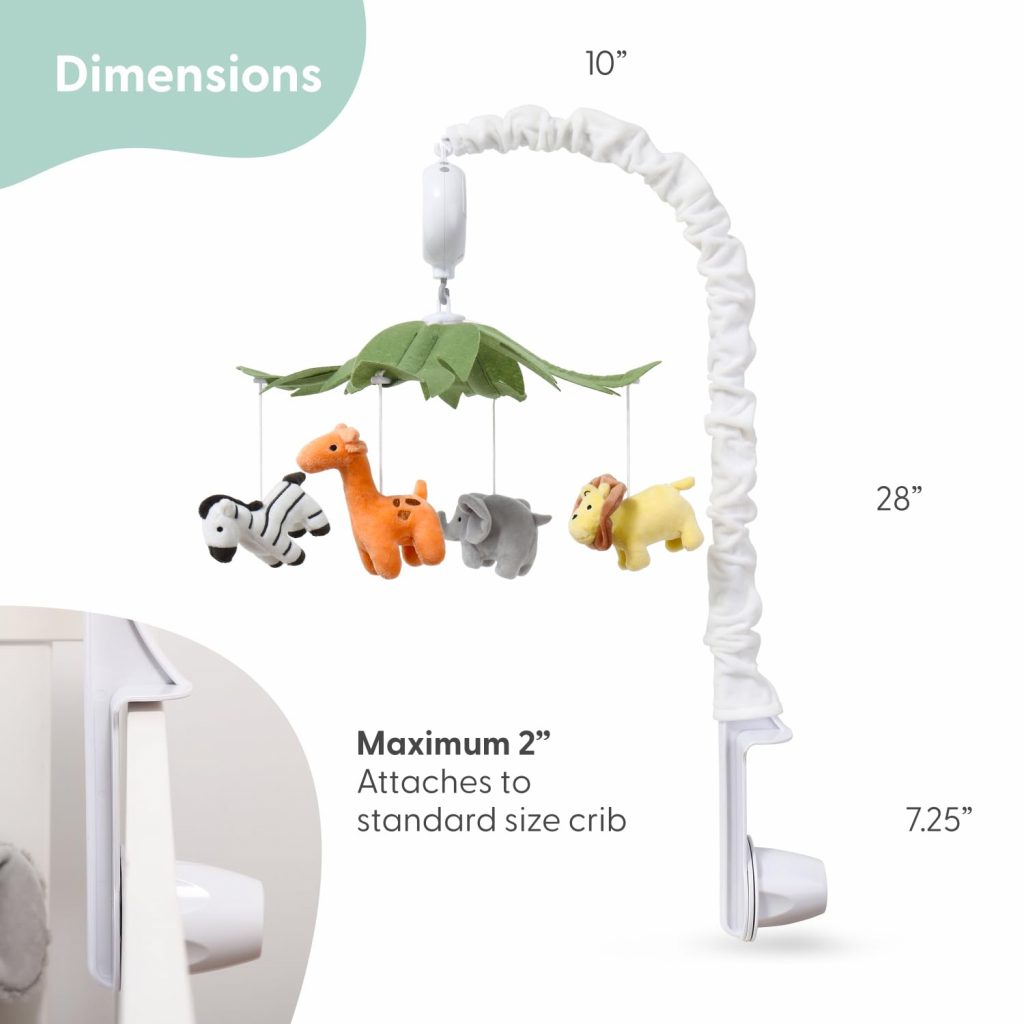
The Peanutshell Musical Crib Mobile brings gentle visual stimulation and soothing sound together in one nursery essential that supports newborn brain development from the very first weeks of life. The soft jungle and safari animal figures rotate slowly above the crib, encouraging babies to track movement with their eyes, which strengthens focus and early visual coordination in a way that directly supports cognitive development milestones.
The 12 built-in lullabies provide the consistent auditory comfort that helps newborns feel calm and secure during both nap time and nighttime sleep routines. The gentle combination of slow rotation and soft music mimics the soothing sensory environment babies experienced before birth, making it one of the most effective tools for settling fussy newborns without requiring constant parental intervention.
The gender-neutral safari animal design works beautifully in any nursery color scheme, and the neutral palette keeps the visual environment calm rather than overstimulating. Parents appreciate how easily the mobile installs on standard cribs and how the soft figures pose no safety risk as babies grow and begin reaching for objects above them.
4. Tummy Time Play Gym
➡️ Tummy time practice and safety monitoring combined in one product. See baby movement mats on Amazon and check which models connect directly to your monitoring app.
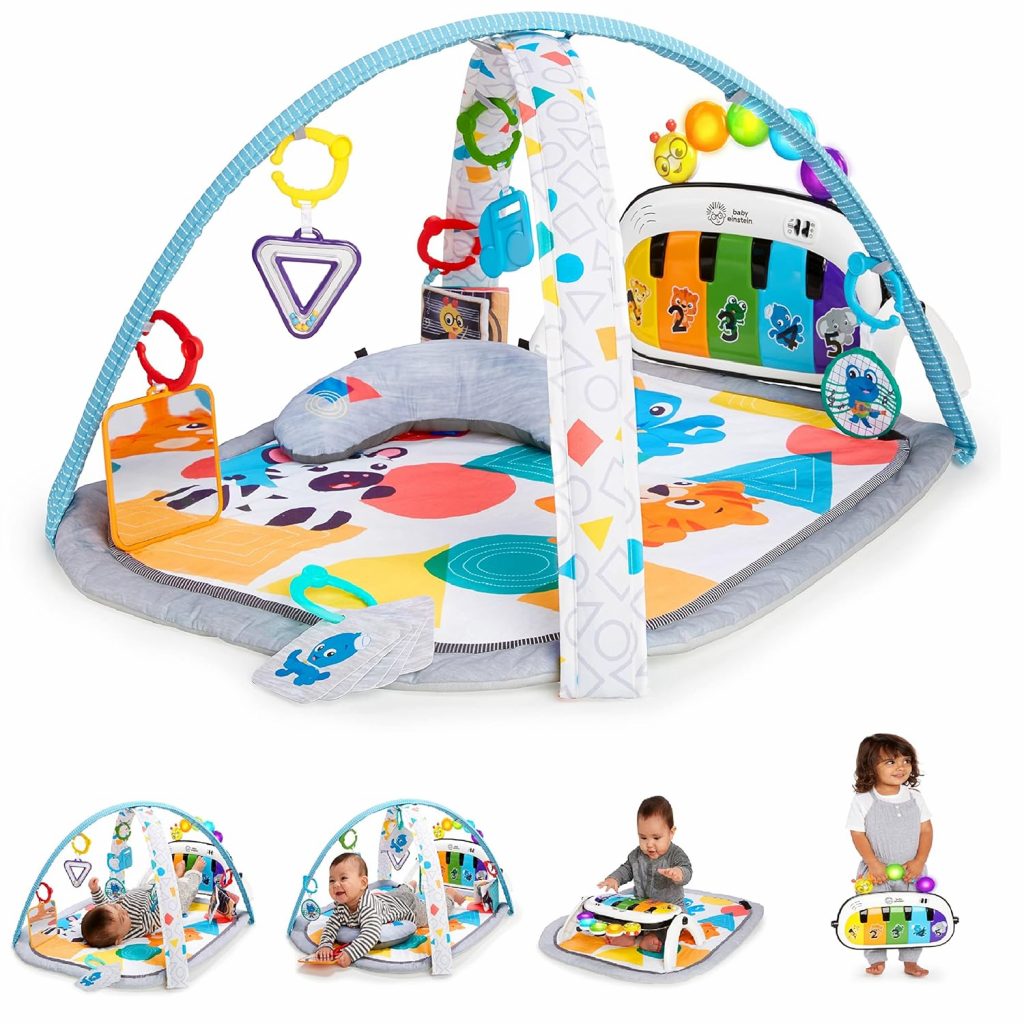
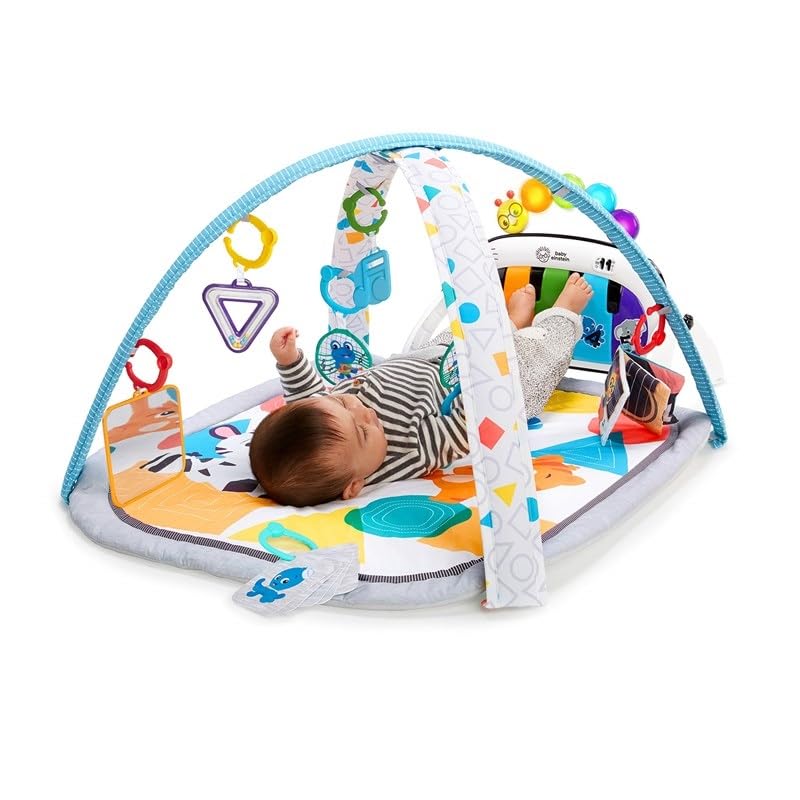
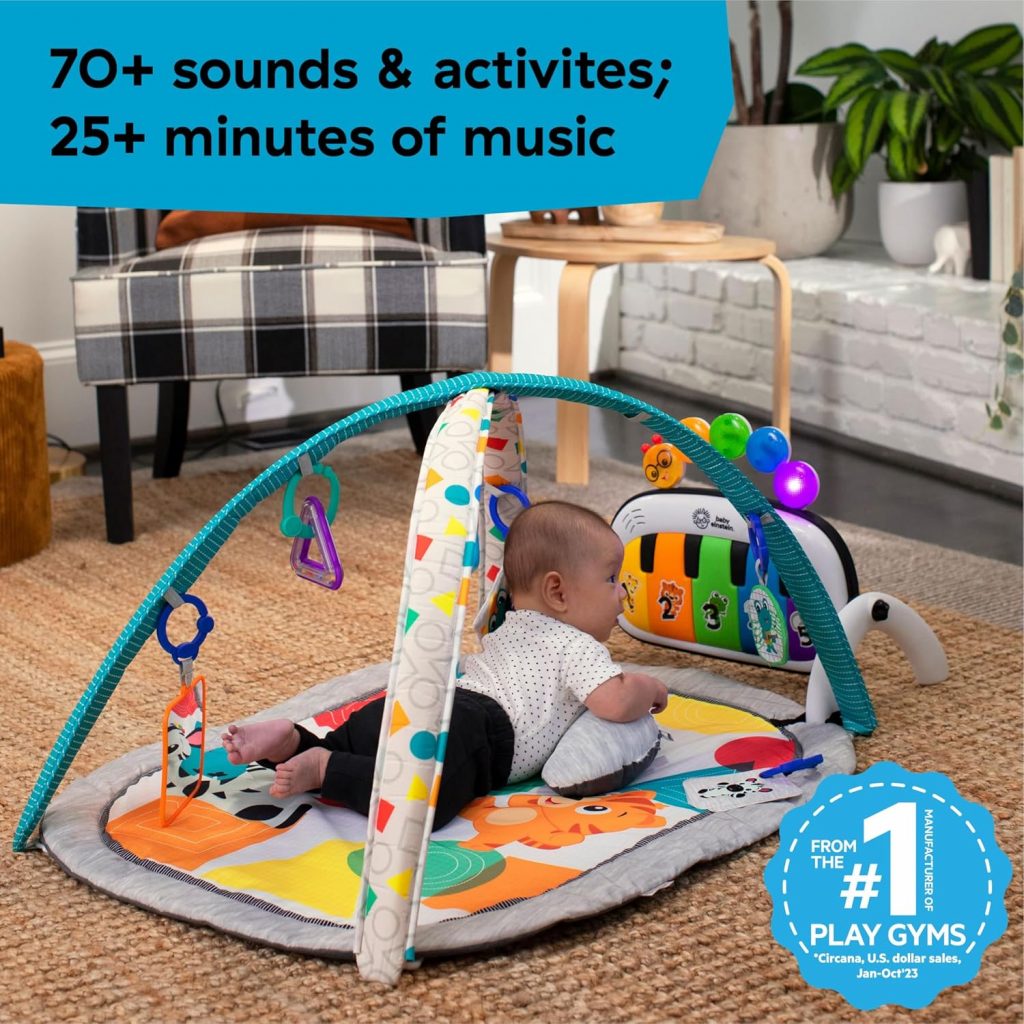
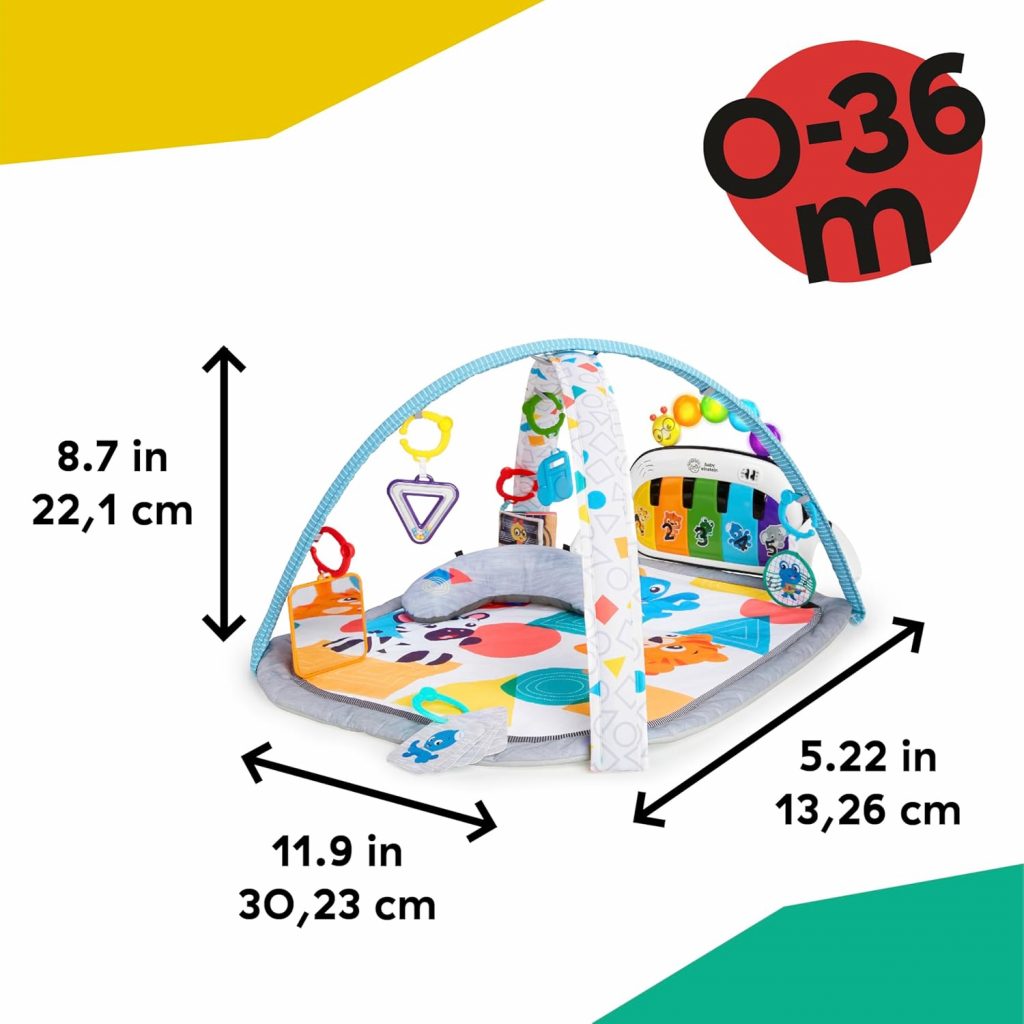
Baby Einstein 4-in-1 Kickin’ Tunes Music and Language Play Gym and Piano Tummy Time Activity Mat
The Baby Einstein 4-in-1 Kickin’ Tunes Play Gym transforms tummy time from a frustrating exercise into an engaging developmental experience that babies actually enjoy. The piano keyboard at the base rewards every kick and push with music and lights, creating an immediate cause-and-effect connection that stimulates early cognitive development and motivates babies to strengthen their neck, back, and core muscles naturally.
The four play modes adapt as your baby grows, transitioning from a tummy time mat to an activity gym, a seated play station, and finally a take-along piano that travels easily to grandparents’ homes or family outings. The multilingual audio introduces simple words and melodies in multiple languages during the earliest stages of language acquisition, when babies absorb new sounds most readily.
Pediatric development specialists consistently recommend supervised tummy time starting from the first weeks of life to build the muscle strength that supports rolling, crawling, and walking. This mat makes that daily practice engaging enough that babies look forward to floor time rather than resisting it.
5. Room Thermometer and Smart Humidifier
➡️ Room temperature and humidity directly determine how long your baby sleeps. See smart thermometers and humidifiers on Amazon that send alerts straight to your phone.
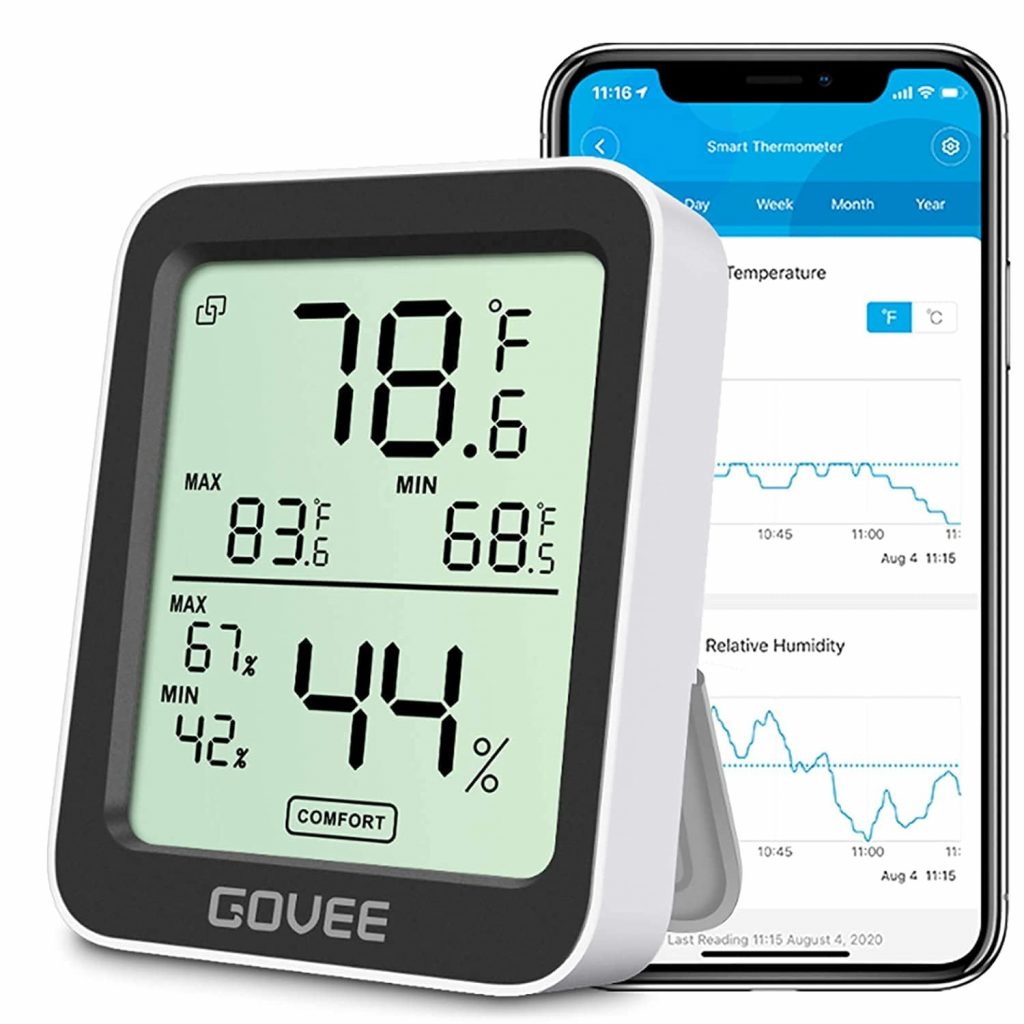
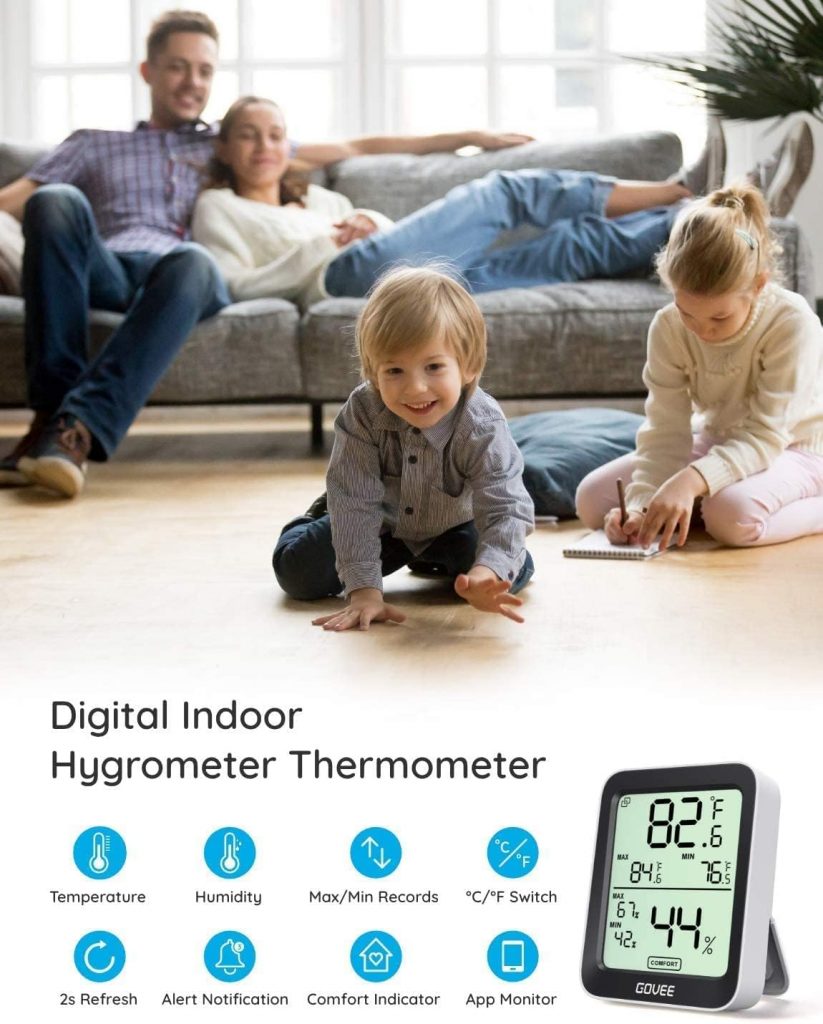
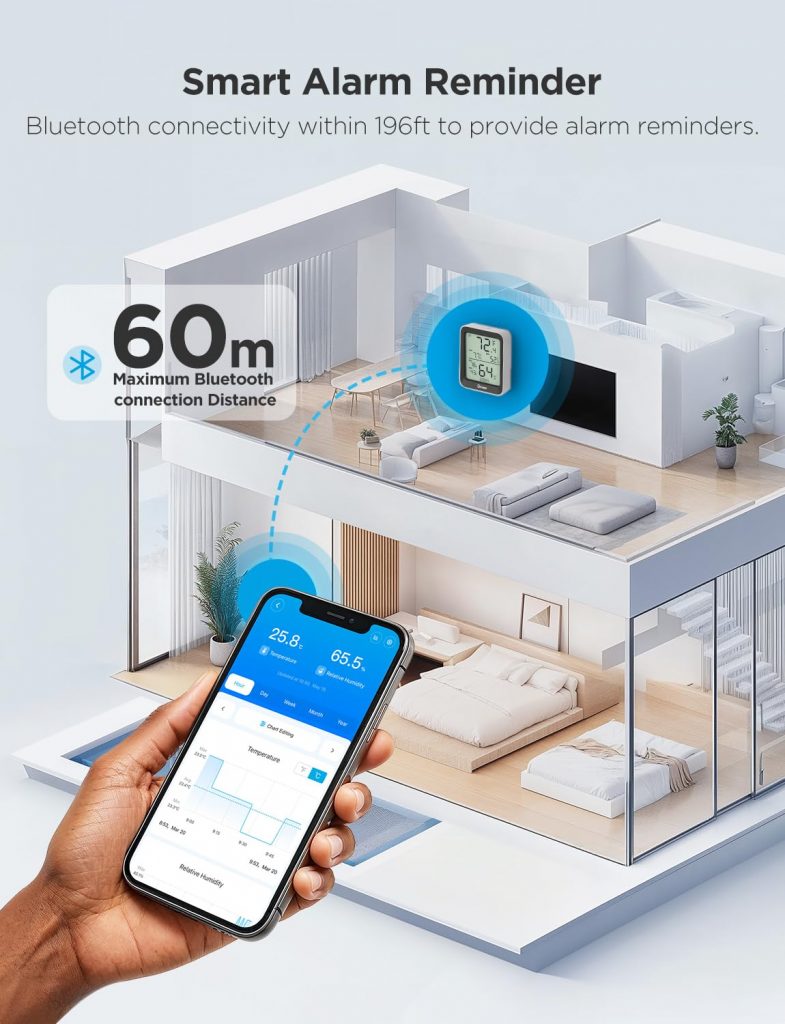
The Govee H5075 Digital Thermometer and Hygrometer takes the guesswork out of nursery environment management by delivering accurate real-time temperature and humidity readings directly to your smartphone from up to 164 feet away. The Bluetooth connection allows parents to monitor room conditions from anywhere in the home without entering the nursery and risking waking a sleeping baby.
Instant notification alerts warn parents the moment temperature or humidity drifts outside the safe range, allowing immediate adjustments before conditions affect your baby’s comfort or sleep quality. The American Academy of Pediatrics recommends maintaining nursery temperature between 68 and 72 degrees Fahrenheit, and this device makes hitting that target effortless and consistent.
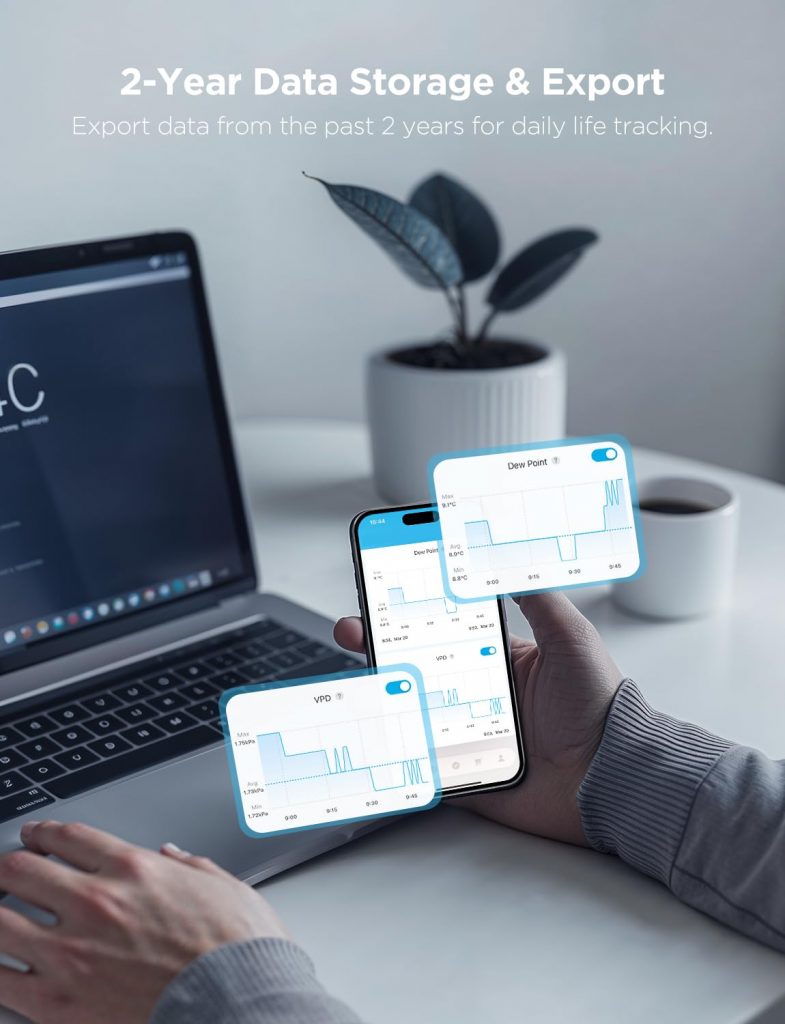
The two-year data storage and export feature provides a valuable record of nursery conditions over time, which can be shared with your pediatrician if your baby shows signs of respiratory sensitivity or disrupted sleep patterns related to environmental factors.
AND THIS SMART HUMIDIFIER ⬇️
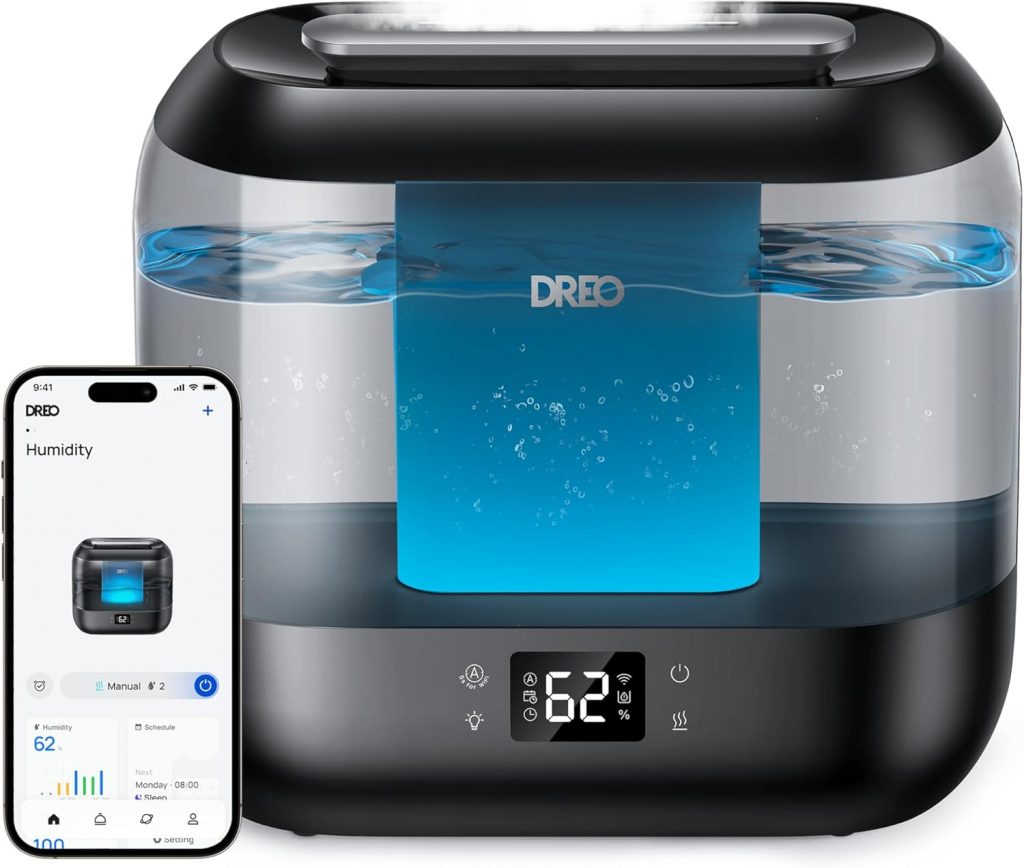
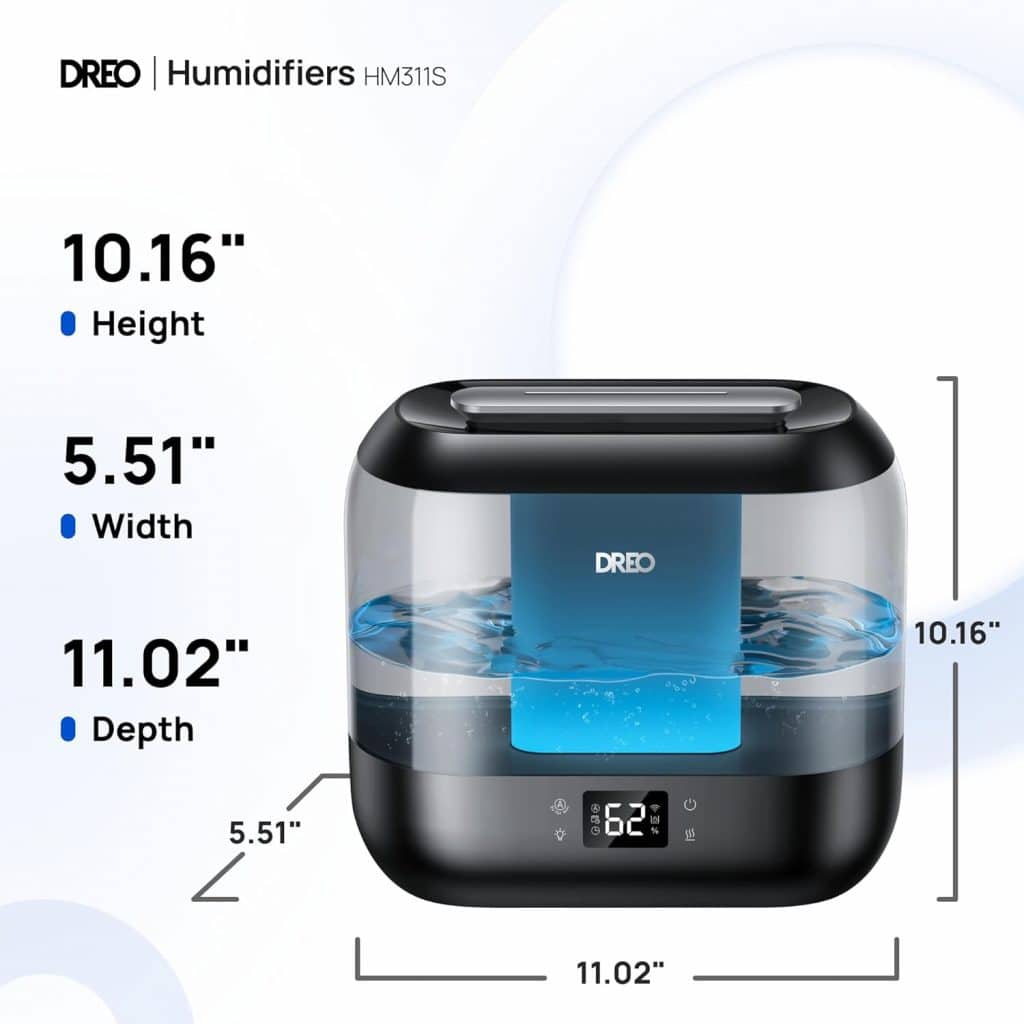

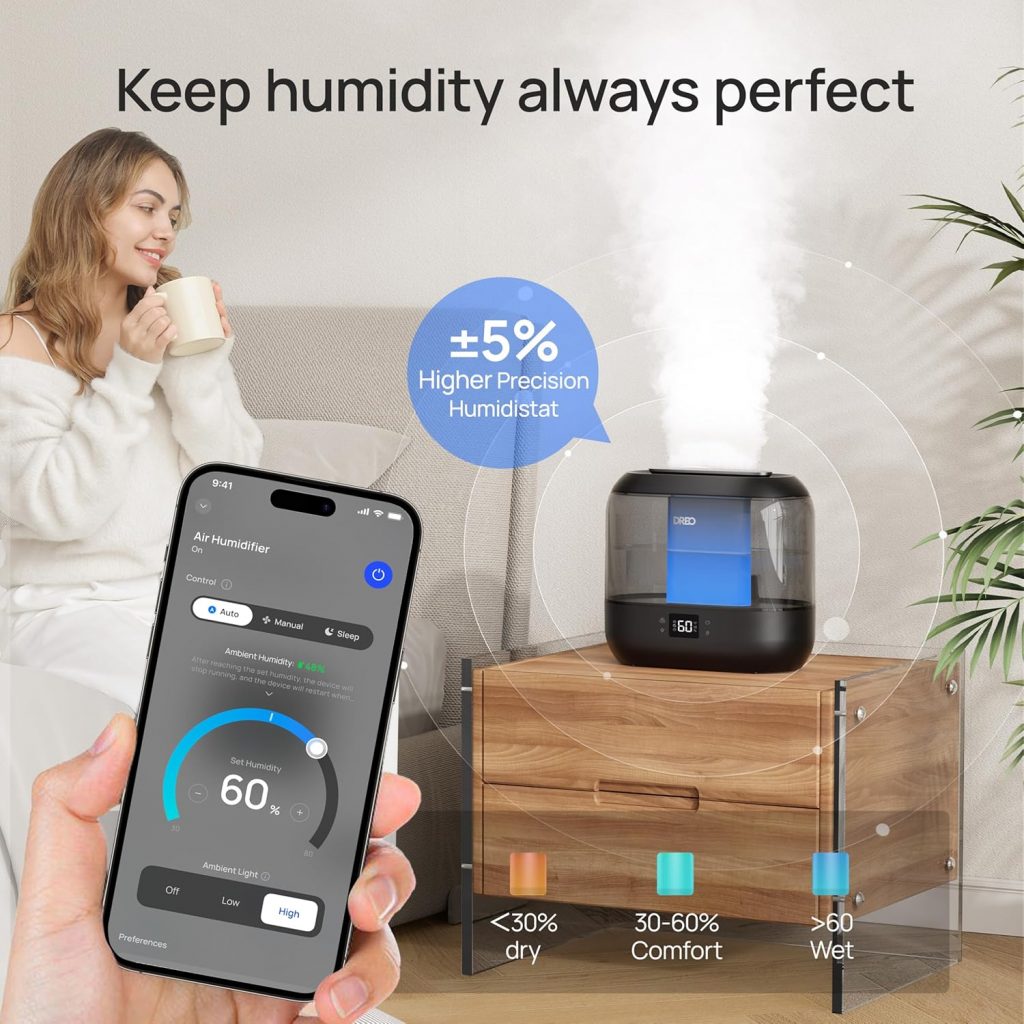
The Dreo 4L Smart Humidifier maintains the ideal humidity level that prevents the dry airways responsible for nighttime congestion, restless sleep, and frequent waking in babies and toddlers. The whisper-quiet 28 dB operation ensures the device runs silently through the night without adding any disruptive sound to the nursery environment, and the 36-hour runtime means parents rarely need to refill the tank during the week.
The top-fill design eliminates the awkward disassembly required by traditional humidifiers, making daily refilling a quick and simple task even during sleep-deprived parenting moments. App and voice control allow parents to adjust mist levels, set schedules, and monitor operation from their phone or through smart home assistants without leaving bed during nighttime adjustments.
The built-in nightlight adds a gentle ambient glow that is soft enough to preserve sleep without requiring a separate device in the nursery, and the cool mist technology is safe for use in infant rooms without any risk of burns from heated water vapor.
6. Private Nursery Camera Without WiFi
➡️ Encrypted, clear, and designed specifically for nurseries. See baby-safe cameras on Amazon that integrate with your monitoring app without exposing your data.

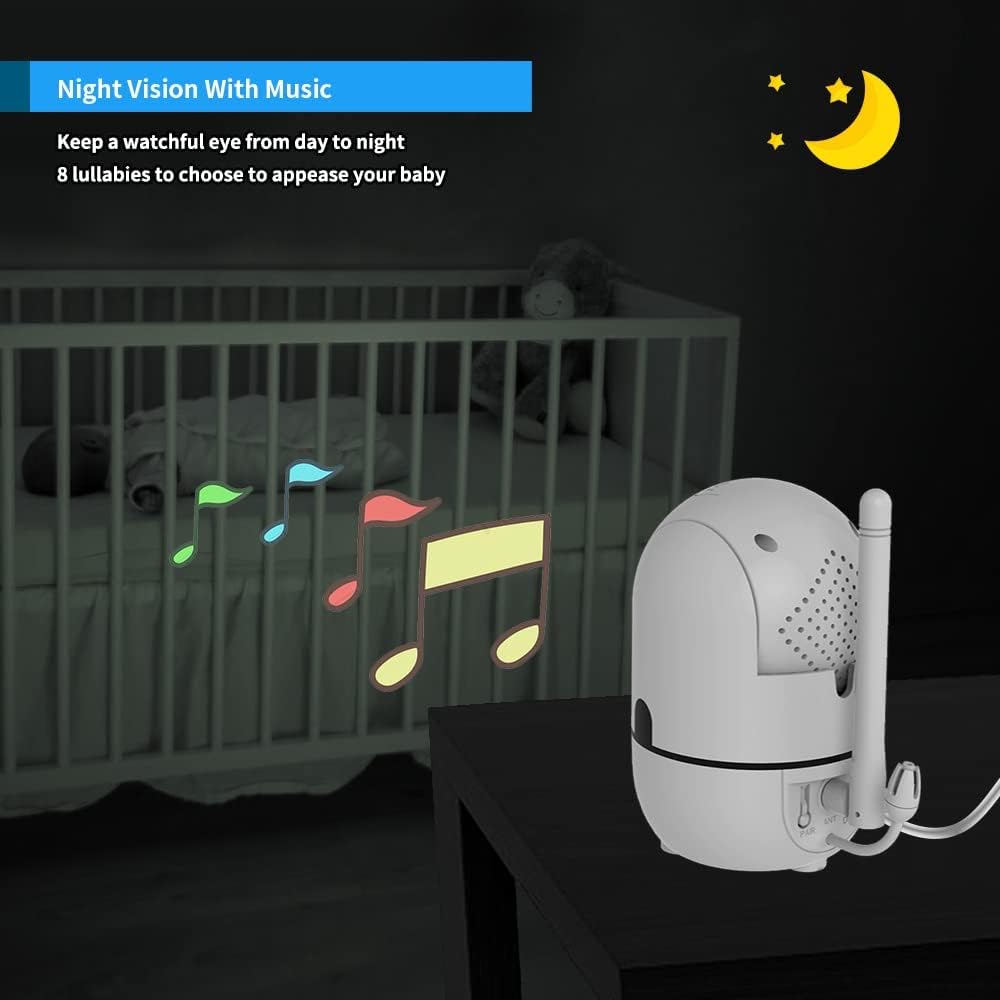
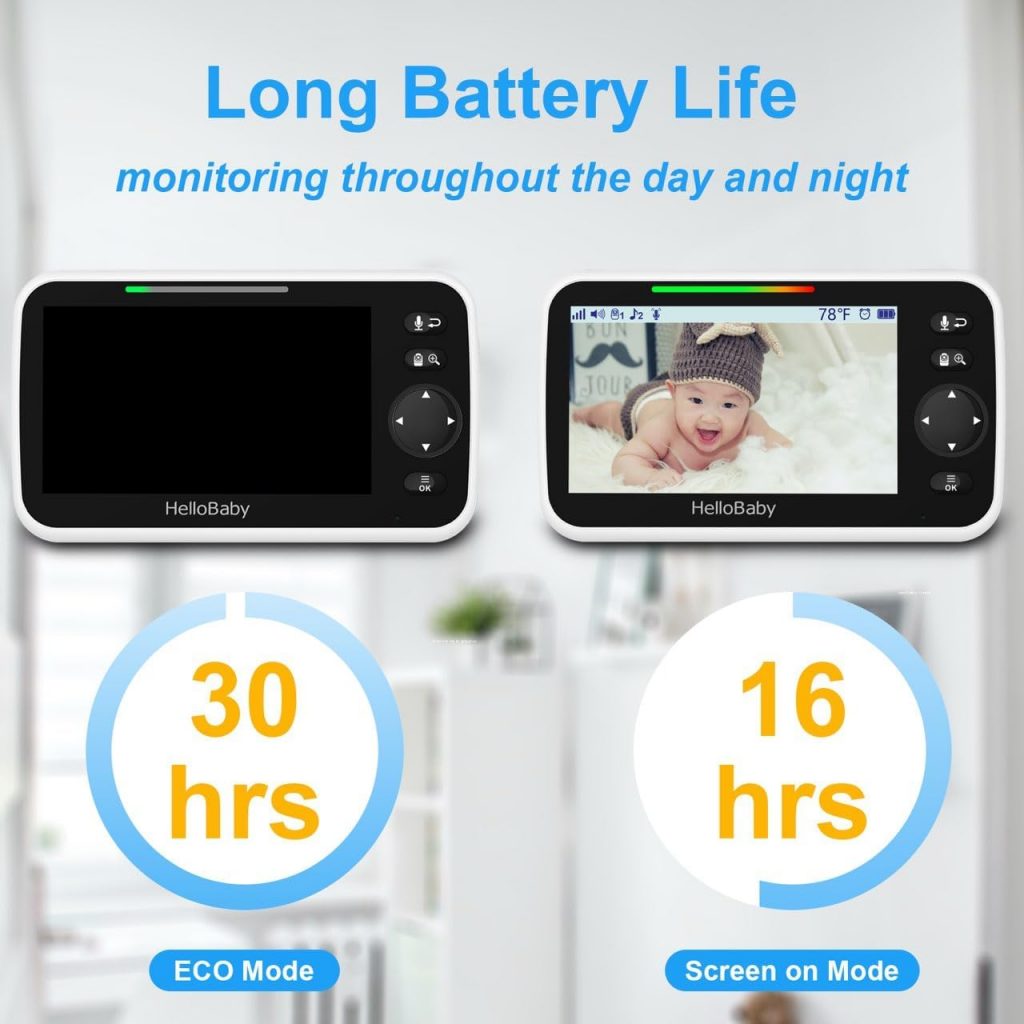
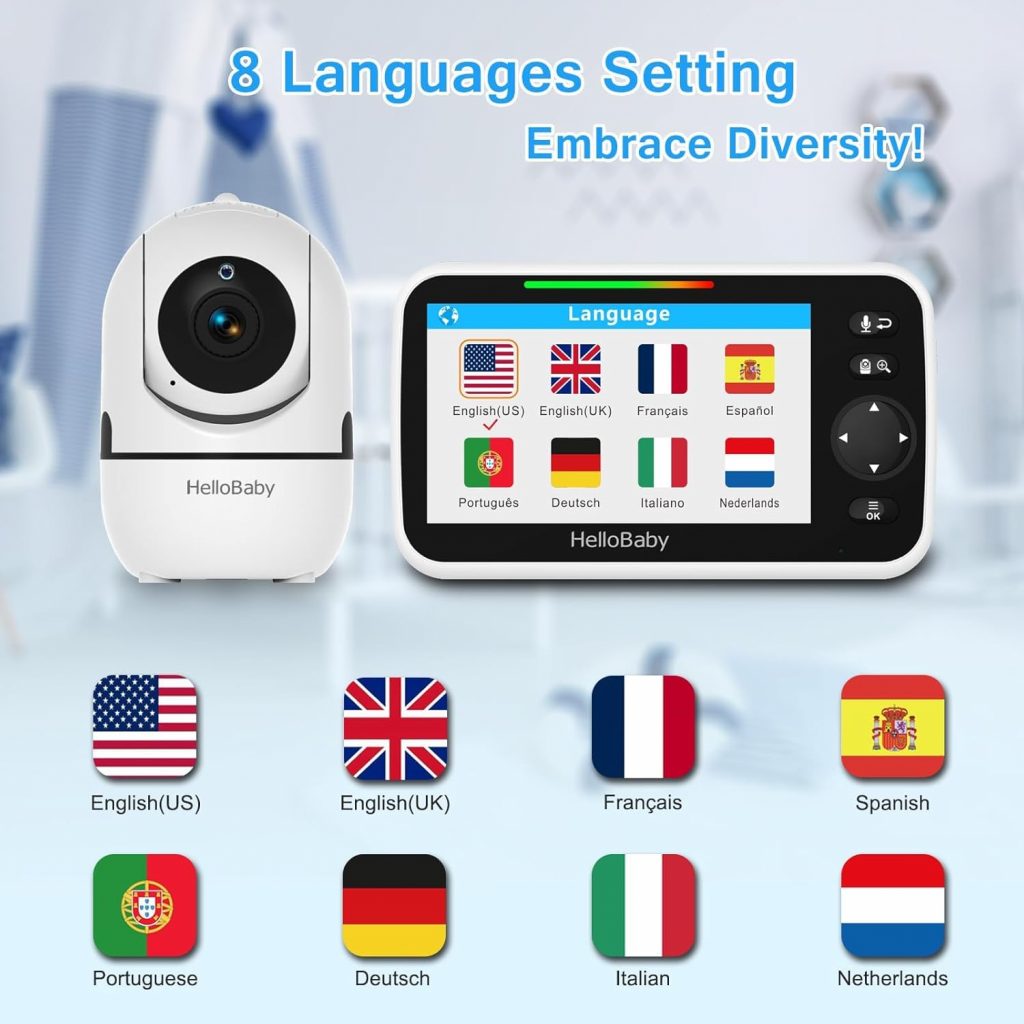
The HelloBaby HB6550 delivers crystal-clear video monitoring without requiring WiFi connectivity, which eliminates the security vulnerabilities and signal reliability issues that affect internet-connected baby cameras. The dedicated 5-inch screen keeps nursery surveillance completely private on a secure local frequency that cannot be accessed remotely or intercepted by third parties, giving parents full confidence in their baby’s privacy.
The 30-hour rechargeable battery ensures the parent unit stays powered through full nights and extended days without interruption, and the 1000-foot range maintains a reliable connection throughout the entire home and into the yard. Pan, tilt, and zoom controls allow parents to reposition the camera view remotely to check on every corner of the crib without physically entering the nursery.
The infrared night vision provides clear footage in complete darkness, two-way audio allows parents to soothe their baby with their voice before physically entering the room, and the VOX voice activation mode preserves battery life by activating the screen only when sound is detected in the nursery.
7. Sensory Rattle Set for the First Year
➡️ Not all toys promote real development. See the developmental toys on Amazon that pediatricians and early childhood educators consistently recommend.
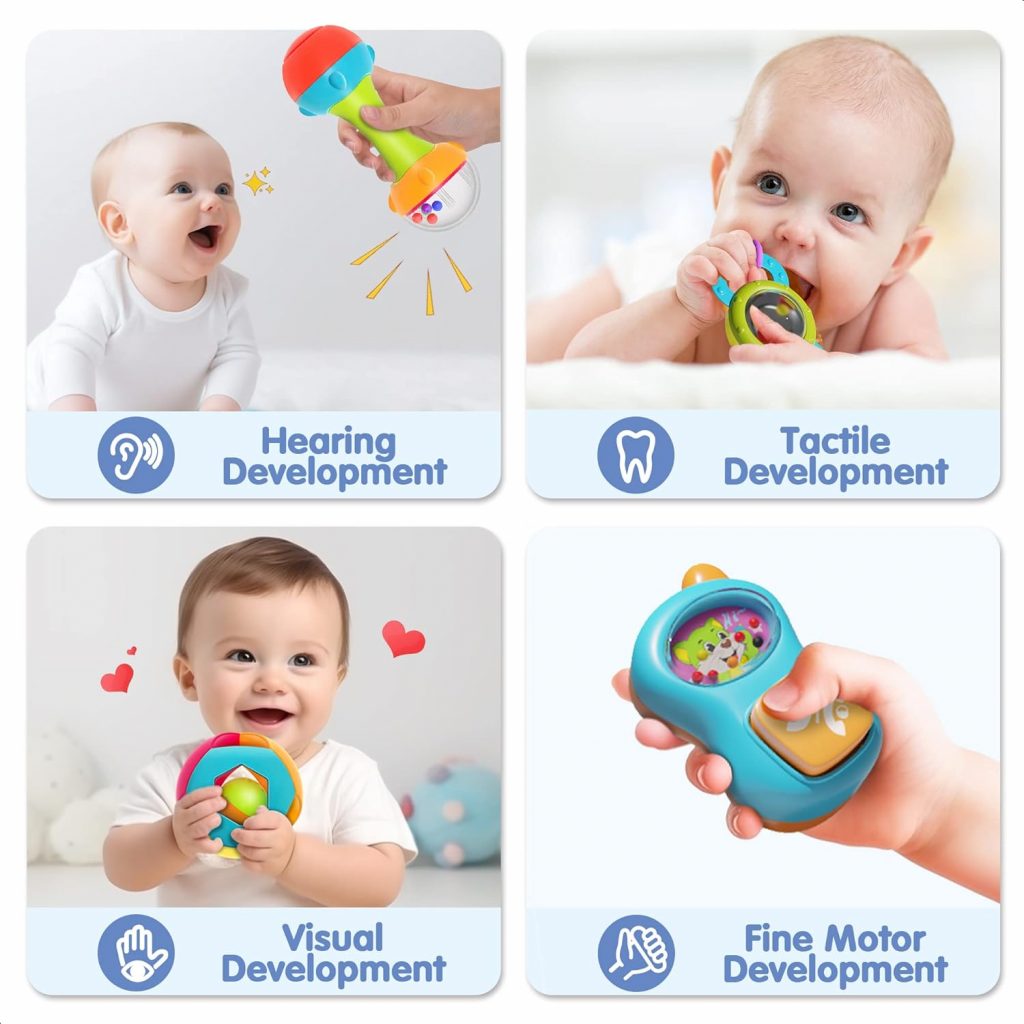
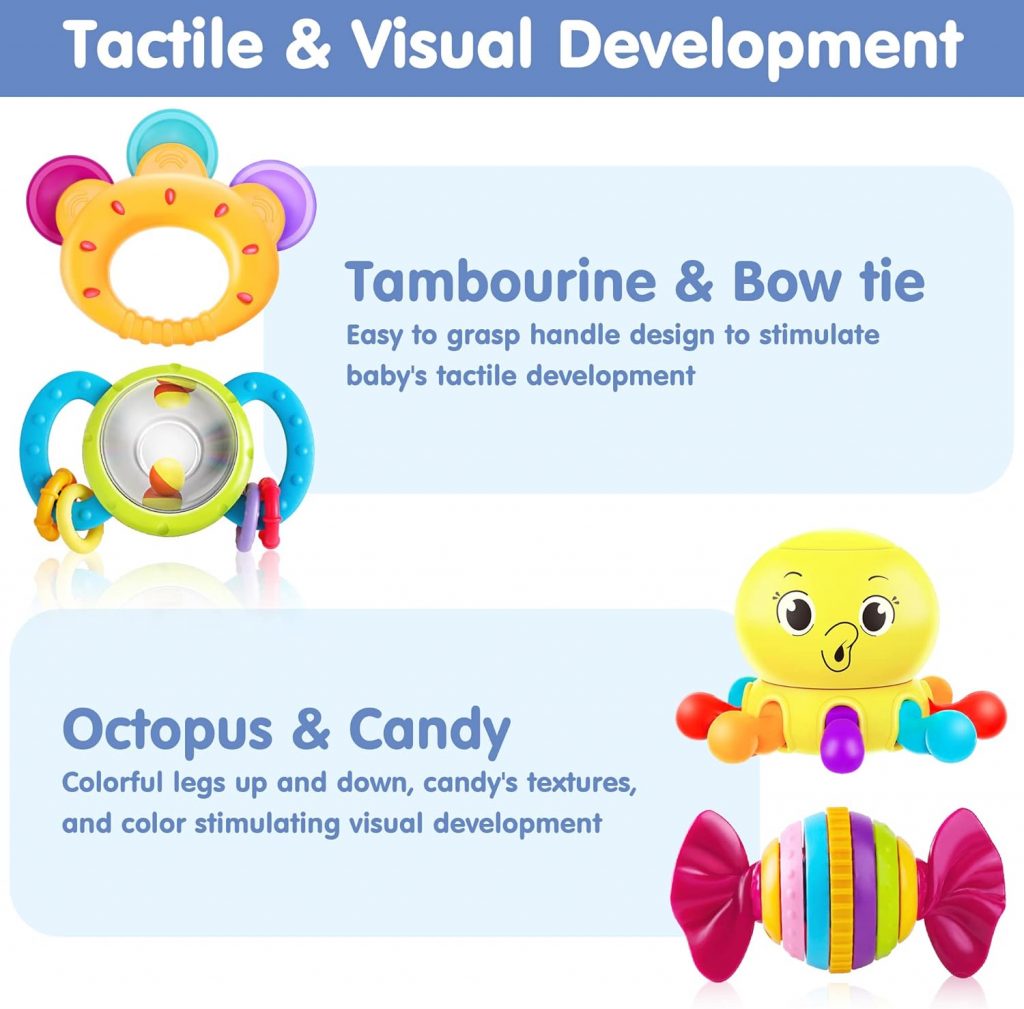
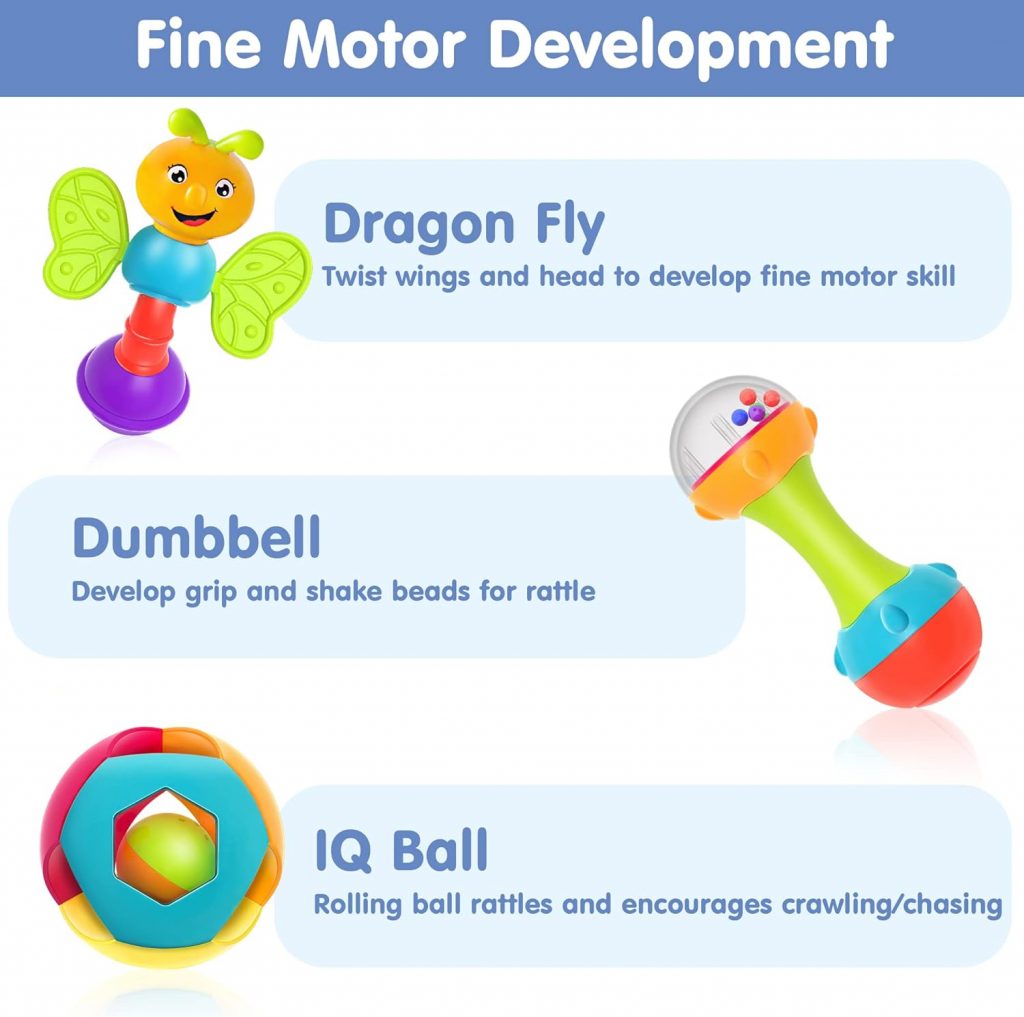
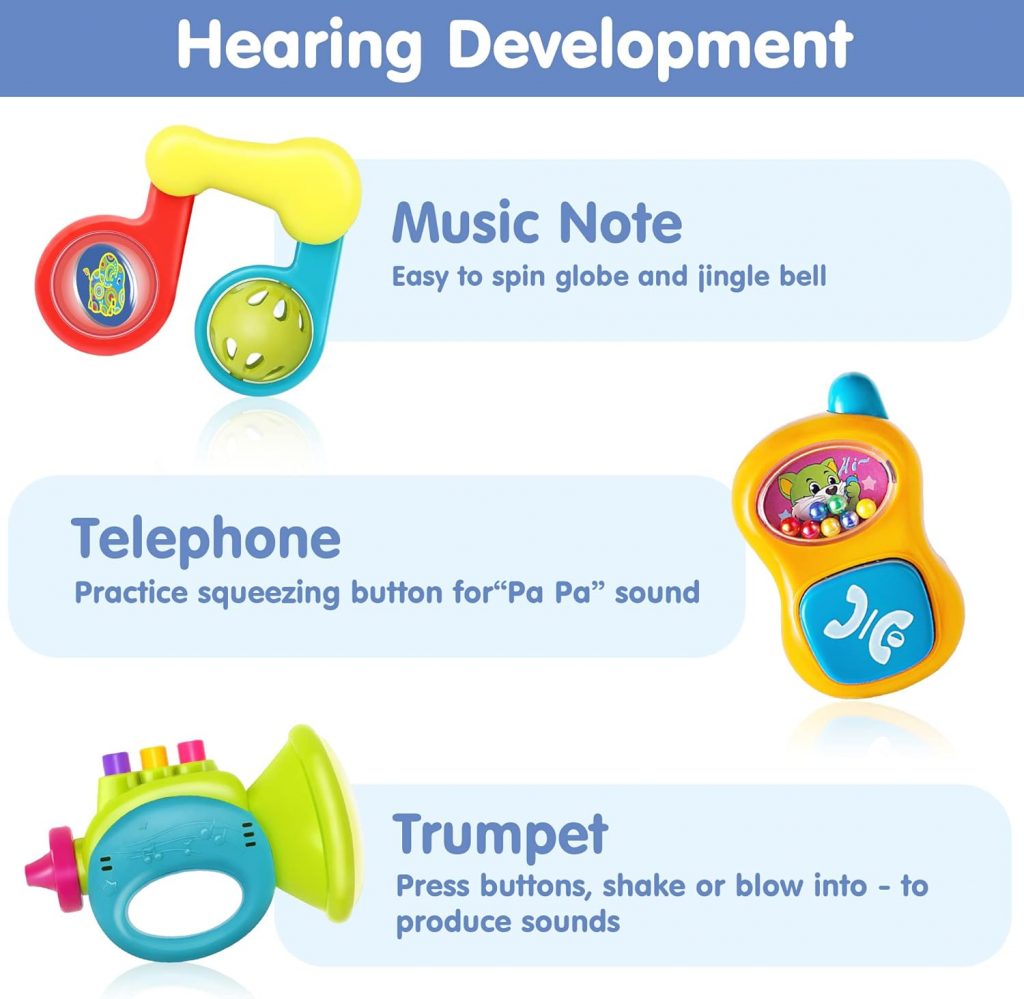
The iPlay iLearn 10-piece Baby Rattle Set provides a complete sensory development toolkit designed specifically for the zero to twelve month stage when babies are building the foundational skills they will rely on throughout early childhood. Each rattle in the set features a different texture, shape, weight, and sound, giving babies a rich variety of tactile and auditory experiences that stimulate sensory processing and fine motor development simultaneously.
The easy-grip designs are sized and shaped for small hands at different developmental stages, starting with simple grab-and-shake rattles for newborns and progressing to more complex shapes that challenge growing dexterity and hand-eye coordination in older infants. The teething-safe materials allow babies to mouth the toys safely during the teething months, extending the useful life of the set well beyond the newborn stage.
All materials meet US safety standards and are free from BPA and harmful chemicals, which is the non-negotiable baseline for any toy that will spend time in your baby’s mouth. Pediatricians and early childhood educators consistently recommend sensory play sets like this one as the most developmentally effective toy investment for the first year of life.
Essential Benefits of Talking to Your Baby: A Complete Guide
What Childcare Professionals Actually Use and Recommend for Safer Baby Sleep
Technology changes fast, but the habits that actually improve infant sleep have stayed remarkably consistent. After years of working with families through newborn nights, the pattern is always the same: the parents who sleep best are not the ones with the most devices. They are the ones who use one or two tools well and trust their own observation for everything else.
- Combine baby sleep monitoring apps with a consistent bedtime routine. Technology helps, but human care is irreplaceable.
- Keep devices updated to ensure accurate readings and safe performance.
- Avoid gadget overload. Focus on tools that simplify your life and truly help your baby rest and grow.
- Always verify product certifications and consult your pediatrician before using wearable monitors.
- Use technology as a support, not a substitute, for attentive parenting.
Most sleep monitoring apps on the market today offer similar core features, which is exactly why the habits around using them matter more than the app itself.
The tools below matter less than the consistency behind them. A newborn sleep tracker will show you the pattern, but only a predictable bedtime routine will change it. If you take one thing from this section, let it be that the device reports what happened while your presence is what shapes what happens next.
Why Your Baby Wakes Up at the Same Time Every Night and How to Fix It
Baby sleep patterns change dramatically during the first two years, and the shift rarely feels gradual from inside the house. Newborns sleep 14 to 17 hours a day in short cycles that scatter across the clock. By twelve months most babies sleep 12 to 14 hours with longer stretches at night, though the path between those two points is uneven. Modern sleep monitoring apps make these patterns easier to spot, turning what used to be guesswork into something parents can actually see.
If your baby wakes at almost the same hour every night, that consistency is usually a signal rather than a coincidence. It often points to a sleep cycle transition, a feeding window, or an environmental change such as heating switching on. A newborn sleep tracker makes the pattern visible so you can test one variable at a time instead of changing everything at once.
Sleep Regression Periods
Most babies experience sleep regressions around 4, 8, 12, and 18 months. These periods coincide with developmental leaps such as rolling over, crawling, or walking. During regressions, babies wake more frequently and resist sleep. Monitoring apps help identify patterns, allowing parents to provide extra comfort during these challenging phases.
REM and Non-REM Sleep Tracking
Advanced newborn sleep tracker systems distinguish between REM (active) and non-REM (quiet) sleep. Tracking these cycles helps parents understand why their baby wakes easily during certain hours and adjust nap schedules for better rest quality. This kind of insight is one of the clearest advantages a newborn sleep tracker offers over simply watching a video feed.
The Sleep Environment Setup That Helps Babies Sleep Longer, Starting Tonight
Technology works best when the room itself is working with you rather than against you. Temperature, light, and sound shape how easily a baby falls asleep and how long each stretch lasts, and all three are within your control tonight without buying anything new. The three settings below are the ones worth getting right before adding any baby care technology to the nursery. Pairing the right room setup with the right baby care technology gives you both the environment and the data working in your favor.
Optimal Room Temperature and Humidity
The American Academy of Pediatrics recommends keeping nursery temperature between 68 and 72°F. Smart thermometers integrated with baby care technology alert parents when conditions drift outside this range. Humidity levels between 30 and 50 percent prevent dry airways and support comfortable breathing.
Light Control and Circadian Rhythm
Darkness triggers melatonin production, helping babies fall asleep faster. Use blackout curtains during naps and nighttime. Some smart baby monitor systems connect with smart lights, gradually dimming during bedtime routines and brightening gently during wake windows to support natural circadian rhythms.
Sound Environment Management
White noise machines create a steady background sound that masks household noise and helps babies settle. Many parents find that consistent sound shortens the time it takes a baby to fall asleep and reduces waking from sudden noises. Choose a machine with adjustable volume to avoid overstimulation, and keep it at a distance from the crib. Some smart baby monitor systems include built-in white noise synchronized with sleep tracking.
The 3 Sleep Problems That Exhaust Most Parents, and the Products That Solve Them
A reliable newborn sleep tracker is especially useful for pinpointing which of these three problems is actually happening in your house.
Night Wakings
Frequent night wakings exhaust parents and disrupt the steady rest that supports baby development. A newborn sleep tracker helps identify causes such as hunger, discomfort, or overtiredness. Data patterns reveal whether your baby wakes due to genuine needs or has developed sleep associations requiring gradual adjustment.
Short Naps
Babies under 6 months often take brief naps lasting 20 to 45 minutes, which is not a problem to be fixed. It is the length of one full sleep cycle at that age. The baby wakes because the cycle ended, not because something went wrong.
What matters is what happens next. If your baby wakes after 30 minutes alert and content, the nap was enough for now. If they wake crying and still visibly tired, the cycle ended before the rest did, and the usual causes are light, noise, or a nap that started too late.
A newborn sleep tracker records nap duration trends across weeks, which is where the useful information lives. One 25-minute nap tells you nothing. Fourteen of them, all ending at the same point in the afternoon, tells you the wake window before that nap is too long.
Naps usually begin consolidating between 5 and 6 months, and the shift is gradual rather than sudden. Until then, several short naps a day are normal and do not need correcting.
Early Morning Wakings
Waking before 6 AM signals overtiredness, excessive daytime sleep, or environmental disruptions. Baby care technology analyzes total daily sleep, helping parents adjust bedtimes and nap schedules. Blackout curtains and consistent routines often resolve early wakings within one to two weeks.
Take a look this post: 10 Self Care Overwhelmed Parents Secrets That Actually Save Your Sanity
Conclusion
Even the best baby sleep monitoring apps do not replace your instincts as a parent. It supports them.
The sleep monitoring apps and gadgets covered in this guide are tools, and like any tool, their value depends on how you use them. Track the data, notice the patterns, adjust the routine, and then put down the phone and trust what you know about your baby.
Sleep improves when the environment is right, the routine is consistent, and the parents are rested enough to show up. Technology can help you get there faster. The rest is still yours to do.
Start with one app or one gadget. See what it tells you. Your baby’s best nights of sleep are ahead.
Looking for comprehensive guidance on caring for your baby? Our book ‘How to Care for Children: From Birth to Age 2’ combines professional childcare expertise with evidence based child development research. Written by Kelly and Peter, this guide provides clear, reliable advice rooted in real world childcare. Available in English, Spanish, and Portuguese on Amazon.
Click the link below your preferred language to get your copy!




1. What are baby sleep monitoring apps and how do they work?
Baby sleep monitoring apps are digital tools that track your baby’s sleep patterns, movements, breathing, and environmental conditions in real time. They work by connecting to smart devices such as cameras, wearable monitors, or sensor pads placed near the crib. Each app collects data continuously and translates it into readable reports that parents can review at any time.
Most baby sleep monitoring apps use a combination of sound detection, motion sensors, and sometimes biometric readings like heart rate or oxygen levels. This data helps parents understand whether their baby is in light or deep sleep, how many times they woke during the night, and what environmental factors may be affecting rest quality. The best apps also send instant alerts when something unusual is detected, allowing parents to respond quickly without relying on guesswork.
Over time, the data collected by baby sleep monitoring apps reveals patterns that help parents build more effective sleep routines. Many pediatric sleep consultants now recommend these tools as a complement to professional guidance, particularly during the first year when sleep needs change rapidly.
2. Are baby sleep monitoring apps accurate and reliable?
The accuracy of baby sleep monitoring apps depends significantly on the quality of the connected hardware. Apps paired with medical-grade wearables, such as the Owlet Dream Sock, tend to provide the most precise biometric readings. Apps that rely solely on a smartphone microphone or basic camera motion detection offer less clinical accuracy but still provide useful behavioral data.
It is important to understand that baby sleep monitoring apps do not replace professional medical evaluation. These tools are designed to support parental observation and provide context, not to diagnose health conditions. If a monitoring app consistently alerts you to irregular breathing or abnormal heart rate patterns, that information should be shared with your pediatrician rather than treated as a definitive diagnosis.
For general sleep tracking purposes, most baby development gadgets available in 2026 are reliable
enough to identify sleep regressions, short nap patterns, and nighttime waking trends. Pairing the app with your own observations gives you the most complete picture of your baby’s sleep health.
3. Can baby sleep monitoring apps help with my baby’s overall development?
Yes, and the connection is more direct than many parents realize. Sleep is the primary driver of infant brain development, hormone regulation, and immune system function. Baby sleep monitoring apps help parents protect and optimize those sleep windows by identifying disruptions before they become chronic patterns.
When parents can see exactly when and why their baby is waking, they can make targeted adjustments to feeding schedules, room temperature, or bedtime routines. This precision reduces the trial-and-error period that exhausts so many families in the early months. Better sleep for the baby also means better sleep for parents, which directly improves the quality of daily caregiving and bonding.
Some advanced apps also track developmental milestones alongside sleep data, helping parents notice correlations between growth leaps and sleep disruptions. This information is particularly useful during the common regression periods at 4, 8, and 12 months.
4. Which features should I look for in baby sleep monitoring apps?
The most essential features in baby sleep monitoring apps are real-time alerts, sleep cycle tracking, and an easy-to-read daily summary. Real-time alerts notify you immediately if something changes, such as prolonged crying, a drop in room temperature, or unusual movement patterns. Sleep cycle tracking helps you understand whether your baby is getting enough restorative deep sleep versus lighter REM cycles.
Beyond the basics, look for apps that offer multi-user access so both parents and caregivers can monitor from separate devices. Integration with a smart baby monitor and other smart home systems is also valuable, as it allows you to adjust room lighting, temperature, or white noise directly from the same app. Good baby sleep monitoring apps should also store historical data for at least 30 days so you can share sleep reports with your pediatrician during well-child visits.
Ease of setup and daily use matters more than the number of features. An app that requires complicated calibration or frequent troubleshooting will add stress rather than reduce it, which defeats the entire purpose of the tool.
5. Are baby sleep monitoring apps and wearable devices safe for newborns?
Yes, when used as directed by the manufacturer. The passive monitoring features in most smart baby monitor setups, such as video surveillance and sound detection, involve no direct contact with the baby and carry no safety risk. Wearable devices require more careful evaluation, as they make physical contact with your newborn’s delicate skin.
Look for wearables that have been tested for skin sensitivity and carry relevant safety certifications for infant use. The Owlet Dream Sock, for example, is designed specifically for infant foot anatomy and uses pulse oximetry technology similar to what hospitals use. Always follow age and weight guidelines, as some wearable monitors are not recommended for premature infants without specific medical supervision.
One important precaution: never treat baby sleep monitoring apps as a substitute for safe sleep practices recommended by the American Academy of Pediatrics. Always place your baby on their back on a firm, flat surface in a crib free of soft bedding, regardless of what any monitoring device reports.
6. How do baby sleep monitoring apps differ from a traditional smart baby monitor?
A traditional baby monitor provides a live audio or video feed so parents can see and hear their baby in real time. This is useful but passive. Baby sleep monitoring apps go several steps further by actively analyzing that feed and transforming it into structured data.
Instead of simply showing you that your baby is awake, baby sleep monitoring apps tell you how long they slept, how many sleep cycles they completed, what the room temperature was when they woke, and whether this waking pattern is consistent with the previous week. This analytical layer is what makes monitoring apps genuinely useful for improving sleep outcomes rather than just documenting them.
The most advanced baby sleep monitoring apps also use machine learning to generate personalized recommendations based on your specific baby’s patterns. This level of customization is something a traditional monitor cannot provide, regardless of its video or audio quality.
7. What is the best baby sleep monitoring apps for first-time parents?
For first-time parents, the best baby sleep monitoring apps balance accuracy with simplicity. Nanit Pro is widely recommended for its intuitive interface, clear visual sleep summaries, and detailed guidance that does not require any prior knowledge of infant sleep science. The app presents data in a format that is easy to understand even during sleep-deprived moments at 3 AM.
The Owlet Dream App is another excellent choice for parents who want more clinical reassurance, particularly those with premature infants or babies with respiratory concerns. The combination of oxygen level monitoring and heart rate tracking provides an additional layer of safety beyond standard behavioral monitoring.
8. How do I choose between a wearable and a non-contact baby sleep monitoring app?
The choice between a wearable and a non-contact baby sleep monitoring app depends primarily on what information matters most to you. Wearable monitors provide biometric data including heart rate, oxygen saturation, and skin temperature, which are metrics that non-contact apps cannot measure accurately. If you want physiological reassurance in addition to behavioral tracking, a wearable paired with its companion app is the better choice.
Non-contact baby development gadgets that work through cameras and microphones are less intrusive and easier to use from day one. They work well for parents whose primary goal is understanding sleep patterns, identifying regressions, and building better routines. These apps also tend to be more affordable since they do not require dedicated hardware beyond a compatible camera.
Many experienced parents use both approaches at different stages. Wearable baby sleep monitoring apps during the newborn period provide medical-level reassurance, while camera-based apps become more practical as the baby becomes mobile and begins rolling or sitting up in the crib.
9. How can I use baby sleep monitoring apps to survive sleep regressions?
Sleep regressions at 4, 8, 12, and 18 months are among the most challenging periods for parents. Baby sleep monitoring apps become especially valuable during these phases because they help you distinguish between a true regression caused by a developmental leap and a temporary disruption caused by illness, teething, or environmental changes.
During a regression, avoid making major changes to your sleep environment or routine based on a single bad night. Use baby sleep monitoring app data to identify trends over at least three to five days before adjusting anything significant. Consistency combined with data-informed patience is the most effective strategy for getting through regressions with minimal long-term sleep disruption.