

You’re mid diaper change, talking to your baby about socks and giggles, and they just stare back with wide, curious eyes. It can feel one-sided, but it’s actually one of the most powerful things you’ll do all day. Every word you say during diaper changes, feedings, or playtime is quietly building your baby’s brain and shaping their future. Babies are constantly learning. They may not speak yet, but they absorb words, tones, and facial expressions with remarkable efficiency. Research shows that infants who are exposed to rich verbal environments tend to develop stronger vocabulary and communication skills later in life.
Simple conversations, even one-sided ones, make a significant difference. You might describe what you’re doing (Now we’re putting on your socks) or respond to your baby’s coos and babbles. These moments help infants connect sounds with meaning, creating neural pathways that support future learning. It’s not just about language acquisition. Talking with your baby also builds emotional bonds. Your voice provides comfort, security, and stimulation. It helps babies feel seen and loved, which is essential for healthy emotional development.
Even if your child doesn’t respond with words, they’re learning constantly. You can use songs, stories, or narrate your daily routines. Eye contact and smiling reinforce the connection, helping your child feel safe and engaged. Make this a habit every day. Your baby’s brain is growing fast, and your voice is a key part of that growth. With time, you’ll notice how your baby begins to understand, respond, and eventually communicate back, all thanks to those early interactions.
Disclosure: This post contains affiliate links. If you make a purchase through these links, we may earn a small commission at no additional cost to you. This helps us keep providing free, quality content for parents everywhere.
Written by Kelly, Childcare Specialist, and Peter, Researcher and Child Development Advocate.
Table of Contents

🍼 Remember: Every word you say now helps shape your child’s future.
1. Emotional Bonding: The Voice That Makes Your Baby Feel Safe
When you speak with your baby, you’re doing far more than sharing information. You’re building an emotional bridge that strengthens your parent-child relationship. The soothing rhythm of your voice provides comfort and security, helping your baby feel loved and protected in their new world.
This emotional connection formed through conversation becomes the cornerstone of your child’s ability to form healthy relationships throughout life. Babies who experience regular verbal interaction with their parents develop stronger attachment bonds and demonstrate greater emotional resilience as they grow.
This bond deepens every time you respond to your baby’s cries, coos, or babbles with your voice. A calm response after a startled cry, or a warm hum during a diaper change, tells your baby’s developing nervous system that the world is safe and that you are there. Over months, these small moments accumulate into a felt sense of security that later shows up as confidence to explore, play, and separate from you without panic.
Resource: 📖 Reading Rockets (education and children’s reading)
2. Language Development: Why Your Words Build Vocabulary for Life
The benefits of verbal interaction extend far beyond the immediate moment. Children who are exposed to rich verbal environments from birth typically:
Develop larger vocabularies faster: Regular conversation exposes babies to diverse words and concepts, giving them a significant head start in language acquisition.
Demonstrate superior communication skills: Early verbal interaction helps babies understand the back-and-forth nature of conversation, preparing them for effective social communication.
Show enhanced listening abilities: Consistent exposure to speech patterns helps babies develop crucial listening skills that support learning throughout their educational journey.
Excel in academic settings: The language foundation built through early conversations often translates to better performance in reading, writing, and overall academic achievement.
These benefits build gradually, not overnight. A baby who hears rich, varied language at four months will not say full sentences by six months, but the groundwork is already forming. Every new word you introduce, every book you read aloud, and every silly rhyme you repeat adds another layer to the vocabulary your child will eventually draw from once they start talking.
Try this toy: ➡️ LeapFrog Fridge Phonics Magnetic Letter Set, Yellow
Resource: CDC Milestones for Baby Language and Learning
3. Cognitive Benefits: How Talking Sharpens Your Baby’s Growing Brain
Speaking with your baby stimulates critical thinking development from the earliest stages of life. When you describe your daily activities, read stories, or simply narrate what you’re doing, you’re helping your baby make connections between words and the world around them.
This verbal stimulation enhances memory formation, problem-solving abilities, and logical thinking skills. Research demonstrates that babies who receive regular verbal input score higher on assessments of their child’s development and demonstrate advanced reasoning abilities as toddlers.
This kind of stimulation works best when it happens naturally, not as a forced lesson. Describing colors while getting dressed, counting stairs as you climb them, or explaining why the sky looks different at sunset all give your baby’s brain the raw material it needs to build logical connections. The goal is not to teach concepts directly. It is to surround your baby with language rich enough that those connections form on their own.
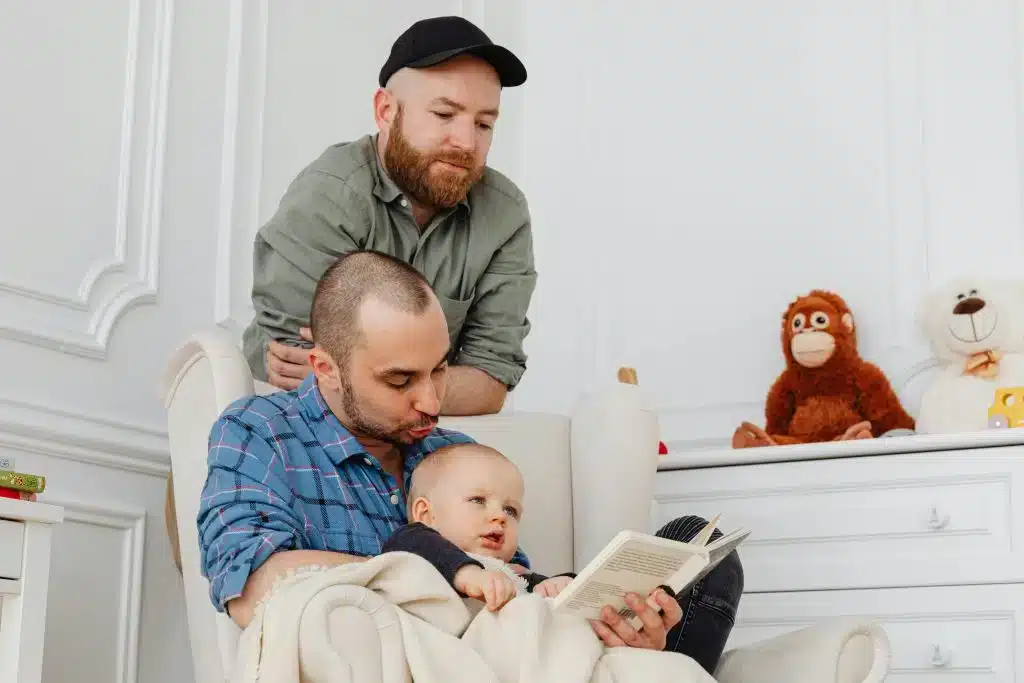
4. Social Skills: Raising a Confident Communicator Starts Now
Regular conversation with your baby lays the groundwork for exceptional social skills. Through verbal interaction, babies learn about turn-taking, emotional expression, and social cues that will serve them throughout their lives.
Children who experience rich verbal environments from birth often become more confident communicators, better leaders, and more empathetic individuals. They learn to read social situations more effectively and respond appropriately to various social contexts.
Age-Specific Communication Strategies
Talking to your baby effectively requires adapting your approach to your child’s developmental stage. Understanding what works best at each age helps you get the most out of every conversation.
Newborns (0-3 Months): The Foundation Stage
During the newborn period, your voice provides crucial comfort and security. Babies at this age respond primarily to tone and rhythm rather than specific words.
Effective strategies for newborns:
- Use a higher-pitched, melodic parentese voice (studies show babies prefer this vocal style)
- Maintain close face-to-face contact (8-12 inches, the distance babies can focus best)
- When your baby coos or gurgles, answer right away. That instant response teaches them conversation has rhythm long before they understand any words.
- Describe sensory experiences (This water is warm, Your blanket is soft)
- Nursery rhymes and lullabies are not just for bedtime. Their repetition helps your newborn’s brain start recognizing patterns in language.
What happens in their brain: Neural connections are forming rapidly. Your voice helps establish language centers in the brain, even though comprehension won’t emerge for months. The emotional tone of your voice activates attachment systems, building the foundation for secure bonding.
3-6 Months: The Interactive Phase
Babies become more socially engaged and begin experimenting with vocal sounds. This is when talking to your baby becomes genuinely interactive.
Strategies for this stage:
- Engage in conversational turn-taking (say something, pause for baby’s response, respond to their sounds)
- Introduce object names during play (This is your ball, See the dog?)
- Your facial expressions matter just as much as your words, so let your face light up when you talk.
- Respond enthusiastically to babbling (this encourages more vocal experimentation)
- Read board books with simple, repetitive text
- Try narrating an entire routine from start to finish, like a diaper change, so your baby hears a complete stream of connected language.
Developmental milestones: Babies begin connecting sounds with meanings. They’re learning that communication has a back-and-forth pattern. Your responses teach them that their vocalizations have power and meaning.
6-12 Months: The Language Explosion Preparation
This critical period sets the stage for first words. Babies understand far more than they can express, making rich verbal input especially important.
Advanced strategies:
- Label everything (That’s a tree, You’re eating carrots)
- Use simple questions and provide the answer (What’s that? It’s a cup!)
- Introduce action words (We’re walking, Daddy is driving)
- If your baby says ‘ba’ for bottle, celebrate the attempt and expand it: ‘Yes, bottle! You want your bottle!’
- Read multiple books daily, encouraging baby to point and engage
- Fill your home with words. The more your baby hears during everyday activities, the richer their environment for learning becomes.
What’s developing: Receptive language (understanding) grows exponentially. Babies are connecting words with objects, actions, and concepts. The neural pathways for speech production are forming, even though expressive language lags behind comprehension.
12-24 Months: The First Words Period
First words emerge, and vocabulary grows rapidly. This is when the investment in early conversation pays visible dividends.
Optimization strategies:
- Ask open-ended questions (even if baby can’t fully answer)
- If your toddler says ‘wawa,’ resist correcting them. Simply respond with the correct word: ‘Yes, water!’ Provide correct models without correction (You said ‘wawa’! Yes, water!)
- Introduce descriptive words (colors, sizes, textures)
- Use complete sentences, not just single words
- Pretend play is a language goldmine. Narrate the tea party or the pretend grocery trip out loud together.
- Read books with more complex storylines
Visible progress: Children with rich early verbal environments often speak in sentences earlier, use more varied vocabulary, and show advanced understanding of complex language structures.
Common Mistakes Parents Make (And How to Avoid Them)
Even well-intentioned parents sometimes approach infant communication in ways that reduce its effectiveness. Understanding these common pitfalls helps you maximize the benefits of talking to your baby.
Mistake 1: Using Only Baby Talk
While parentese (high-pitched, melodic speech) is beneficial, completely avoiding proper language limits learning opportunities.
The solution: Use parentese for emotional engagement but also model correct grammar and varied vocabulary. You’re such a good baby! (parentese) followed by Now we’re going to read a fascinating book about animals (proper language) provides optimal input.
Research from child development specialists suggests that babies exposed exclusively to simplified speech can take longer to build a varied vocabulary once they start talking. A simple way to track your balance is to notice whether you alternate between playful tones and full sentences within the same conversation, rather than sticking to one style all day.
Mistake 2: Talking at Baby Instead of With Baby
One-way monologues don’t teach the interactive nature of communication as effectively as turn-taking conversations.
The solution: Pause after speaking. Wait for baby’s response (coo, gurgle, gesture). Respond to their communication attempts as if they said something meaningful. This teaches conversation structure.
This pause and wait technique mirrors how real conversations work between adults. Even a two or three second pause signals to your baby that a response is expected, which helps them understand the rhythm of dialogue long before they can form words themselves.
Mistake 3: Screen Time as a Substitute
Educational videos cannot replace live verbal interaction for supporting your baby’s language skills. Babies learn best from responsive human communication.
The solution: Minimize screen time for children under 2. When screens are used, co-view and narrate what’s happening, making it an interactive experience rather than passive consumption.
Pediatric guidelines generally recommend avoiding screens for children under 18 months, except for video calls with family. If a screen is unavoidable, treat it the same way you would a picture book: point things out, ask simple questions, and keep your baby engaged with you rather than only with the device.
Mistake 4: Speaking Only During Teaching Moments
Limiting conversation to formal learning times reduces the total verbal input babies receive.
The solution: Narrate your entire day. Talk during diaper changes, car rides, cooking, cleaning, everything. These natural contexts provide rich learning opportunities.
A helpful habit is choosing one routine task each day, such as folding laundry or making coffee, and narrating it out loud even when your baby is not in the room. This builds the practice of constant narration so it becomes automatic during the moments that matter most, like feeding or bath time.
Mistake 5: Correcting Instead of Modeling
Pointing out baby’s pronunciation errors can discourage verbal attempts.
The solution: Model correct production without correction. If baby says pasketti, enthusiastically respond Yes! Spaghetti! We’re eating spaghetti! This provides the correct model while validating their communication attempt.
Toddlers who are gently corrected too often can become hesitant to keep trying new words. Celebrating the attempt first, then modeling the correct word naturally, keeps the motivation to communicate alive while still giving your child accurate language input.
The Neuroscience: What Really Happens in Baby’s Brain
Understanding the scientific mechanisms behind language development helps parents appreciate why talking to your baby is so transformative.
Synaptic Formation and Pruning
During the first three years, babies’ brains create synaptic connections at an astounding rate, about one million per second. Verbal interaction directly influences which connections strengthen and which are pruned away.
How it works: When you speak to your baby, multiple brain regions activate simultaneously: auditory processing areas, language centers, memory systems, and emotional regulation networks. Repeated activation strengthens these connections, making language processing more efficient.
The critical window: Neural plasticity is highest during infancy. The language exposure your baby receives now literally shapes brain structure in ways that cannot be fully replicated later.
This is why pediatricians often describe the first three years as a unique opportunity rather than a deadline. Babies who receive less verbal input early on can absolutely catch up, but the natural efficiency of this window is part of why consistent talking matters so much during infancy specifically.
The 30 Million Word Gap
Research by Hart and Risley revealed that by age 3, children from high-verbal-input families had heard approximately 30 million more words than children from low-verbal-input families.
The long-term impact: This early word exposure gap correlated with significant differences in vocabulary, reading ability, and academic achievement through elementary school and beyond.
Your power to change outcomes: Increasing your daily conversation with your baby can close this gap, providing equal opportunity for language development regardless of socioeconomic factors.
Closing this gap does not require structured lessons or flashcards. Simply narrating daily routines, naming objects during a walk, or describing what you are cooking adds up significantly over weeks and months, since these small moments accumulate into thousands of extra words heard.
Why Your Calm Voice Helps Your Baby Handle Big Feelings
The soothing quality of parental voice activates oxytocin release and helps regulate baby’s stress response systems.
Building resilience: Babies who receive responsive verbal interaction develop better emotional regulation capabilities. Your calm narration during stressful moments (doctor visits, separation) teaches babies that they can trust you to help them manage difficult emotions.
Creating a Language-Rich Environment
Maximizing the benefits of talking to your baby extends beyond direct conversation. The entire environment can support language development.
Environmental Strategies
Minimize background noise: Turn off televisions and reduce background music when interacting with baby. Babies learn language best in quiet environments where they can focus on your voice.
Create conversation zones: Designate specific areas for conversation, like a reading corner, mealtime table, or changing station with mobiles and pictures to discuss.
Use environmental print: Label objects around your home. Even before baby can read, seeing words associated with objects reinforces language concepts.
Invite guests: Exposure to multiple speakers (grandparents, friends) helps babies learn that language is a universal human tool, not just something mommy and daddy do.
Daily Routine Integration
Morning routines: Good morning! The sun is shining. Let’s get dressed. First, your diaper. Now your shirt…
Mealtime: You’re eating sweet potatoes. They’re orange and soft. Yummy!
Bath time: Splash! The water is warm. Here’s your rubber duck. It floats!
Bedtime: Time for sleep. Your pajamas are cozy. Let’s read a story. Goodnight, sweet baby.
Consistency in these verbal routines provides predictable language exposure that supports learning.
What If Talking to Your Baby Doesn’t Come Naturally?
Not every parent feels naturally chatty, and that is completely okay. If narrating your day out loud feels awkward, you are not alone, and it does not mean you are failing to build your baby’s language skills.
Start small. A few minutes of focused talking to your baby during a diaper change, a short song during bath time, or naming three objects during a walk all count as meaningful verbal interaction. Quality moments of real communication skills practice matter more than nonstop chatter, and they add up to real progress in your baby’s language skills over time.
If you are naturally quiet, lean into what feels genuine. Reading aloud, even without added commentary, exposes your baby to rich language and supports their child’s development just as effectively as spontaneous conversation. Podcasts and audiobooks are not substitutes, since your baby needs a real, responsive voice, but reading your own book aloud during quiet moments together still builds their language skills.
Co-parents and caregivers can share the load too. If one parent is more comfortable narrating and singing, the other can focus on responsive talking to your baby, like answering coos, naming objects during play, or describing routines. What matters most is that your baby regularly experiences some form of verbal interaction from the people who care for them, not that any single person talks nonstop.
5. Long-Term Academic Success: The School Advantage That Starts in Infancy
The time you invest in verbal interaction today pays dividends for years to come. Children who receive rich verbal input during their earliest years consistently outperform their peers in academic settings, demonstrating:
- Higher reading comprehension scores
- Enhanced writing abilities
- Superior critical thinking skills
- Better classroom participation
- Increased confidence in learning environments
None of this requires flashcards or formal lessons during early childhood. The academic advantage stems from thousands of everyday conversations: narrating a walk, naming vegetables at the supermarket, or answering your young child’s endless “why?” questions. When the child starts school, this everyday verbal foundation often translates into an easier transition to reading, greater classroom participation, and more confidence in raising their hand.
This initial investment in communication triggers a chain reaction that influences every aspect of your child’s development. From enhanced creativity to improved emotional intelligence, the benefits of talking to your baby continue to unfold throughout the child’s life.
Talking to Your Baby in a Multilingual Home
If your family speaks more than one language, talking to your baby in each of them is not confusing, it is a gift. Research consistently shows that exposure to multiple languages from infancy supports strong communication skills and does not delay speech milestones.
Babies raised in multilingual homes often develop flexible thinking skills alongside their linguistic abilities, as their brains learn early on to distinguish between and switch among different sound systems. Consistency is key: speaking each language regularly, rather than mixing them randomly, helps your baby’s language skills develop clearly in both.
If grandparents or caregivers speak a language different from yours, embrace that verbal interaction rather than limiting it. Every additional voice and language your baby hears contributes to their development, rather than causing confusion.
Practical Tips You Can Start Using Today
Start immediately : Begin speaking with your baby from the moment they’re born. Your voice was familiar to them in the womb, and continuing this verbal connection helps ease their transition to the outside world.
Describe everything: Narrate your daily activities, describe what you’re doing, and explain the world around you. This constant verbal input provides rich learning opportunities.
Read together daily: Even newborns benefit from hearing stories. The rhythm and patterns of language in books provide excellent verbal stimulation.
Respond to their sounds: When your baby makes sounds, respond as if you’re having a conversation. This is one of the simplest ways to build communication skills early.
Use varied vocabulary: Don’t limit yourself to simple words. Babies benefit from exposure to complex vocabulary and varied sentence structures.
Be consistent: Make verbal interaction a natural part of every activity throughout the day.
The Science That Proves Every Word Counts
Research consistently demonstrates the powerful impact of talking to your baby on their overall development.
Studies have shown that:
- Babies can recognize their mother’s voice within hours of birth
- Infants who hear more words and experience more back-and-forth conversation with caregivers tend to show stronger vocabulary and higher IQ scores years later, according to Hart and Risley’s landmark word-gap research
- Early language exposure directly correlates with academic performance in elementary school
- Children with rich early verbal experiences demonstrate better emotional regulation
The neural pathways formed during these early conversations create the foundation for all future learning. Your voice literally shapes your baby’s brain structure, influencing how they process information, form relationships, and navigate the world.
Conclusion
Your Voice Shapes Your Baby’s Future
The power of your voice in shaping your baby’s future cannot be overstated. Every conversation, every story, and every gentle word contributes to building a strong, capable, and confident individual. Talking with your baby is a simple, free, and powerful tool that supports emotional bonding, language skills, and your child’s development. It requires no special equipment, no expensive programs, just your consistent, loving presence and willingness to communicate. Start today and make it a habit. Your baby’s developing mind is ready to absorb everything you share. Every word counts, and the benefits will last a lifetime.
Read these articles: ⬇️
Incredible Alphabet Teaching Secrets That Transform Babies Into Early Readers
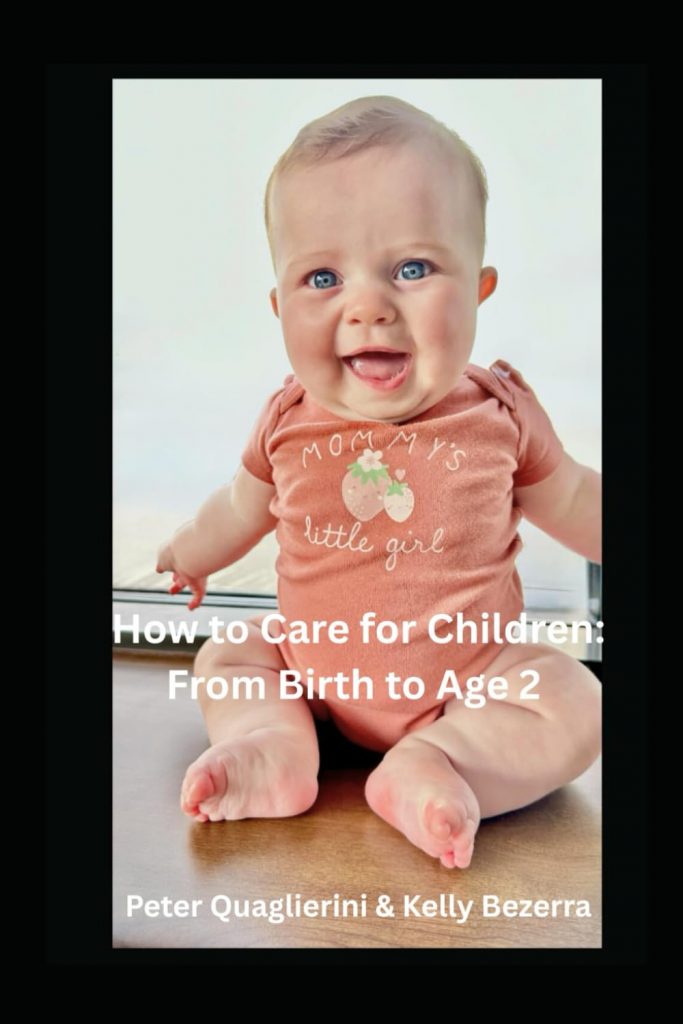
Looking for comprehensive guidance on caring for your baby? Our book ‘How to Care for Children: From Birth to Age 2’ combines professional childcare expertise with evidence based child development research. Written by Kelly and Peter, this guide provides clear, reliable advice rooted in real world childcare. Available in English, Spanish, and Portuguese on Amazon.
Click the link below your preferred language to get your copy!


1. Can newborns really benefit from conversation?
Yes, absolutely. Even newborns respond to the rhythm and melody of your voice, building early brain connections that support future learning. Research shows that babies recognize their mother’s voice within hours of birth and prefer it to other voices. While newborns don’t understand words yet, vocal interaction activates language centers in their developing brains, creates essential neural pathways, and strengthens emotional bonding through familiar, comforting sounds.
2. What if my baby can’t respond verbally yet?
This is completely normal and expected. Your baby’s brain is listening and learning constantly, even without verbal responses. Receptive language (understanding) develops months before expressive language (speaking). Babies are absorbing vocabulary, grammar patterns, conversational rhythms, and emotional tones long before they can produce words themselves. Continue talking; the foundation you’re building now will support their child’s development for years to come.
3. How much should I speak with my baby?
Aim for frequent, natural conversation throughout the day during diaper changes, feeding, playtime, and daily routines. Research suggests that the more words and conversational turns babies experience daily, the stronger their vocabulary and language skills tend to be later on. There’s no maximum limit to beneficial conversation. Quality matters too: use varied vocabulary, proper grammar, engage in responsive turn-taking, and create genuine conversational experiences rather than just background noise.
4. Does it matter what I say?
While the quantity of words matters significantly, quality is equally important. Use varied vocabulary beyond simple words, employ proper grammar to model correct language structures, engage in meaningful narration of activities and environment, respond to baby’s sounds and gestures conversationally, and read books with rich, complex language. Avoid constant baby talk alone; mix playful parentese with proper adult language to support their language skills over time.
5. What if I feel silly talking to someone who can’t respond?
This feeling is extremely common among new parents, but remember that your baby is absorbing every word even without verbal responses. Consider it essential practice for future conversations and focus on the tremendous developmental benefits you’re providing. Many parents find it easier to narrate activities (Now I’m folding laundry) or read books aloud rather than creating artificial conversations. The key is consistent verbal input, regardless of format.
6. When do babies start understanding what I’m saying?
Babies begin understanding simple words around 6-9 months, though this varies significantly. By 12 months, most babies understand 50+ words even if they can only say a few. Comprehension develops through consistent exposure: hearing words repeatedly in context, seeing facial expressions and gestures accompanying words, and experiencing responses to their own communication attempts. Continue talking even before obvious comprehension emerges; understanding develops gradually through accumulated exposure.
7. Can too much talking overwhelm my baby?
Generally no, but babies do need periods of quiet rest. Watch for overstimulation signs: turning away, fussiness, decreased eye contact, or falling asleep. Balance conversation with quiet time for processing and rest. The key is responsive communication: engage when baby is alert and interested, allow quiet time when baby signals need for rest. Natural conversation throughout daily activities provides optimal input without overwhelming.
8. Does talking to my baby really affect long-term academic success?
Yes, extensively documented research shows early verbal interaction strongly predicts later academic achievement. Children with rich early language exposure consistently demonstrate higher reading comprehension scores, enhanced writing abilities, superior critical thinking skills, better classroom participation, and increased confidence in learning environments. The Hart and Risley 30 million word gap study showed that early language exposure differences directly correlated with academic performance through elementary school and beyond.
There are truly some great suggestions on how talking really helps a child reach their potential.
Thank you!