

Table of Contents
- Understanding Your Baby’s Cries
- Mastering Feeding Fundamentals
- Diaper Changing and Hygiene Care
- Creating a Safe Sleep Environment
- Bathing and Newborn Skin Care
- Recognizing Health Warning Signs
- Building Your Confidence as a New Parent
- Conclusion
- Frequently Asked Questions
Essential baby care for new parents is not a skill you are born with. It is a skill you build, one feeding, one diaper change, and one sleepless night at a time. The moment your newborn arrives, the world feels both extraordinary and terrifying. You are holding the most precious responsibility of your life, and the weight of that love can be paralyzing when you are unsure what to do next.
This guide was written for exactly that moment. Whether you are navigating essential baby care for new parents for the first time or welcoming a new baby into your growing family, the fundamentals of newborn care never lose their importance. Understanding how to feed, soothe, bathe, and monitor your baby not only keeps your newborn healthy but also transforms that initial overwhelm into genuine, practiced confidence.
Every technique in this article is grounded in pediatric guidelines and professional caregiving experience. Each section is designed to help you move out of survival mode and into a daily rhythm of meaningful connection with your baby. By the end of this guide, you will have a complete framework built around newborn care tips for first time parents, from recognizing different cry patterns to knowing precisely when to call your pediatrician.

1. Understanding Your Baby’s Cries: The First Step in Essential Baby Care for New Parents
One of the most underestimated aspects of essential baby care for new parents is learning to interpret your baby’s cries as a form of communication. Your baby cannot speak, but crying is a remarkably sophisticated signaling system. Learning to decode different cry patterns is one of the most transformative skills available to you in the early weeks, because it removes much of the guesswork that overwhelms so many families.
Hunger Cries
Hunger cries typically begin as soft whimpering or rhythmic smacking sounds before escalating into a more demanding, repetitive pattern. You may notice early hunger cues before crying even begins: your baby turning their head toward your chest when held, opening their mouth when their cheek is touched, or sucking on their fingers. Recognizing these early signals is fundamental to how to care for a newborn baby at home, because it makes feeding smoother and prevents your baby from reaching the point of frantic, inconsolable crying that makes latching or bottle acceptance significantly harder.
Tired Cries
When a baby becomes overtired, fussiness builds gradually. Watch for yawning, eye rubbing, or a reduction in active movement before the crying begins. Acting on early sleep cues is essential because overtired newborns become much harder to settle. The window between tired and overtired closes quickly, especially in the first weeks of life.
Discomfort Cries
These cries tend to be sharp, sudden, and higher in pitch. They typically stop almost immediately once the source of discomfort is resolved: a wet diaper, an uncomfortable position, clothing with a scratchy seam, or gas trapped in the digestive tract. If the crying stops the moment you act, you have found the cause.
Gas and Digestive Cries
Gas related cries appear in waves and are accompanied by visible physical signs, such as drawing the knees up toward the chest, arching the back, or facial redness. These cries tend to peak in the evening hours, a phenomenon many parents recognize as the witching hour. Gentle tummy massage in slow clockwise circles and bicycle leg movements provide real and immediate relief in most cases.
Understanding these patterns is one of the most practical applications of essential baby care for new parents. That shift from reactive panic to responsive confidence is the foundation of everything else in this guide.
2. Mastering Feeding Fundamentals: Newborn Care Tips for First Time Parents
Feeding is the cornerstone of daily newborn care. Whether you choose to breastfeed or use formula, establishing solid technique and understanding your baby’s hunger rhythms will make every feeding session more effective and more peaceful. Mastering this area is central to essential baby care for new parents in the first weeks.
Breastfeeding Positioning
Proper latch and positioning prevent nipple pain and ensure your baby is transferring milk efficiently. The guiding principle is always to bring your baby to your breast, not your breast to your baby. Support your baby’s head, neck, and entire body so that they are facing you completely, belly to belly. Your baby’s nose should align with your nipple before latching; this positioning naturally encourages a wide mouth opening and a deep, effective latch that protects your nipple tissue.
If you are experiencing persistent pain during breastfeeding, consult a lactation consultant as early as possible. Discomfort during feeding is almost always a sign that positioning or latch technique can be adjusted, and professional support makes a significant difference. For a deeper understanding of why this feeding method matters, our detailed article on breastfeeding benefits for baby covers the full scope of its impact on infant health.
Bottle Feeding Technique
For parents who are formula feeding or supplementing, technique matters just as much. Hold your baby in a partially upright position and never feed a newborn lying flat on their back, as this position increases the risk of choking and middle ear infections. Tilt the bottle only enough to fill the nipple completely with milk or formula, keeping air from collecting at the nipple tip. This simple adjustment significantly reduces gas, spit up, and post-feeding discomfort.
Allow your baby to control the pace of each feeding session. Paced bottle feeding, where you pause every few minutes and hold the bottle horizontal to let your baby rest and signal fullness, prevents overfeeding and supports healthy appetite regulation from the very first weeks. This technique is one of the most overlooked newborn care tips for first time parents doing bottle feeds.
Feeding Frequency
Newborns typically feed every two to three hours in the first weeks of life, including overnight. Rather than watching the clock, watch your baby. Hunger cues are a more reliable guide than a fixed schedule. Growth spurts, which commonly occur around two weeks, six weeks, and three months, will temporarily increase feeding frequency. This is completely normal and is not a sign that your milk supply is insufficient.
According to the World Health Organization infant and young child feeding guidelines, exclusive breastfeeding for the first six months of life is the optimal feeding standard, with continued breastfeeding alongside complementary foods for up to two years or beyond.
Burping Techniques
Burping releases air your baby swallowed during feeding, which reduces spitting up and gas discomfort. There is no single correct technique. Try the over the shoulder position, the seated upright position with your hand supporting the chin and chest, or laying your baby face down across your lap with their belly resting on your thighs. Pat or rub gently in upward strokes. Some babies burp quickly; others require several minutes of patient effort. If your baby seems comfortable and settled without burping after a few minutes, do not force it.
3. Diaper Changing and Hygiene: Baby Feeding and Diapering Basics Every Parent Needs
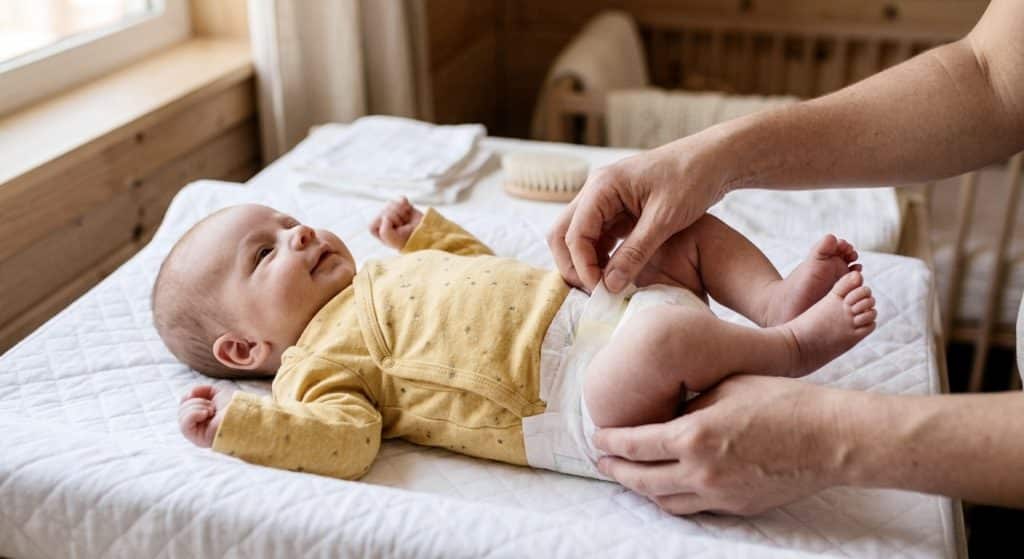
Diaper changing is one of the most frequent tasks in your day, with newborns requiring an average of eight to twelve changes in twenty four hours. Done correctly, it protects your baby’s skin and significantly reduces the risk of infection. Developing consistency here is a core element of essential baby care for new parents.
Preparation and Safety
Before you unfasten a single snap, have everything within arm’s reach: a clean diaper, unscented wipes or a soft cloth with warm water, diaper cream if needed, and a fresh change of clothing if a blowout has occurred. Never leave your baby unattended on a changing surface, not even for a moment. Falls from changing tables are among the most common causes of infant injuries in the home, and they happen in the seconds it takes to turn around. Keep one hand on your baby throughout the entire change.
Cleaning Technique
For girls, always wipe from front to back to prevent bacteria from the rectal area from reaching the urinary tract. For boys, place a clean cloth or the front of the new diaper over the penis immediately after removing the soiled one. Use fragrance free wipes or plain warm water on a soft cloth for at least the first few weeks of life. Newborn skin is extremely sensitive, and fragranced products, even those labeled for babies, can cause unnecessary irritation and disrupt the natural skin barrier.
Mastering baby feeding and diapering basics together in the first week creates a reliable daily rhythm that reduces anxiety for both you and your baby.
Preventing Diaper Rash
Diaper rash is nearly universal in infancy, but it is largely preventable with consistent care. Change diapers promptly when soiled, allow the skin to air dry for thirty to sixty seconds before placing the new diaper, and apply a thin layer of zinc oxide barrier cream at the first sign of redness. Ensure diapers fit correctly. A diaper that is too tight causes chafing along the thighs and waistband; one that is too loose allows leaks that keep the skin damp for extended periods.
Umbilical Cord Care
Until the cord stump falls off naturally, which typically occurs between one and two weeks after birth, keep the area clean and dry. Fold the waistband of the diaper below the stump to prevent friction and moisture buildup. Contact your pediatrician if you notice redness spreading to the surrounding skin, swelling, a foul odor, or any discharge. These are potential signs of infection that require prompt evaluation.
4. Creating a Safe Sleep Environment: A Critical Part of How to Care for a Newborn Baby at Home
Sleep is one of the most discussed and most researched aspects of newborn care tips for first time parents, and with good reason. Both insufficient sleep and unsafe sleep conditions carry serious risks for newborns. Understanding this section of essential baby care for new parents can be lifesaving.
Safe Sleep Fundamentals
The American Academy of Pediatrics safe sleep guidelines are consistent and clear: place your baby on their back, for every sleep session, every single time. Use a firm, flat sleep surface with a properly fitted sheet. Keep the sleep area completely empty: no blankets, pillows, bumper pads, positioning wedges, stuffed animals, or any soft objects. These items significantly increase the risk of suffocation and sudden infant death syndrome.

Room temperature should be maintained between 68 and 72 degrees Fahrenheit. Use a wearable blanket or sleep sack to keep your baby warm without introducing the risks that come with loose bedding. This is one of the most non-negotiable standards in essential baby care for new parents.
For a comprehensive breakdown of how sleep needs evolve from the newborn stage through toddlerhood, our guide on baby sleep schedule by age covers every developmental stage with practical detail.
Recognizing Sleep Cues
Your baby will signal tiredness before reaching a full overtired meltdown. Watch for yawning, a glassy or unfocused gaze, decreased interest in activity, or mild fussiness that has no obvious cause. Acting on these early cues by beginning your settling routine immediately prevents the overtired state that makes falling asleep dramatically harder for young babies.
Establishing Day and Night Rhythms
Newborns do not arrive with a functioning circadian rhythm. It takes approximately four to six weeks for the sleep and wake cycle to begin organizing itself. You can support this process by keeping daytime feeds in bright, somewhat stimulating environments and keeping nighttime feeds calm, dim, and quiet, with minimal talking and interaction. This consistent contrast gradually teaches your baby to associate darkness and quiet with extended sleep. This strategy is a practical component of any complete newborn sleep and bathing guide.
Swaddling Safely
Swaddling mimics the snug environment of the womb and can be a highly effective calming tool in the first six to eight weeks of life. Wrap snugly around the arms and torso, but always leave the hips and knees with enough room to bend and move freely. Tight swaddling around the lower body increases the risk of hip dysplasia, a developmental condition that is entirely preventable with correct technique. Discontinue swaddling as soon as your baby shows any signs of attempting to roll over.
5. Bathing and Newborn Skin Care: Your Complete Newborn Sleep and Bathing Guide
Bath time is one of the most enjoyable bonding rituals in essential baby care for new parents, but it does not need to be a daily event. Daily bathing can strip the natural oils from your newborn’s delicate skin and cause dryness and irritation. Two to three baths per week is entirely sufficient in the early weeks, provided you are cleaning the diaper area thoroughly at every change.
When to Start Tub Baths
For the first week or two of life, or until the umbilical cord stump falls off and any circumcision site has fully healed, limit bathing to sponge baths. Use a warm, damp cloth to gently clean your baby’s face, neck folds, hands, and diaper area. Submerging your baby in water before the cord stump separates introduces moisture that can increase infection risk at the base of the stump. This guidance is a foundational part of how to care for a newborn baby at home safely.
Water Temperature and Safety
Fill the baby tub with two to three inches of warm water. Test the temperature with the inside of your wrist or elbow rather than your hand, aiming for approximately 98 to 100 degrees Fahrenheit. Never leave your baby unattended in the water, even with a bath support seat in place, and even for a few seconds. Infant drowning can occur in less than one inch of water and in under sixty seconds.
Washing Technique
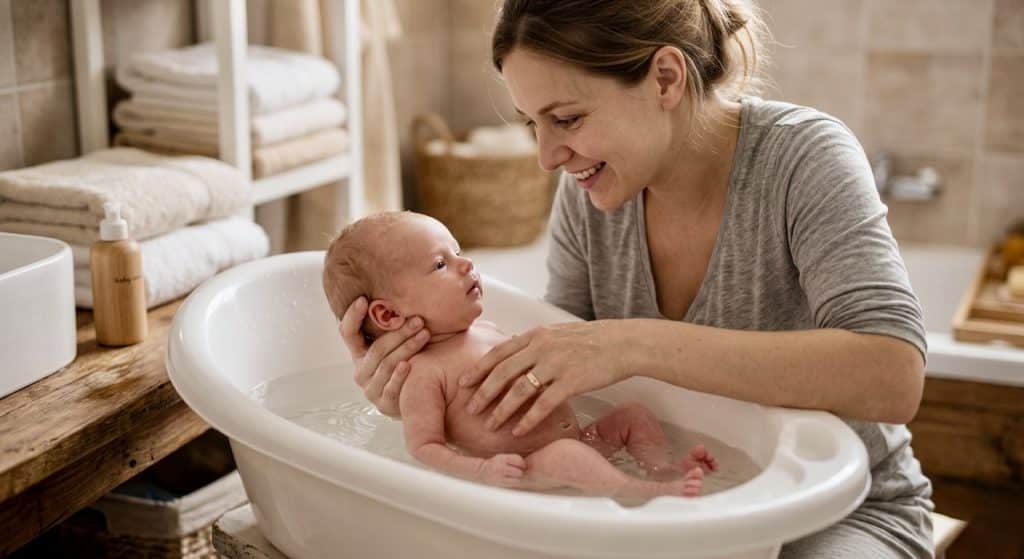
Work from the cleanest areas to the dirtiest: begin with the face, then move to the scalp, then the body, and finish with the diaper area. Use a mild, fragrance free baby soap and rinse thoroughly to prevent residue from irritating the skin. Pay particular attention to skin folds at the neck, behind the ears, in the armpits, and at the groin. Moisture accumulates in these areas and creates the warm, damp conditions that allow yeast or bacterial rashes to develop if they are not cleaned consistently.
After Bath Skin Care
Wrap your baby immediately in a warm towel and pat the skin dry with gentle pressure rather than rubbing. While the skin remains slightly damp, apply an unscented, hypoallergenic moisturizer to lock in hydration. This step is particularly important during dry weather, in heated indoor environments during winter, and for babies who are prone to eczema. A consistent bath and skin care routine is one of the most soothing components of essential baby care for new parents.
6. Recognizing Health Warning Signs: What Essential Baby Care for New Parents Requires You to Know
One of the most important components of essential baby care for new parents is developing the ability to distinguish between normal newborn behavior and symptoms that require prompt medical attention. This knowledge is not optional. It is one of the most vital skills in your entire caregiving toolkit.
Normal Newborn Characteristics
Many behaviors that alarm parents for the first time are entirely typical. Irregular breathing patterns with brief pauses of up to ten seconds, frequent hiccups, occasional sneezing, and periods of fussiness are all within the range of normal newborn behavior. Skin that appears blotchy or mottled in cool temperatures, peeling skin on the hands and feet, and widely varying bowel movement frequency are all expected findings in the first weeks of life.
Symptoms That Require Immediate Medical Attention
The Centers for Disease Control newborn screening resources provide families with essential guidance on identifying conditions that require prompt attention. Parents should contact their pediatrician or go directly to an emergency department for any of the following situations.
A fever of 100.4 degrees Fahrenheit or higher in a baby under three months of age is always a medical emergency, regardless of how well your baby appears otherwise. For a thorough breakdown of this specific scenario, our detailed post on when to take your baby to the ER for fever covers every situation you need to know.
Persistent vomiting, projectile vomiting after every feeding, or any blood visible in vomit or stool all require immediate evaluation. Fewer than six wet diapers per day after the first five days of life may indicate dehydration, a condition that progresses rapidly in newborns. For a complete reference on this topic, our article on baby dehydration signs explains every warning signal in detail.
Extreme difficulty waking your baby for feeds, a noticeable change in muscle tone, or a baby who appears limp and unresponsive warrants immediate emergency care. Any breathing difficulty, including flaring nostrils, visible retractions between the ribs, or a persistent grunting sound with every breath, is a serious warning sign. For a comprehensive overview of the symptoms parents most commonly miss, our post on dangerous baby health warning signs is an essential companion to this guide.

Trusting Your Instincts
One of the most undervalued aspects of essential baby care for new parents is parental instinct. Research consistently shows that primary caregivers often sense that something is wrong before it becomes clinically obvious. If something about your baby’s behavior, color, or responsiveness feels different, even if you cannot put it into words exactly, do not wait. Call your pediatrician. There is no such thing as an unnecessary call when it involves a newborn.
7. Building Your Confidence: The Final Piece of Essential Baby Care for New Parents
Confidence in caregiving is not a trait you either possess or you do not. It builds incrementally with every diaper change you complete without incident, every feeding that goes smoothly, and every cry you successfully decode. Essential baby care for new parents is ultimately about building this confidence through practice, not through achieving perfection from the start.
Parents who give themselves permission to learn gradually and who resist the cultural pressure to perform perfection immediately consistently report higher satisfaction and lower rates of parental burnout.
Start With One Skill at a Time
Do not attempt to master everything in the first week. Focus on feeding and diapering in the first days, then add bathing and sleep strategies as those basics become familiar. Let each skill settle before layering on the next. This approach reduces cognitive overload and allows genuine competence to develop, rather than a fragile performance of caregiving that collapses under pressure. Approaching baby feeding and diapering basics first creates a stable foundation for everything else.
Create Predictable Routines
Babies thrive on repetition. A consistent sequence of events around feeding, activity, and sleep, even a loose one in the earliest weeks, sends powerful signals to your baby’s developing nervous system. Predictability reduces crying because your baby begins to anticipate what comes next. It also reduces your own daily stress because you are no longer improvising every hour from scratch. Building routine is an often overlooked dimension of how to care for a newborn baby at home effectively.
Seek Support Without Apology
Asking for help is not a sign of failure. It is one of the most intelligent decisions you can make for your baby. Connect with a lactation consultant if feeding is challenging. Reach out to your pediatrician with questions, including the ones that feel too small to mention. Join a parent support group, in person or online. Accept practical help from family and friends when it is offered sincerely. Parenting was never meant to be a solitary endeavor.
For support with your own emotional wellbeing in the weeks after birth, our article on postpartum depression signsprovides important and practical guidance that every new parent deserves to read.
Document the Early Weeks
Keep a simple log of feeding times, diaper output, and sleep periods during the first two to three weeks. This record serves two important purposes: it helps you identify patterns in your baby’s natural rhythms, and it provides your pediatrician with precise, reliable information at every well visit. Having this data in hand during appointments significantly reduces parental anxiety because you are answering questions with facts rather than estimates.
The parents who approach essential baby care for new parents with curiosity and self compassion are the ones who consistently build the strongest, most confident caregiving foundation in the shortest time.
Conclusion
Essential baby care for new parents comes down to three things: reliable knowledge, consistent practice, and patience with your own learning curve. Every skill covered in this guide, from reading your baby’s cries to building a safe sleep environment, becomes easier and more intuitive with repetition.
Your baby does not need a perfect parent. Your baby needs a present, attentive, and loving one. The parents who commit to learning essential baby care for new parents with intention are the ones who look back at the early weeks not with anxiety, but with pride at how far they came. The fact that you are here, seeking knowledge and preparing yourself, already makes you exactly that.
Looking for comprehensive guidance on caring for your baby? Our book ‘How to Care for Children: From Birth to Age 2’ combines professional nanny experience with evidence based child development research. Written by Kelly and Peter, this guide provides clear, reliable advice rooted in real world childcare. Available in English, Spanish, and Portuguese on Amazon.
Click the link below your preferred language to get your copy!




1. How often should I feed my newborn as part of essential baby care for new parents?
Newborns should be fed on demand, typically every two to three hours, which amounts to eight to twelve feedings per day. Do not wait for your baby to cry before initiating a feed. Look for early hunger cues such as rooting, hand to mouth movements, and lip smacking. In the first few weeks, it is important not to allow your newborn to sleep longer than four hours between daytime feeds, as adequate caloric intake is critical for weight gain and neurological development. This feeding pattern is one of the most important components of essential baby care for new parents.
2. How do I know if my baby is getting enough milk with newborn care tips for first time parents?
The most reliable indicators of adequate milk intake are wet diaper output and weight gain over time. After the first four to five days of life, your baby should produce at least six wet diapers per day. Most newborns lose a small percentage of their birth weight in the first days after delivery, but should fully regain that weight by ten to fourteen days of age. If you have concerns about intake, your pediatrician or a certified lactation consultant can perform a weighted feed to measure exactly how much your baby is consuming.
3. What is the safest sleep position when learning how to care for a newborn baby at home?
Always place your baby on their back on a firm, flat surface for every sleep session, including all naps. This position is consistently associated with the lowest risk of sudden infant death syndrome across all major pediatric research. Once your baby has developed the physical strength to roll independently from back to stomach and from stomach to back without assistance, you no longer need to reposition them during sleep. Until that milestone is reached, every sleep session should begin with your baby on their back.
4. When should I give my newborn their first bath as part of baby feeding and diapering basics?
The World Health Organization recommends delaying the first bath for at least twenty four hours after birth. This preserves the vernix caseosa, the white protective coating on your newborn’s skin, which has natural antimicrobial properties and supports moisture regulation in the first days of life. At home, use sponge baths only until the umbilical cord stump has fallen off and healing is complete, which typically occurs within one to two weeks of birth. After that point, gentle tub baths two to three times per week are appropriate. Proper bathing technique is a core element of how to care for a newborn baby at home.
5. What are the most important warning signs in a newborn sleep and bathing guide that require immediate medical attention?
Any fever of 100.4 degrees Fahrenheit or higher in a baby under three months is a medical emergency without exception. Additional red flags include persistent difficulty breathing, extreme difficulty waking your baby for a scheduled feed, refusal to feed across two or more consecutive feeding sessions, projectile vomiting after every feed, fewer than six wet diapers per day after day five of life, and a sunken soft spot at the top of the head. If you notice any of these signs, contact your pediatrician or go to an emergency department immediately. When it involves a newborn, acting quickly is always the right decision.
6. What are the most common mistakes in essential baby care for new parents during the first weeks at home?
The most common mistakes in essential baby care for new parents include skipping burping after feeds, placing babies to sleep on soft surfaces with loose bedding, waiting too long to act on hunger cues, and bathing the newborn daily instead of two to three times per week. Many parents also underestimate the importance of tracking diaper output and feeding times in the first two weeks. Keeping a simple daily log eliminates much of the uncertainty that makes early caregiving feel overwhelming, and helps your pediatrician assess your baby’s progress accurately at each visit.
7. How does essential baby care for new parents change between the first week and the first month?
Essential baby care for new parents evolves significantly between week one and week four. In the first seven days, the primary focus is on establishing feeding, monitoring diaper output, and learning your baby’s basic hunger and sleep cues. By the second and third week, most parents begin to notice emerging patterns in their baby’s rhythms, which makes it possible to introduce a loose daily routine around feeding, awake time, and sleep. By the end of the first month, the foundational skills of how to care for a newborn baby at home become more automatic, and confidence builds noticeably with each passing day.
