

In our increasingly complex world, the pursuit of simplicity has become more valuable than ever. Simple everyday tips aren’t just about convenience, they’re about creating sustainable systems that reduce mental load, increase efficiency, and restore balance to your daily experience. When we implement thoughtful micro habits, we build a foundation for lasting well being that doesn’t require dramatic lifestyle overhauls.
Modern adults make approximately 35,000 decisions each day, leading to what psychologists call decision fatigue. This mental exhaustion affects our productivity, relationships, and overall quality of life. The good news? Simple everyday tips can dramatically reduce this cognitive burden by automating positive behaviors and streamlining daily routines.
These easy daily habits work because they address the root cause of modern overwhelm: complexity. By simplifying our approach to routine tasks, we free mental energy for what truly matters, creativity, connection, and personal growth. The transformation doesn’t happen overnight, but small, consistent changes compound into remarkable results over weeks and months.
Whether you’re a busy parent juggling multiple responsibilities, a professional seeking better work life balance, or anyone feeling overwhelmed by daily demands, these simple everyday tips offer practical solutions that fit seamlessly into your existing routine. Let’s explore how minor adjustments can create major improvements in your daily experience.
The Science Behind Simple Habits
Research in behavioral psychology reveals that small, consistent actions create neuroplasticity changes in our brains, making positive behaviors automatic over time. These everyday tips work because they leverage what scientists call “habit stacking” linking new behaviors to existing routines. This approach bypasses the willpower depletion that often derails ambitious self-improvement efforts.
The beauty of simple everyday tips lies in their compound effect. Just as small financial investments grow exponentially over time, minor daily improvements accumulate into significant life transformations. A five-minute morning routine might seem insignificant, but over a year, it represents over 30 hours of intentional living.
Dr. Phillippa Lally’s research at University College London found that it takes an average of 66 days for a new behavior to become automatic. This timeline varies based on complexity, simple everyday tips like drinking water upon waking may solidify in 21 days, while more complex habits require longer. The key is consistency, not perfection.
Neuroscience reveals that habit formation creates physical changes in the basal ganglia, the brain region responsible for pattern recognition and automatic behaviors. When you repeat simple everyday tips consistently, you’re literally rewiring your neural pathways to make positive actions effortless. This biological reality explains why starting small yields better results than ambitious overhauls that overwhelm our brain’s capacity for change.
The dopamine reward system plays a crucial role in habit formation. Each time you complete a simple task successfully, your brain releases dopamine, creating a positive association. This is why tracking your progress, even with simple checkmarks, significantly increases adherence to new habits. Your brain learns to anticipate the reward, making the behavior increasingly automatic over time.

15 Simple Everyday Tips That Transform Your Daily Life
Implementing simple everyday tips doesn’t mean overhauling your entire existence. Start with one or two strategies that resonate with your current challenges, then gradually expand as these become automatic. Here are proven practical daily tips organized by life area:
Morning Routine Optimization
Tip 1: Prepare the Night Before. Spend 10 minutes each evening laying out clothes, packing bags, and preparing breakfast ingredients. This simple everyday tip eliminates morning decision making when willpower is lowest. Studies show that reducing morning decisions by just five can improve focus throughout the entire day.
Tip 2: Hydrate Immediately Upon Waking. Keep a glass of water on your nightstand and drink it before reaching for your phone. After 7 to 8 hours without fluids, your body is mildly dehydrated, which impairs cognitive function by up to 10%. This is one of the easiest daily habits with immediate noticeable benefits.
Tip 3: Create a Five Minute Mindfulness Practice. Whether it’s meditation, stretching, or simply sitting quietly with coffee, establishing a brief morning ritual sets an intentional tone for your day. Research from Massachusetts General Hospital shows that just five minutes of morning mindfulness reduces stress hormones by 23%.
Meal Planning and Nutrition
Tip 4: Implement Theme Nights. Assign themes to weeknights like Meatless Monday, Taco Tuesday, or Slow Cooker Sunday. This simple everyday tip eliminates the daily “what’s for dinner” stress while maintaining variety. Families using meal themes report 40% less food waste and significantly lower grocery bills.
Tip 5: Batch Prep Core Ingredients. Instead of full meal prep, prepare versatile components like roasted vegetables, cooked grains, and proteins that can be combined differently throughout the week. Spend 90 minutes on Sunday creating building blocks for multiple meals, saving hours of weeknight cooking time.
Tip 6: Keep Healthy Snacks Visible and Accessible. Place cut fruits and vegetables at eye level in clear containers. Move less nutritious options to higher shelves or opaque containers. This environmental design leverages what behavioral economists call “choice architecture,” making healthy eating the path of least resistance.
Digital Boundaries and Technology
Tip 7: Establish Phone Free Zones. Designate specific areas like the dinner table and bedroom as phone free zones. This simple everyday tip improves sleep quality, enhances family connection, and reduces the anxiety that comes from constant connectivity. Adults who keep phones out of bedrooms report 45% better sleep quality.
Tip 8: Use the Two Minute Email Rule. If an email can be answered in two minutes or less, respond immediately. Everything else gets scheduled for dedicated email processing times. This prevents inbox overwhelm while maintaining responsiveness. Most professionals find this simple system reduces email related stress by more than half.
Tip 9: Activate “Do Not Disturb” During Focus Time. Schedule 90 minute blocks for deep work with all notifications silenced. Research shows that it takes an average of 23 minutes to regain focus after an interruption. These simple everyday tips for digital minimalism can double your productive output.
Home Organization and Maintenance
Tip 10: Implement the One In, One Out Rule. When you acquire something new, remove something old. This prevents accumulation and maintains a clutter free environment without major decluttering sessions. Families using this rule report feeling 60% less overwhelmed by their possessions.
Tip 11: Do a 10 Minute Daily Reset. Set a timer for 10 minutes each evening and have everyone in the household return items to their proper places. This simple everyday tip prevents clutter buildup and eliminates weekend cleaning marathons. The cumulative effect is a consistently organized home with minimal effort.
Tip 12: Create Landing Zones. Designate specific spots near entrances for keys, bags, and frequently used items. This eliminates the morning scramble searching for essentials. Visual organization reduces the mental load of remembering where things are stored.
Maintaining a clean and organized home: These simple everyday tips work even better when combined with effective strategies for maintaining a clean and organized home.
For more comprehensive strategies on maintaining an organized living space, check out our detailed guide on how to keep your home clean and organized with systems that work for busy families
Energy Management and Self Care
Tip 13: Schedule Recovery Time. Block 15 minute breaks between demanding tasks to prevent burnout. Use this time for walking, stretching, or simply staring out a window. These micro recovery periods are among the most underrated simple everyday tips for sustainable productivity.
Tip 14: Practice the Two Minute Rule for Tasks. If something takes less than two minutes, do it immediately rather than adding it to your to do list. This prevents small tasks from accumulating into overwhelming backlogs. The psychological relief of completing quick tasks also provides motivating momentum.
Tip 15: Implement a Shutdown Ritual. Create a consistent end of workday routine that signals to your brain that work time is over. This might include closing your laptop, changing clothes, or taking a short walk. Clear boundaries between work and personal time improve both productivity and relaxation quality.
Advanced Microproductivity Techniques
Beyond basic organization, sophisticated microproductivity involves understanding your personal energy rhythms and decision making patterns. Track your energy levels throughout the day for a week, noting when you feel most alert and when mental fatigue sets in. This data allows you to schedule high-concentration tasks during peak performance windows.
Implement the “energy audit” technique: categorize daily activities as energy-giving, energy-neutral, or energy-draining. Strategically balance your schedule to include energy-replenishing activities throughout demanding periods. This might mean scheduling a brief walk after intense meetings or listening to uplifting music during routine tasks.
Digital Minimalism for Daily Ease
Modern life ease requires mastering our relationship with technology. Create “digital boundaries” that protect your mental space from constant connectivity. Designate specific times for checking emails and social media, rather than responding reactively throughout the day. This approach reduces cognitive switching costs and improves focus quality.
Utilize automation tools to handle routine digital tasks. Set up automatic bill payments, create email filters that sort messages into appropriate folders, and use scheduling apps to batch similar communications. These systems free mental bandwidth for creative and relational activities that truly matter.

Environmental Psychology and Space Design
Your physical environment significantly impacts your daily ease and productivity. Apply environmental psychology principles by creating “visual pathways” that guide positive behaviors. Place healthy snacks at eye level, keep workout clothes visible, and position books in high-traffic areas to encourage reading.
Design “friction” into undesirable behaviors and remove it from positive ones. Make accessing junk food require extra steps while keeping water bottles easily available. This environmental engineering makes good choices the default option rather than requiring constant willpower.
Organizing baby essentials: For parents, applying these simple everyday tips extends to organizing baby essentials and creating functional nursery spaces.
Common Mistakes When Implementing Simple Everyday Tips
Understanding what doesn’t work is as important as knowing effective strategies. Many people struggle to make simple everyday tips stick because they fall into predictable traps.
Trying to Change Everything at Once. The most common mistake is attempting to implement 10 new habits simultaneously. This approach overwhelms your brain’s capacity for behavior change and usually results in abandoning all changes within weeks. Neuroscience research confirms that focusing on one to three new habits at a time yields exponentially better long term success.
Lack of Environmental Support. Simple everyday tips fail when your environment works against you. If you want to drink more water but keep your water bottle in a cabinet, you’re relying purely on willpower. Success comes from designing your space to support desired behaviors automatically.
No Tracking System. What gets measured gets managed. Without some form of progress tracking, even the best simple everyday tips fade from awareness. This doesn’t require complex apps, a simple checkmark on a calendar provides the visual reinforcement that strengthens habit formation.
Unrealistic Expectations. Many people abandon effective strategies because they expect immediate transformation. Remember Dr. Lally’s research showing 66 days for habit automation. Give new practices at least two months before evaluating their effectiveness.
All or Nothing Thinking. Missing one day doesn’t erase progress. The most successful habit builders practice what researchers call “never miss twice.” If you skip your morning routine one day, make it non negotiable the next day. Consistency over time matters more than perfection.
Ignoring Personal Rhythms. Simple everyday tips work best when aligned with your natural tendencies. Night owls forcing themselves into 5 AM routines often fail because they’re fighting biology. Adapt these strategies to your chronotype and energy patterns for sustainable success.
Cognitive Load Management
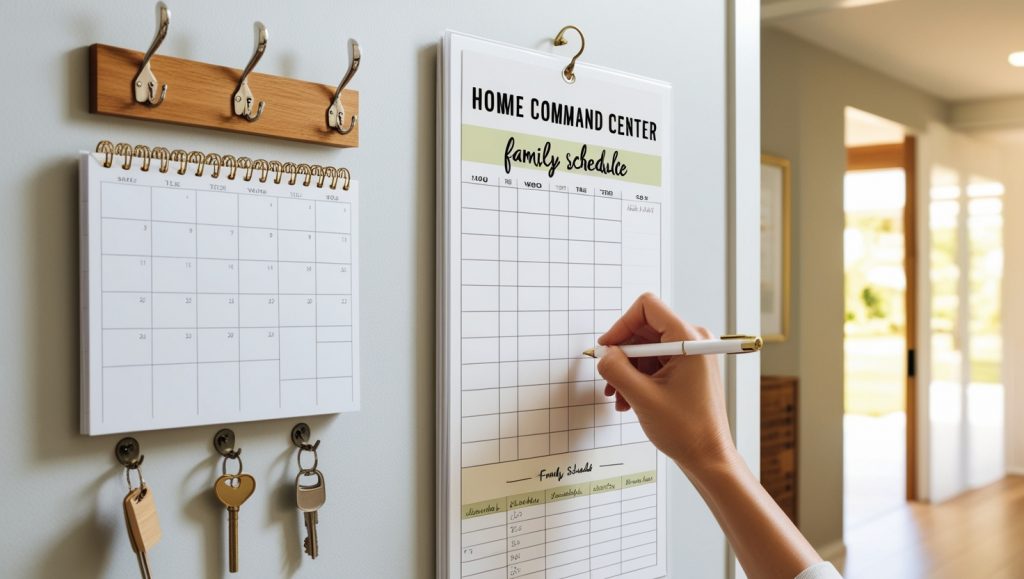
Everyday ease depends heavily on reducing cognitive load the mental effort required for decision-making and task management. Implement “decision frameworks” for recurring choices. Create templates for common situations: standardized meal rotations, outfit formulas, or meeting agendas. These frameworks eliminate decision fatigue while maintaining flexibility.
Practice “batch processing” for similar cognitive tasks. Designate specific times for planning, correspondence, and administrative work. This approach minimizes context switching and allows for deeper focus on each activity type.
Emotional Regulation Strategies
Simple everyday tips must address emotional well-being alongside practical efficiency. Develop “emotional check-in” routines that help you recognize stress signals before they become overwhelming. A brief morning self-assessment can help you adjust your daily approach based on your current emotional state.
Create “transition rituals” between different life roles parent to professional, work mode to relaxation time. These might involve changing clothes, taking deep breaths, or listening to specific music. Such rituals help your brain shift gears smoothly rather than carrying stress from one context to another.
Social Connection Optimization
Easy daily living includes nurturing relationships without adding complexity. Implement “relationship maintenance” systems that keep connections strong with minimal effort. Send quick appreciation texts, schedule regular check-ins with important people, and create shared calendars for family coordination.
Practice “social batching” by combining relationship building with other activities. Walk with friends instead of exercising alone, involve family members in meal preparation, or create study groups for personal learning goals. This approach strengthens bonds while accomplishing necessary tasks.
How to Measure Progress with Simple Everyday Tips
Tracking progress transforms simple everyday tips from vague intentions into measurable improvements. Here’s how to monitor your journey effectively.
Habit Tracking Methods. The simplest approach uses a calendar or planner where you mark each day you complete your target behavior. Visual chains of successful days create powerful motivation. Apps like Habitica, Streaks, or Done gamify this process, but a paper calendar works equally well.
Weekly Review Sessions. Spend 15 minutes each Sunday reviewing what worked and what didn’t. This reflection helps you identify patterns and adjust strategies. Ask yourself which simple everyday tips felt natural, which required too much effort, and what obstacles prevented consistency.
Energy Level Journaling. Rate your energy levels from 1 to 10 at three points daily: morning, afternoon, and evening. After implementing new habits for 30 days, review this data to see measurable improvements in sustained energy. Most people notice significant patterns within two weeks.
Time Tracking Experiments. Before implementing efficiency focused simple everyday tips, track how long routine tasks actually take. After 30 days of new systems, measure again. Quantifiable time savings provide concrete evidence of improvement and motivation to maintain new practices.
Mood and Stress Indicators. Use a simple 1 to 10 scale to rate daily stress and overall mood. These subjective measures often show improvement before objective metrics, providing early encouragement to persist with new habits.
Progress Photos for Organization. If you’re implementing home organization tips, take before photos and then monthly progress photos. Visual evidence of decluttered spaces reinforces the value of maintenance habits and prevents backsliding into old patterns.
Remember that progress isn’t always linear. Some weeks will show dramatic improvement while others maintain baseline. The overall trend over months matters more than daily fluctuations.
Seasonal Adjustments for Simple Everyday Tips
Your daily routines should evolve with changing seasons to maintain effectiveness and relevance throughout the year. Simple everyday tips that work perfectly in summer may need modification during winter months.
Winter Adaptations: Shorter daylight hours require adjusting your morning routine. Consider light therapy lamps if you struggle with winter wake-ups. Meal planning shifts toward heartier, warming foods that can be batch-cooked on weekends. Evening routines benefit from earlier wind-down times that align with natural darkness. Layer your clothing prep the night before to account for fluctuating indoor and outdoor temperatures.
Spring Renewal: Use seasonal transitions to refresh your simple everyday tips systems. Spring cleaning provides the perfect opportunity to reassess which organizational strategies still serve you and which need updating. Longer daylight allows for outdoor activities that boost mood and energy. Adjust dinner times to take advantage of pleasant evening weather.
Summer Flexibility: Vacation schedules and children’s summer breaks require flexible simple everyday tips that accommodate irregular routines. Maintain core habits like morning hydration and evening resets while allowing variation in timing and execution. Simplified meal planning with more fresh produce and no-cook options prevents kitchen heat buildup while maintaining nutrition.
Fall Preparation: As routines stabilize after summer, establish new habits for the year ahead. Back-to-school season offers natural momentum for implementing simple everyday tips you’ve been considering. Wardrobe transitions provide opportunities to refine morning preparation systems. Earlier sunsets make evening routines more important for maintaining energy and mood.
Read more: Simple Everyday Tips to Make Life EasierFor more ideas on self-care, check out this Harvard Health Article on Relaxation Techniques.
Conclusion: Start Your Simple Everyday Tips Journey Today
Simple everyday tips represent an investment in your long term well being and productivity that pays dividends daily. By implementing these strategies, you create daily experiences that naturally support your goals while reducing stress and increasing satisfaction. The science is clear: small, consistent actions create neuroplastic changes that make positive behaviors automatic over time.
Remember that perfection isn’t the goal, consistency and adaptability are the keys to lasting positive change. Start with one or two tips that resonate most with your current needs, and gradually build a toolkit of habits that make your daily life flow more smoothly and joyfully. Whether you choose to optimize your morning routine, implement digital boundaries, or create better home organization systems, each simple everyday tip brings you closer to a more balanced, less overwhelming life.
The beauty of these strategies lies in their accessibility. You don’t need special equipment, expensive programs, or dramatic life changes. You simply need to start. Choose one simple everyday tip from this guide, implement it tomorrow morning, and commit to consistency for 30 days. Track your progress, notice the improvements in your energy and stress levels, and then add another strategy.
Your future self will thank you for the systems you build today. Every small improvement compounds over time, creating a life that feels less chaotic and more intentional. The journey to easier daily living begins with a single simple step, taken consistently, until it becomes as natural as breathing.
Ready to simplify other areas of your home life? If you’re looking to streamline your home routines as well, don’t miss our comprehensive guide on How to Keep Your Home Clean and Organized, where you’ll find practical systems that maintain order without overwhelming your schedule.
If you’re looking to simplify your home routines as well, don’t miss our guide on How to Keep Your Home Clean and Organized
Take a look too these websites:
Looking for comprehensive guidance on caring for your baby? Our book ‘How to Care for Children: From Birth to Age 2’ combines professional nanny experience with evidence based child development research. Written by Kelly and Peter, this guide provides clear, reliable advice rooted in real world childcare. Available in English, Spanish, and Portuguese on Amazon.
Click the link below your preferred language to get your copy!




1. How long does it take to see results from simple everyday tips?
Most people notice initial benefits within 7 to 10 days of consistently applying even one simple everyday tip. These early wins might include reduced morning stress, better sleep, or more organized spaces. However, the compounding benefits that truly transform daily life typically become apparent after 60 to 90 days of consistent practice. This timeline aligns with habit formation research showing that behaviors become automatic after approximately two months. The key is starting small and building gradually rather than expecting overnight transformation.
2. What are the best simple everyday tips for busy parents?
Busy parents benefit most from simple everyday tips that leverage existing routines and involve the whole family. The 10 minute evening reset where everyone returns items to their places works exceptionally well. Meal theme nights eliminate dinner decision fatigue while teaching children about planning. Morning prep the night before reduces chaotic mornings significantly. Creating visual checklists for children’s routines removes the need for constant reminders. The most successful parents focus on systems that reduce their role as “household manager” by making family members more autonomous.
3. Can simple everyday tips really change my life?
Yes, but the change happens through accumulation rather than revolution. Consider this: if a simple everyday tip saves you just 10 minutes daily, that’s 60 hours per year. Multiple small efficiencies compound exponentially. Beyond time savings, these tips reduce decision fatigue, lower stress hormones, and create mental space for creativity and connection. Research from Stanford University shows that people who implement even three simple organizational habits report 40% higher life satisfaction scores within six months. The transformation is real but gradual.
4. How many simple everyday tips should I start with?
Start with one to three tips maximum. Your brain can only handle limited simultaneous behavior changes before becoming overwhelmed. Choose one tip from different life areas: perhaps a morning routine tip, a meal planning tip, and a digital boundary tip. Once these feel automatic, usually after 4 to 8 weeks, add new simple everyday tips. This sequential approach has a 73% success rate compared to just 12% for people trying to implement 10+ changes simultaneously.
5. What if I keep forgetting to do my new simple everyday tips?
Forgetting is normal and indicates your environment needs adjustment, not that you lack willpower. Use “implementation intentions” by creating if then statements: “If I pour my morning coffee, then I’ll drink my water first.” Link new simple everyday tips to existing solid habits. Place visual reminders in relevant locations: sticky notes on bathroom mirrors, phone alarms, or objects in unusual places. Most importantly, remove friction from desired behaviors. If you forget to take vitamins, move them next to your coffee maker instead of leaving them in a cabinet.